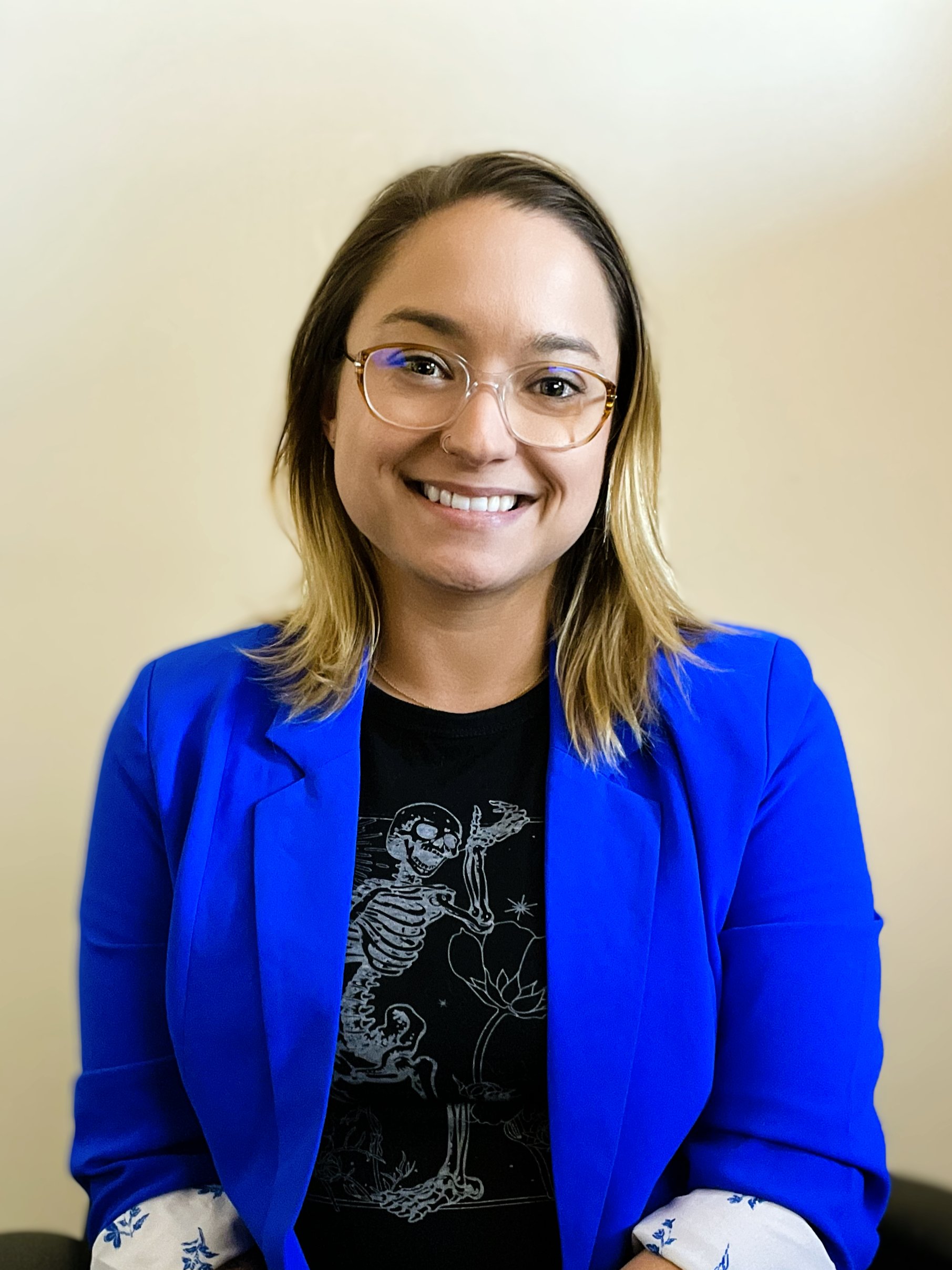
Meet Megan.
Hello, I’m Megan,
a researcher, educator, writer, strategist, and founder whose work lives somewhere in the messy, fascinating space where learning, systems, care, openness, joy, and change meet.
I have spent my career across K–12 and higher education, libraries, digital learning, instructional design, open education, faculty development, and professional learning. I have been a classroom teacher, digital learning specialist, adjunct instructor, open education librarian, curriculum designer, facilitator, program builder, and, perhaps most consistently, the person asking questions like:
Who can actually enter this? What do they have to know before they can begin? Where are people getting stuck? And what would we have to change about the system instead of asking people to become better at surviving it?
Those questions have followed me across contexts, and increasingly, I think they are all connected.
My work now
I’m currently a PhD student in Leadership and Change at Antioch University, where I’m developing a line of inquiry around openness as a relational practice.
Open education is one of the places this thinking began for me, but the questions have grown larger. I’m interested in what happens when we understand openness not only through access, resources, permissions, or licenses, but through the relationships and conditions that make meaningful participation possible.
That has me thinking about care, trust, power, knowledge, belonging, reciprocity, leadership, disability, institutional structures, and the often-invisible knowledge people are expected to possess before they are able to participate.
One question I keep returning to is deceptively simple:
A door is only open if someone can actually get through it. So what makes getting through possible?
I’m especially interested in the space between access and participation: the threshold where someone may technically be invited in but still has to figure out where to start, what counts, who to ask, how much risk they are expected to absorb, and whether there is actually a place for them once they arrive.
I’m not approaching these questions only as a scholar. I’m interested in building things from them.
Through The Open Practice Academy, I work with educators, librarians, instructional designers, leaders, nonprofits, and mission-driven organizations to examine how their values become actual practices and structures. My work includes consulting, coaching, professional learning, curriculum and program design, open education, documentation, organizational systems, and the small pieces of infrastructure that help people move from “this matters” to “I can actually do this.”
I’m particularly interested in the gap between what an organization says it values and what its systems make possible. Care, openness, access, participation, and belonging cannot live only in mission statements. They show up in timelines, instructions, workflows, decision-making, documentation, compensation, communication, expectations, and what happens when an actual human being does not move neatly through the system as designed.
And then there is Unproductive Joy Factory, which might look like the odd little sibling in all of this, but I increasingly suspect it belongs right at the center.
Unproductive Joy Factory is my creative playground and an emerging research and practice space devoted to joy without justification: making things, playing, experimenting, collecting tiny objects, following curiosity, and doing things that do not have to become productive to deserve our time.
I’m interested in what happens when adults, especially people whose lives have been organized around achievement, caregiving, leadership, work, or survival, are given permission to do something simply because it delights them.
There is an intentional contradiction in researching and building a business around unproductive joy. I’m keeping it.
The point isn’t that joy never produces anything. Joy can support creativity, connection, learning, resilience, and all kinds of wonderfully useful things. The distinction I care about is that usefulness does not have to be the condition that makes joy worthwhile.
That question belongs beside my other work more naturally than I initially expected.
Because underneath all of it, I think I’m studying the conditions we create for human beings.
What makes it possible to participate?
What makes it safe to experiment?
What knowledge have we left invisible?
What happens when people need something different from what the system anticipated?
What allows someone to contribute without first performing expertise?
What makes room for care?
What makes room for joy?
And what would our institutions, learning environments, workplaces, and communities look like if we treated those questions as structural rather than incidental?
I also make things.
I write books, essays, reflections, tools, frameworks, curricula, workshops, research notes, and occasionally very strange little objects.
Some of my work is scholarly. Some is practical. Some is literary. Some exists because making it delighted me.
I’m increasingly uninterested in pretending those parts of me have nothing to do with one another.
I like work with heart, intellectual curiosity, clarity, humor, and a little edge. I believe serious thinking can be playful. I believe scholarship can begin with lived experience without ending there. I believe practice can generate theory. I believe people should be allowed to change their minds as they learn. And I believe meaningful work should not require us to abandon our humanity to prove that we are committed to it.
This site is where those threads come together.
If you’re here because you’re interested in openness, leadership, learning, care, systems, participation, institutional change, or unproductive joy, welcome.
If you’re here because you’re trying to build something and aren’t quite sure what it is yet, you’re welcome too.
Some of the most interesting work begins there.