OERganic: Cultivating Humanity in Education
"Imagine if [education could] be more effective, efficient, ethical, and beautiful. What would it look like?"
- The Imagine If... thinking routine was developed by Project Zero, a research center at the Harvard Graduate School of Education.
Redefining Access: OER's Financial and Beyond
As an Open Educational Resources (OER) librarian at the University of Texas at Arlington (UTA), I've engaged in numerous enlightening discussions within our community. I've observed a fascinating trend: the initial appeal of OER often lies in its financial benefits. The ability to reduce or eliminate costs is a powerful draw, and rightly so—the economic impact of OER is significant and tangible.
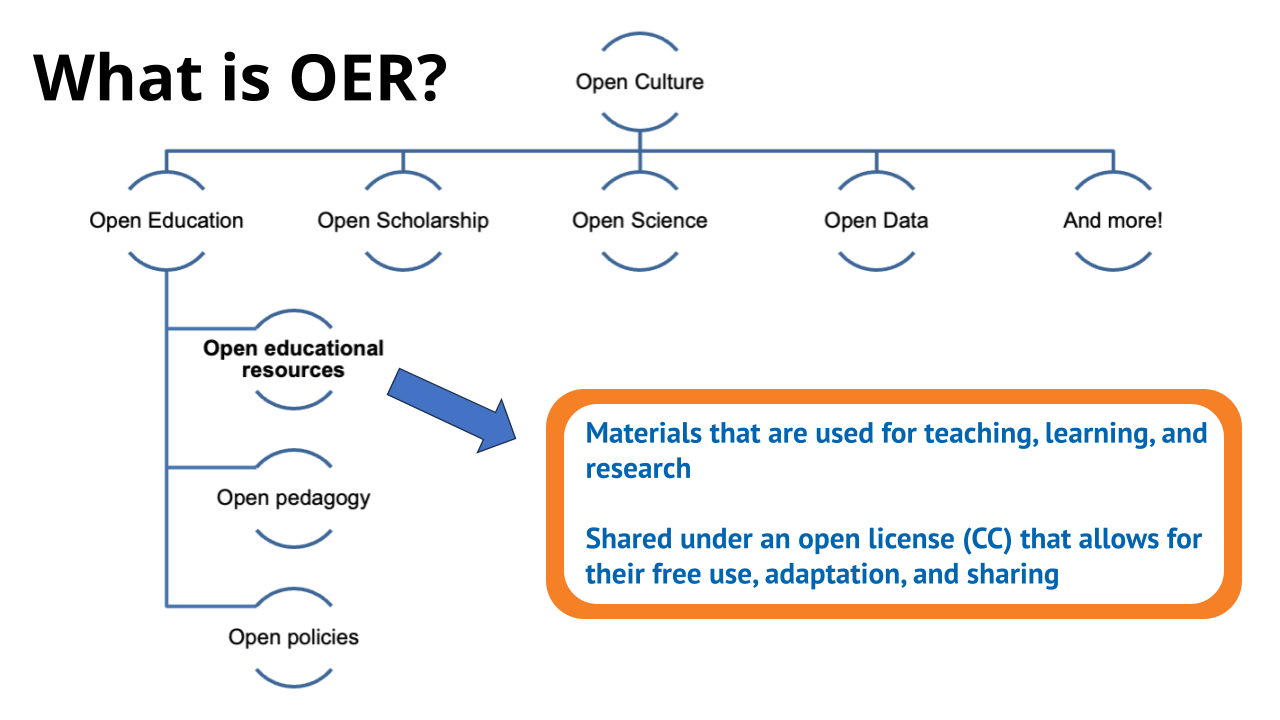
Definition of Open Educational Resources
However, as my understanding of the open movement and its pedagogy deepens, I'm discovering an array of benefits that extend far beyond mere cost savings. My dialogues with faculty members reveal a shared enthusiasm for adopting, remixing, and creating OER not only as a cost-effective measure but as a way to tailor and contextualize their courses. This custom approach lends itself to a more personal, relevant educational experience.
Personalizing Learning: The OER Approach at UTA
There's a palpable desire among educators to expand their students' horizons. They seek to afford their pupils global exposure for their research and scholarship, even at the undergraduate level. It's heartening to witness faculty facilitating opportunities for students to graduate from UTA as published OER authors—authors whose works will resonate and be utilized by a global audience of students, educators, and community members.
Many faculty members are actively identifying and bridging gaps in available resources within their fields. They strive to infuse their disciplines with diverse perspectives, to amplify marginalized voices, and to ensure that human consideration triumphs over stagnant theory.
Human-Centric Education: The Core of Open Philosophy
When faculty members choose to engage with OER, they send a powerful message to their students: You are seen, you are valued, and you matter. It's this human-centric ethos that makes students feel truly acknowledged and cared for within their educational journey.
In my dialogue with students, the value of Open Educational Resources in shaping their learning is unmistakable. They’ve expressed how OER not only makes education more accessible but deeply resonates with their personal and academic narratives. This shift from passive absorption to active engagement in their educational materials is revolutionary. It reaffirms our mission at UTA: to create an inclusive and innovative academic environment where every student is acknowledged, valued, and empowered to contribute to the ever-evolving landscape of knowledge.
This is the conversation I wish to further, exploring the human impact of OER, learning from others, and spreading the word about these profound benefits. It’s not just about the resources; it’s about the people they empower and the lives they touch.
Starting Small: A Guide to Embracing Open
I want to share a book recommendation, Open: The Philosophy and Practices that are Revolutionizing Education and Science (2017) by Rajiv S. Jhangiani and Robert Biswas-Diener. The entire book is Open Access (free to read) and absolutely worth reading in its entirety. I don’t want anyone to not join this conversation because they don’t want to read a book. It is okay to start small. These are the chapters I suggest to faculty when they are brand new OER:
Introduction to Open (pp. 3-8)
Openness and the Transformation of Education and Schooling (pp. 43-66)
After engaging with these three chapters, I suggest exploring the other chapter titles and following what interests you.
From an educator’s perspective, I love that I am able to piece apart this book and share it with others in a way I feel would make sense. It allows me to tailor the support and collaboration I can provide. Educators can harness the flexibility of certain Creative Commons licenses to dissect and link directly to specific sections of openly licensed materials, tailoring the resources to their teaching needs.
I invite your reflection and dialogue:
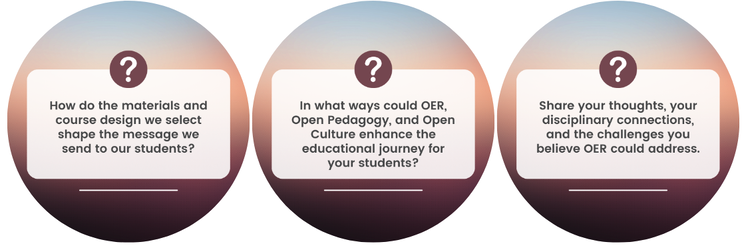
How do the materials and course design we select shape the message we send to our students?
In what ways could OER, Open Pedagogy, and Open Culture enhance the educational journey for your students?
Share your thoughts, your disciplinary connections, and the challenges you believe OER could address.
As an OER Librarian, I’m here to dive deep into the world of open education and bring back what you need most. What are you curious about? What challenges can I help you tackle through research and insights? Let me know what topics you’d like to see covered in this newsletter. Your feedback will shape our content, ensuring it’s always relevant and useful. Let’s learn and grow together in this exciting field of open education.
Final Notes: Ethical AI Use in Our Newsletter
In the creation of this newsletter, I am committed to the ethical use of artificial intelligence (AI) as a tool to enhance our exploration of Open Educational Resources (OER). I use AI responsibly to refine content, generate ideas, and ensure clarity and engagement in our discussions. However, I always ensure that the final content aligns with our core values of transparency, accuracy, and inclusivity.
I believe in harnessing the capabilities of AI to complement our human creativity and intelligence, not replace it. Each piece of content is carefully reviewed to ensure it reflects the genuine experiences and needs of our community. This approach helps us maintain the integrity of the information shared and ensures that our newsletter remains a trustworthy and valuable resource for everyone interested in the vibrant field of open education.
Your thoughts and feedback are invaluable to this process, helping us refine and improve our use of AI in creating a newsletter that truly resonates with and serves our community. Let’s continue to explore the potential of open education together, supported by the best tools available, used wisely and ethically.
Resources & Links
The Imagine If... thinking routine was developed by Project Zero, a research center at the Harvard Graduate School of Education.
Open: The Philosophy and Practices that are Revolutionizing Education and Science on JSTOR. (2024). Retrieved 20 April 2024, from https://www.jstor.org/stable/j.ctv3t5qh3
Student Voices: Embracing Open Educational Resources at UTA | UTA Libraries. (2024). Retrieved 20 April 2024, from https://libraries.uta.edu/news-events/blog/student-voices-embracing-open-educational-resources-uta
Zara, M., Streeter, S., Allen, L., & Rowe-Morris, M. (2024). OER @ UTA [Google Slides]. UTA Libraries, The University of Texas at Arlington. https://docs.google.com/presentation/d/1VdAy-1tkgnCEUtnyhelxpxrITJTU5K0t7j0BLccotYQ/edit?usp=sharing