Beyond Access: Reclaiming the Human Core of Open Education
Finding My Way Back
It’s been a while since I’ve written here. This year has been full of motion, program re-evaluation, strategic pivots, and navigating the political and financial headwinds shaping higher education right now.
Amid all that change, I began a new chapter this fall as a Year 2 Texas Higher Education Coordinating Board OER (Open Educational Resources) Fellow. The fellowship is already providing incredible support, community, and guidance as I lead major transitions in UTA’s open education work.
Being part of this statewide network of educators and librarians who believe the future of Texas education is open has re-energized my purpose and grounded my next steps. The reflection below captures where that journey is taking me.
OER are the tools. Open Education Is a Practice.
Last week in Austin, I joined my peers for the Year 2 Texas OER Fellowship meeting, led by the Texas Higher Education Coordinating Board’s Division of Digital Learning and the Institute for the Study of Knowledge Management in Education (ISKME). The fellowship’s vision is simple and ambitious: the future of Texas education is open, and we get there together.
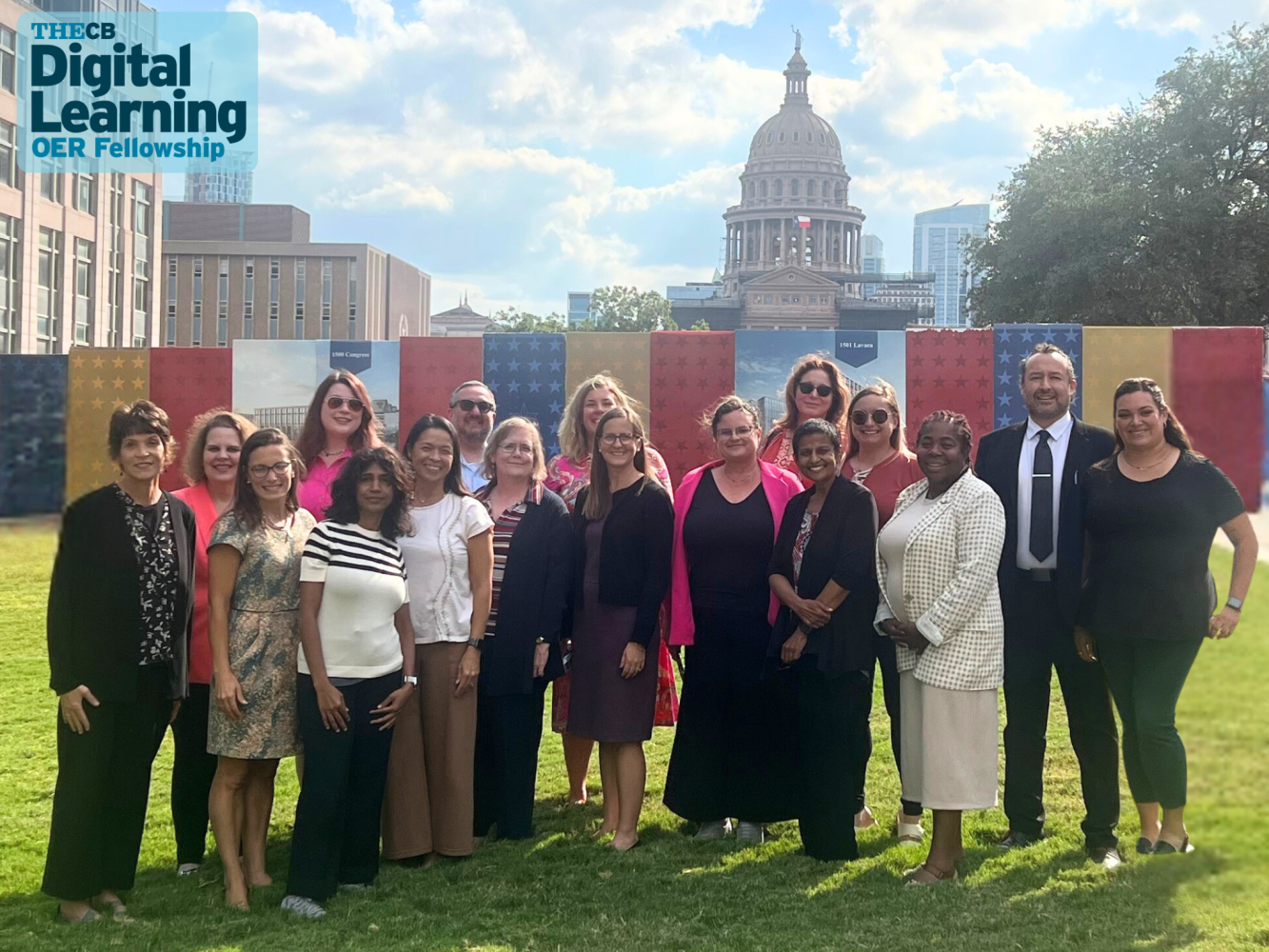
The 2025 Texas OER Fellowship Year 2 cohort, joined by leaders from the Texas Higher Education Coordinated Board and ISKME, gathered in Austin to collaborate on advancing open education across the state.
For me, this gathering felt less like a conference and more like a mirror. My capstone project was already in motion long before I applied for the fellowship. Since becoming the Open Educational Resources Librarian at the The University of Texas at Arlington in October 2023, I’ve been navigating what it means to build, and rebuild, an open education culture that’s human first, tool second.
From Foundations to Fulfillment
UTA has been a leader in open education since 2017. Our OER publishing platform, Mavs Open Press, has produced numerous faculty-authored open textbooks. The university invests more than $400,000 annually to sustain this work, a remarkable commitment from leadership that has made OER adoption both possible and practical.
When I stepped into this role, I was new to OER and academic librarianship but not to the values that underpin them. My background is in public education, literacy, and learning. I’ve always been drawn to the kind of teaching that centers people, their access, their identities, and their capacity to grow when seen and supported. As a first-generation college student and a former Angel Tree kid, I know firsthand how access and belonging change lives. Open education feels like a way to repair what I once needed most.
The Research: Beyond Cost Savings
As I deepened my understanding of OER, I began noticing a pattern: much of the conversation stops at affordability and access. Yet the research shows that’s only the beginning.
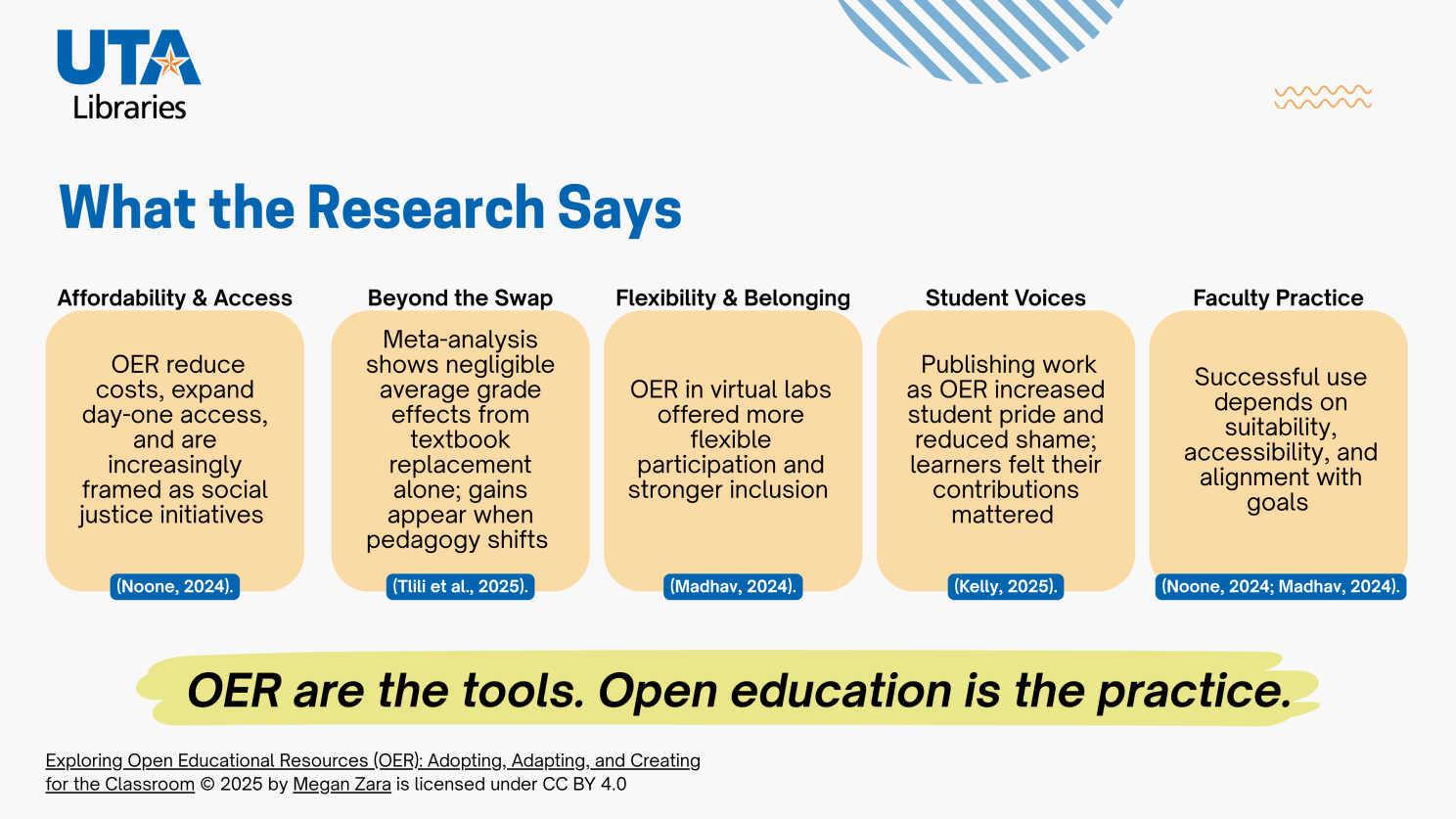
Recent studies highlight that while OER adoption continues to expand affordability and access, the most significant gains occur when open pedagogy shifts practices, fosters belonging, and centers student voices.
Affordability & Access: OER reduce costs, expand day-one access, and are increasingly framed as social justice initiatives (Noone, 2024).
Beyond the Swap: Meta-analyses show negligible grade impacts from simple textbook replacement alone; gains appear when pedagogy shifts (Tlili et al., 2025).
Flexibility & Belonging: In virtual labs, OER enabled more flexible participation and stronger inclusion (Madhav, 2024).
Student Voices: When students published their work as OER, they reported more pride and less shame in learning (Kelly, 2025).
Faculty Practice: Successful OER use depends on alignment with accessibility, suitability, and goals (Noone, 2024; Madhav, 2024).
The takeaway is clear: OER are the tools. Open education is the practice.
Centering the Missing Stakeholders
As encouraging as this research is, one group has been largely missing from the center of the conversation: students. For years, open education efforts have focused on faculty adoption, publishing infrastructure, and institutional support. Only recently have I seen a meaningful uptick in studies, conference sessions, and community discussions acknowledging students as co-creators, not just beneficiaries.
At UTA, that gap is clear. Many students still don’t know what OER are or that their professors can choose free, high-quality materials. Bringing them into the movement, not just as users but as partners, is essential if we want open education to fulfill its promise of equity and belonging.
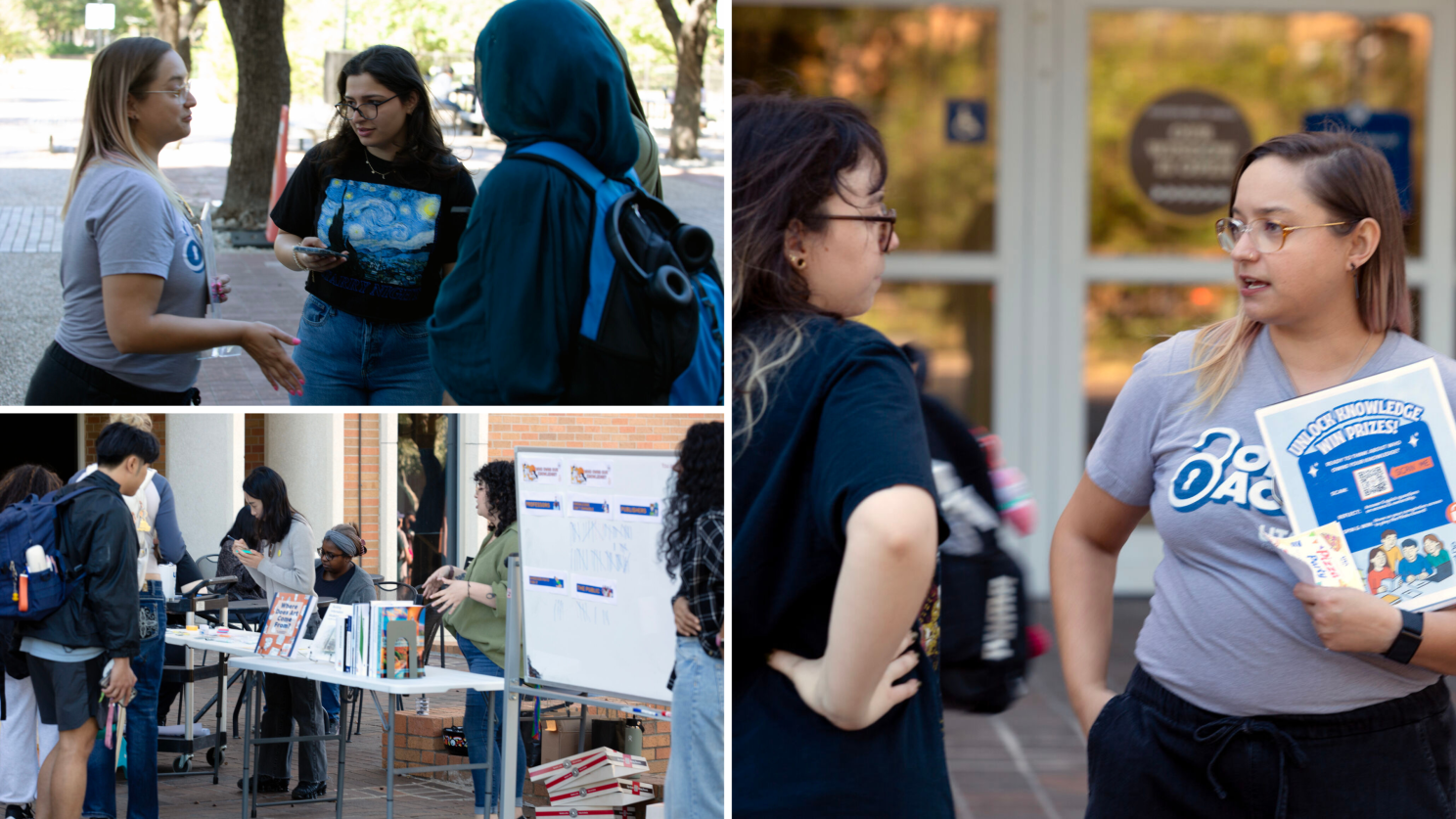
At UTA's Open Access Week 2025 event, "Who Owns Our Knowledge?", students paused between classes to talk about what it means to create, share, and access knowledge freely (and for a free donut).
My team and I have been working to close that gap. We recently submitted a lightning talk for the 2025 Open Education Conference in Denver, Colorado, where I’ll be heading next week to dive deeper into the learning and community around open education. Our talk highlights how we’ve begun shifting our outreach to intentionally include students, inviting them to see themselves not just as learners but as active participants in shaping what openness means at UTA.
From Tools to Trust
At UTA, we’ve long led with the tools, funding, publishing, and adoption support, and then circled back to the practice. It works, but only on the surface. The more profound transformation comes when faculty and students connect through openness as a shared practice, not a one-time act of substitution.
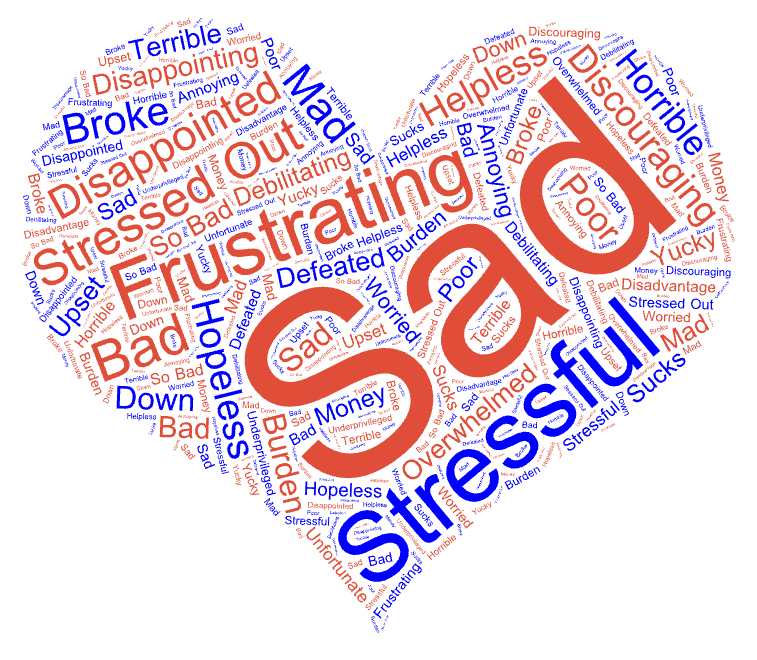
"Words of Despair Wordcloud" Wordcloud from 64 student responses describing how it feels to be unable to afford course material. "Sad", Frustrating", and "Stressful" were the most frequent words shared.
When I speak with students about OER, the gap becomes visible. Many have never heard the term. When they learn that faculty can choose free, high-quality materials instead of commercial textbooks, their reactions range from awe to frustration. Some realize a professor already made that choice for them, silently and generously, and it changes how they see their learning environment. That single decision builds trust, safety, and community before a word of instruction is ever spoken.
The Human Core of Open Education
The fellowship reinforced what I already sensed: open education isn’t just an access movement. It’s a human movement. It thrives on vulnerability, connection, and care, the same qualities that excellent teaching has always required.
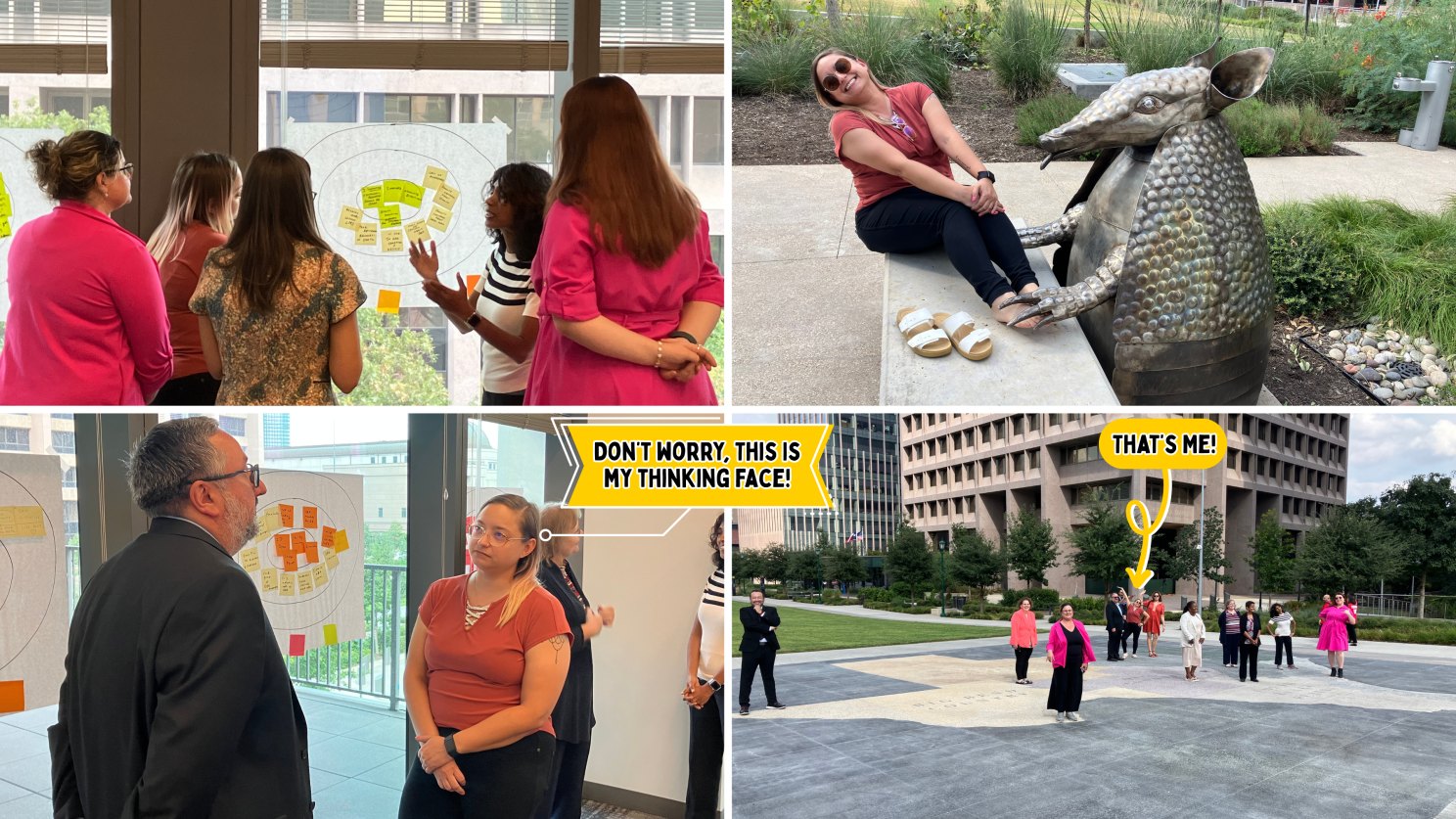
Moments from the THECB OER Fellowship Year 2 Kickoff in Austin, Texas. Thinking hard, learning deeply, and finding joy in the community shaping the future of Open Education in Texas.
I see my role as a lead learner, not as an expert or gatekeeper, drawing on Kouzes and Posner’s Five Practices of Exemplary Leadership and Brené Brown’s research on shame and vulnerability. I build capacity, not dependence. Every project, conversation, and resource begins with a question: are people’s basic and psychological needs met enough to engage, contribute, and thrive? It’s my quiet version of Maslow’s hierarchy, always in the background.
My Capstone: Sharing Openly, Building Collectively
My capstone project embodies this philosophy. With my graduate research assistants, we're developing a research-informed, openly licensed Canvas course designed to build understanding of open education as both practice and mindset. The course will be freely available to anyone with an internet connection and sharable for reuse or remix across institutions and communities.
This work represents the next evolution of UTA’s open education journey, one that moves from implementation to transformation, from cost savings to connection, and from adoption to agency.
We are building something iterative, imperfect, and alive. As Maya Angelou reminds us, "Do the best you can until you know better. Then, when you know better, do better."
Open Education is how we do better together.
#OpenEducation #OER #HigherEd #HumanizingEducation #EquityInEducation #InclusiveTeaching #BelongingInLearning #StudentSuccess #TexasOERFellows #OpenPedagogy #DigitalLearning
References
Colvard, N. B., Watson, C. E., & Park, H. (n.d.). The Impact of Open Educational Resources on Various Student Success Metrics.
Kelly, A. E. (n.d.). Students as Co-Authors: Achievement Emotions, Beliefs About Writing, and OER Publishing Decisions. Open Praxis.
Madhav, N. (2024). Optimising Open Educational Resources and practises to Enable Inclusive Education. Teacher Education through Flexible Learning in Africa (TETFLE), 6, 165–184. https://doi.org/10.35293/tetfle.v6i1.5040
Noone, J., Champieux, R., Taha, A., Gran-Moravec, M., Hatfield, L., Cronin, S., & Shoemaker, R. (2024). Implementing open educational resources: Lessons learned. Journal of Professional Nursing, 55, 65–69. https://doi.org/10.1016/j.profnurs.2024.08.005
Rampelt, F., Ruppert, R., Schleiss, J., Mah, D.-K., Bata, K., & Egloffstein, M. (2025). How Do AI Educators Use Open Educational Resources? A Cross-Sectoral Case Study on OER for AI Education | Open Praxis. https://doi.org/10.55982/openpraxis.17.1.766
Tlili, A., Zhang, X., Lampropoulos, G., Salha, S., Garzón, J., Bozkurt, A., Huang, R., & Burgos, D. (2025). Uncovering the black box effect of Open Educational Resources (OER) and practices (OEP): A meta-analysis and meta-synthesis from the perspective of activity theory. Humanities and Social Sciences Communications, 12(1), 504. https://doi.org/10.1057/s41599-025-04644-y
Photos
All photos featured in this article were taken/created by me or shared with permission for open use and publication.
AI Acknowledgment
I use AI as a writing assistant and thought partner in both my personal and professional work. My process begins with original, freeform writing, which I then refine with AI support for grammar, organization, and flow. According to GAIDeT principles, generative AI tools were used under full human supervision for these limited editorial tasks. Responsibility for all research, verification, and final content rests entirely with me as the author.
Author’s Disclaimer
These reflections are my own and shared from my personal account. They don’t represent the official views or policies of the University of Texas at Arlington, but they do reflect the heart and curiosity I bring to my work there.