Leading Authentically: Humanness, Wolves, Frameworks, and Lived Experience
“Leadership isn’t a title, it’s a practice. If you care about people, you’re already leading.”
This began as a reflection prompt for my Texas Higher Education Coordinating Board OER Fellowship and turned into something truer: a field guide to how I lead, where I am strong, and where I am still growing. Writing it grounded my values, clarified my style, and named the patterns I keep practicing. It is also an invitation. If you care about learning, you are already leading, title or not. This is my map: back-of-the-pack and willing to go back in, honest about mental health and energy, committed to small experiments that make work humane and useful. I hope it helps you name your own shape of leadership.
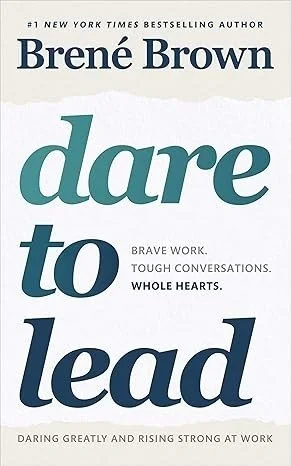
Dare to Lead: Brave Work. Tough Conversations. Whole Hearts. By Brené Brown (2018)
If there’s a compass for this work, it’s Brené Brown’s take on daring leadership. Her research, and honestly, her whole body of work, is transformative. I just finished Brené's book, Dare to Lead, and it really did land like a leadership reset, "back to the roots", as she mentions in the book. Her research insists that brave work, tough conversations, and whole hearts belong together. In the Dare to Lead frame, vulnerability and accountability aren’t opposites; they travel as companions. Every time I read her work, I change a little. I become more me. Dare to Lead doesn’t merely humanize leadership, it dares leaders to be human, treat people like humans, and build organizations for real humans. Brené teaches through her own arena moments and rumbles, with a mix of compassion and skill-based practicality that’s soft and useful, and a strong leader showing us how it's done.
My current read, Strong Ground: The Lessons of Daring Leadership, the Tenacity of Paradox, and the Wisdom of the Human Spirit, also written by Brené Brown, is the "not-a-sequal" next read after Dare to Lead. I want to be sure to clarify that you do not have to have read Dare to Lead in order to understand and learn from Strong Ground. Brené is so wonderful about updating her ideas and research across her books and writing so that any of her books can truly be read on its own.
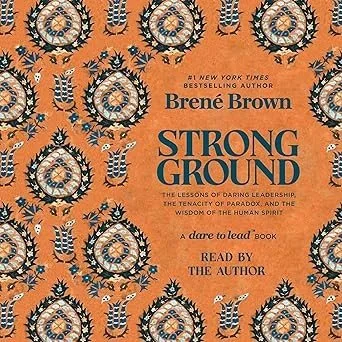
Strong Ground: The Lessons of Daring Leadership, Tenacity of Paradox, and the Wisdom of the Human Spirit, by Brené Brown (2025)
Rising Strong teaches us that we can live and work inside paradox—honestly, we have to—to reach a human level of leadership. Be both compassionate and logical. Build organizations that are financially sustainable and productive and truly supportive of employee mental health and well-being. I see leadership as a dare to be authentically ourselves first. Know who you are so you can lead from that grounded place. Let words match actions; that’s how we model integrity for the people who look to us for guidance.
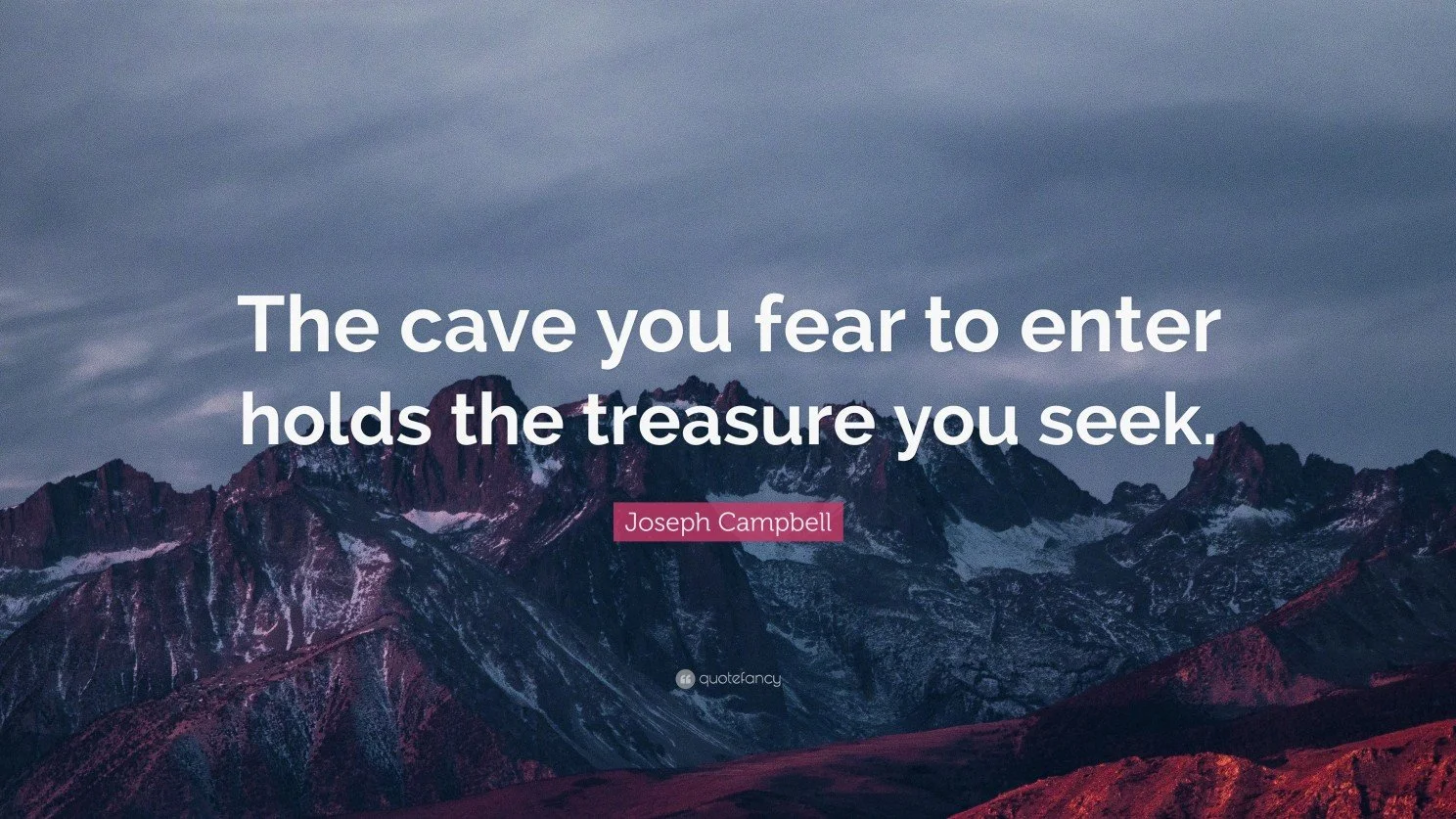
Someone is always watching, relying, hoping you’ll go first, a class, a colleague, a kid. Brené Brown often shares the line attributed to Joseph Campbell, “The cave you fear to enter holds the treasure you seek,” and that image fits this season of my work. I do a lot of things I’m afraid to do. Over and over, the things that scared me most have offered the richest learning—terrifying and wonderful, humbling and expansive.
Leaning into discomfort, the unknown, the vulnerable, and the scary has the power to bring real joy to our lives and the lives of others. For everyone’s good, we need leaders with the courage, vision, heart, and discipline to embrace vulnerability, and to invite others to do the same. That’s how the world changes.
Led and Seen: A Leader Who Dared
Reading Brené always sends me back to the leaders who taught me how to lead, for better and for worse. Many of us have served under people who never really saw us. We were a number, a data point, a problem to be fixed. The ask was always “improve yourself,” instead of “let me examine how I lead.” That experience shaped me as much as anything I’ve studied.
I learned a different way from an early mentor, Dr. Shawn Perry. I am not someone who fits neatly inside systems. I live with real mental health challenges that can make ordinary days heavier than they look from the outside. I have spent years balancing optics and authenticity, learning when to ask for what I need even when it breaks the script, and choosing to try new things because I am wired for innovation. Systems that do not allow room for dreaming and creativity choke off the very oxygen of improvement. Shawn did not fit neatly either. He shares stories about the educators who saw him, and that is the crux: people need leaders who see them as they are and value what they bring, even when it is not tidy.
When Shawn opened Trent Middle School in Frisco ISD in 2015, I joined the founding staff. First I taught sixth grade English and Reading, then Technology Applications. Trent’s mascot is the timberwolf, and Shawn built a culture around how real wolves travel.
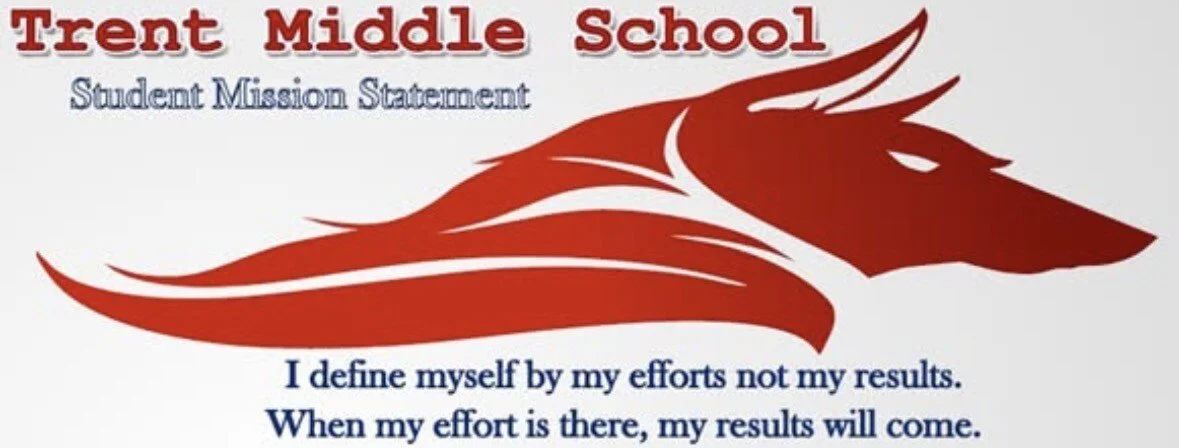
Trent Middle School's Student Mission Statement (Frisco, Texas)
Wolves move together. The strong set a sustainable pace. Elders watch the rear. The pack rotates effort so no one burns out. The young are kept in the safe middle. Our core values were Purpose, Attitude, Commitment, and Kindness. They were practice, not just posters. Shawn led from the back of the pack. He was steady and empathetic. He taught from lived experience and guided without grandstanding. Under that kind of leadership I took brave swings and still felt safe. In three fast years I had a baby, worked full time, finished a master’s degree in Literacy and Learning from Texas Woman's University with a 4.0, earned a new certification in Early Child-Adult Technology Applications, shifted to teaching a brand-new subject, discovered a love for teaching peers, wrote district curriculum, served as electives team lead and campus technology chair, and eventually moved into a district Digital Learning Coach role. I grew without losing myself or my family. I did not realize how much happened in such a shprt time until I wrote it down for this piece. Shawn's leadership gave me space to grow, the leverage and courage to take calculated risks (failure was going to be okay), and take care of myself and family.
One moment captures how Shawn held paradox. I was pregnant with my son and the weight of teaching a tested subject (ELAR) felt heavy. The Tech Apps teacher was moving away and that role fit my strengths and was not a state tested subject. To offer me the job, I needed to pass the certification exam, but timing was tight. My son arrived in March 2016. The opening surfaced late spring. The earliest test date was May, yet he needed to staff English sooner. Shawn offered this: if I passed, Tech Apps was mine. If I did not, I would step into a split English assignment to fill a gap. The offer was more than fair. More than that, I trusted him to support me either way. He was protecting the campus and making space for me to try something new. That is leadership inside paradox.
Shawn also modeled authenticity from day one. He built community from what could be, not what had been. He is a huge Star Wars fan, and some of my warmest memories are of him walking the halls in an Obi-Wan cape with a lightsaber, doing principal things while being fully himself. That kind of realness gave the rest of us permission to bring our full selves too.
Many of the people he invested in are still at Trent. He now leads Frisco High School, and I am proud to call him a mentor, colleague, and friend. What means the most is that he kept reaching out—years after I left Trent. He remembered me. He remembers me. That continued care makes me feel deeply seen, and it’s a model I carry forward. When I picture the leaders worth learning from, I see Shawn and the community he made. I work to lead like that every day.
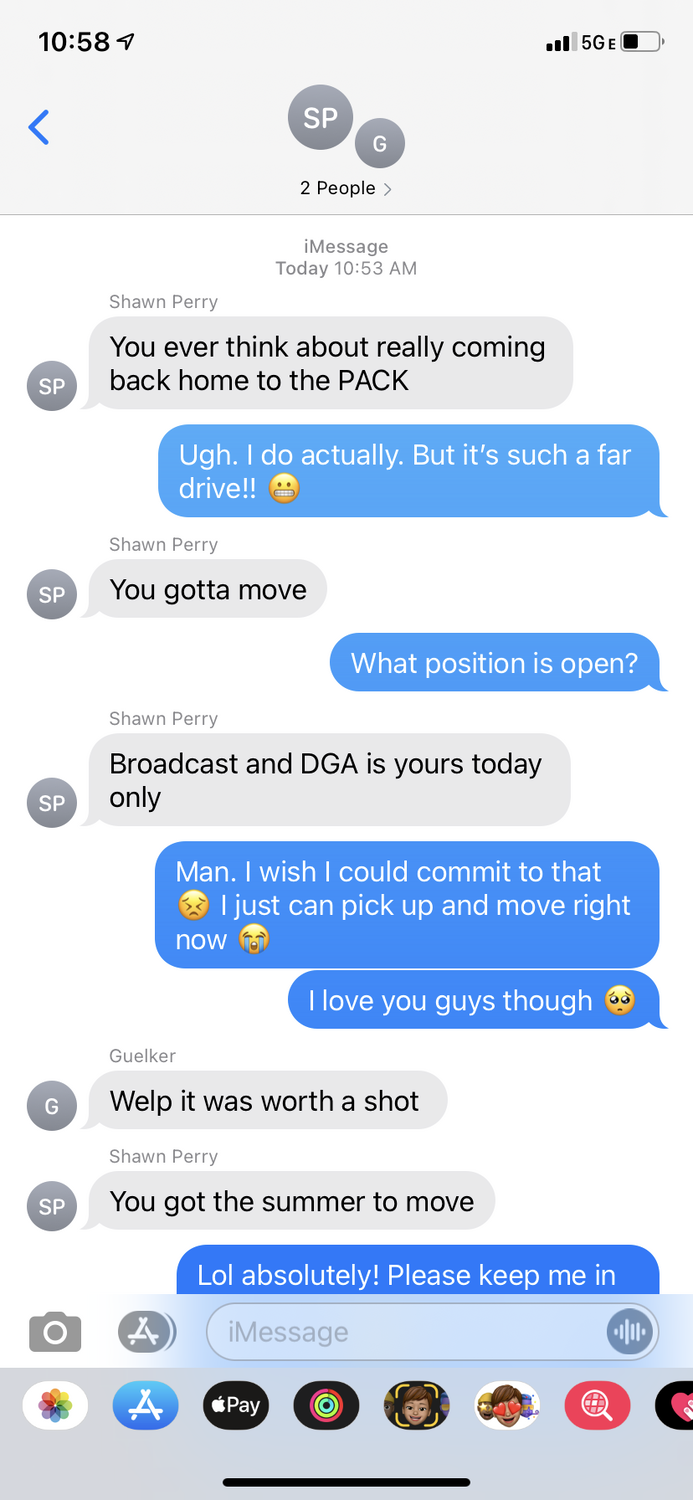
Text to me from Shawn and my fantastic AP Jeff Guekler, June 2021
The Throughline of My Career
I am a “go-back-in” leader. I lead from lived experience, and I want my hands in the work I ask others to do. If I find a door out of the smoke, I turn around and walk people through it. That’s been the pattern across my career in public K–12 and higher ed: middle school teacher, district curriculum writer, digital learning specialist, PD designer and facilitator, committee chair, and now OER librarian. I choose roles that let me be the adult I needed—and, if I’m honest, the one I still need. My work is to build spaces where people can think clearly, tell the truth without penalty, and leave with one useful thing for tomorrow.
Underneath that is a simple belief: people have innate worth exactly as they are. I have a soft spot for those who don’t fit neatly, which is most of us. The systems we inherit out of tradition often don’t fit real humans. My purpose feels bigger than any single classroom: revise, dismantle, enhance, and create systems that are truly for people. I learned early that the quickest route to human systems is authentic, interdisciplinary partnership—aligning what students do with how teachers teach so time isn’t wasted and learning is real.
English + Tech Apps = real writing When I taught English, I’d reserve computers for two or three days just so students could type essays—days of typing with no new learning. After I moved into Technology Applications, I rewired the pattern. I aligned my word-processing standards with the English team’s units so the writing process flowed across our rooms: students drafted in English, then came to my class to format, revise, and publish. We split assessment on purpose—I graded format and mechanics; the English teacher graded content and ideas—so feedback stayed targeted and English teachers stopped losing content days to typing. Same essays, same kids; now “tech time” meant skill growth, not just keystrokes.
Science + Spreadsheets = real data We used the same braid with science. Students finished a physics lab with numbers in a notebook—useful, but stuck on paper. I timed my spreadsheets unit to their lab cycle. They brought data to my room, entered it into a sheet, checked calculations, and built graphs that echoed (and sometimes corrected) their hand-drawn versions. Again, we split the lift—I assessed technical accuracy and visualization; science assessed concepts and conclusions—so every minute at a computer served both classes. Suddenly, technology wasn’t a separate event; it was sense-making.
Those partnerships taught me what I practice now: connect with people, align systems, and make the complex usable. The scale kept widening, and I stayed close to the work. As an English teacher my circle was about 75 students a year; in Tech Apps it jumped to roughly 300. As a Digital Learning Specialist in Frisco ISD, I served two full campuses (about 50–60 staff and 600–800 students each), piloted Canvas LMS at both middle schools, and helped shape Canvas onboarding for the district—tens of thousands of faculty, staff, and students felt the ripple. In Fort Worth ISD, I supported 10 schools (2 high schools, 2 middle schools, 6 elementary) and co-led the Campus Technology Liaison program—one liaison from each of 200+ campuses—so our touchpoint became the whole district (around 80,000 people). I also helped bring Canvas to FWISD, carrying lessons from Frisco so the rollout felt more humane and more useful.
Now, as the Open Education Resources Librarian at UTA, my campus community is 40,000 strong, and my circle keeps expanding. I’m finding rooms that fit me at the state level through THECB’s OER Fellowship and at the national level as I lean into the Open Education Network’s and Open Education Association’s early work to shape a movement for literally everyone. My direct stakeholders are learners, and everyone is a learner.
I’ve watched my impact grow and it’s deeply rewarding, not because the numbers are big, but because the work stayed in the trenches with real people. I don’t chase leadership; I follow the work I love, and leadership finds me. As the circle widens, I want language for why this path fits. In standardized spaces, I used to stay quiet and hide my “weird” ideas, and I felt wrong there, until I experienced different leadership. Now I speak up. I share my ideas and thought process openly, explain my rationale, and connect with people on a human level—empathy, heart, and workable ideas. That’s what people follow.
Personality frameworks keep showing me I’m a little different, and that difference serves the work. Studying myself as a leader through structured reflection grounds me and clarifies my practice.To ground that growth in language, I mapped my leadership through a few lenses: Big Five, MBTI, Enneagram, CliftonStrengths, True Colors, and a bit of astrology for tone and whimsy.
Why These Lenses, Why Now
I wanted language for the person I am while I’m doing the work. So I reached for a small constellation of lenses that see me from different angles:
Big Five for how I tend to move through the world.
Myers–Briggs (MBTI) for how I take in information and make decisions.
Enneagram for what drives me at the core.
CliftonStrengths for where my natural value-creation lives.
True Colors for my temperament’s hue.
Astrology for style, story, and a little cosmic seasoning.
These aren’t verdicts or boxes to be put into. They’re mirrors, tools to spot patterns, name the edges where I’m still growing, and design a kinder way to lead. Each one offers a different kind of truth: data about tendencies, language for motivation, clues about how I create value, and reminders about tone and presence. Taken together, they help me align how I show up with what I care about: human-centered systems, brave conversations, and work that leaves people better than it found them.
Here’s how those mirrors read for me, then how that shows up in practice.
Big Five
The Big Five is a map of five currents—Openness, Conscientiousness, Extraversion, Agreeableness, Negative Emotionality—and I’m mostly wind and water. Very high Openness shows up as dot-connecting, one of my favorite skills. I listen for the space between people’s words, notice patterns, and use them to shape how I partner. The outcome is that lightbulb moment educators live for. Lower Conscientiousness and Extraversion mean I prefer light scaffolding and smaller rooms where thinking can breathe. Ideas and innovation need space and safety; I do my best work with independent time and right-sized groups.
Higher Agreeableness keeps me tuned to people, and my moderate sensitivity to stress helps me catch pressure early. I’m always listening for where the human experience can be improved, scanning for quiet grinds that stall progress. Support that fits my wiring is simple and kind: a clear definition of done, a gentle update rhythm, and shared templates that hold shape without choking creativity.
Myers–Briggs (INFP)
As an INFP, the Mediator, I move from meaning first. I hold a strong why, translate complexity into plain speech, and choose experiments that won’t harm belonging. This is my yearning for authenticity coming through: everyone deserves to live and work as themselves. I love creating pathways that make authenticity possible, turning “complicated” into “understandable” without flattening nuance.
When I falter, it’s usually because I’m looking for the kindest path for everyone and the decision lingers. I believe real leadership lives inside paradox (thank you, Brené), and sometimes I lean a bit more toward care than function. Returning to my why, and asking, vulnerably, “Who does this benefit and who might this harm?” helps me make efficient, functional, compassionate decisions. Possibilities that help: deadlines with grace, invite fast feedback, and let “good enough for now” be part of a humane process.
Enneagram (Type 4)
Fours, the Individualist, are built for depth and authenticity. We notice what’s missing and give it language. That’s me when I protect the soul of the work, surface the unsaid, and make room for honest expression. On thin-energy days, comparison or “too much” can creep in, and imposter feelings hover around corners, especially when belonging matters as much as it does to me.
My move is to alchemize feeling into a design prompt: name what’s real, set a short window, and let making carry me forward so the group keeps moving too. Authenticity isn’t a vibe for me; it’s a mental-health practice. I don’t only want to “fit in,” I want to belong, as myself, and help others belong as themselves.
CliftonStrengths
My top strengths, Connectedness, Strategic, Input, Intellection, and Ideation, explain how I create value. I see the system and the pain points, pick the lever, curate resources, think deeply, and generate options. That’s why I build templates, toolkits, and guides, and why I love small public pilots. The flip side is real: I can stack ideas without closure or research past usefulness. I am an overthinker and overplanner who can get stuck at the panoramic view.
I’m learning to do less and do it better; slow down to move well. Gentle rails help: distill many ideas into one testable plan, name tradeoffs out loud, and pause long enough to bring people with me. I’m not perfect at this, and teammates who are strong executors propel the work forward in ways I’m grateful for.
True Colors (Green)
Green is analytic, conceptual, future-facing. When things get messy, my Green steadies the table with models, visuals, and simple rules of thumb people can use tomorrow. The edge is that clarity can read as cool, or aloof, when I’m actually holding the room calm. So I practice warm clarity: pair logic with care, check for understanding, and make sure people feel seen before we move.
This also captures my commitment to objectivity without losing humanity. I try to see and hear people exactly as they are, while remembering difference is real and context matters. And I keep building artifacts—guides, visuals, scaffolds—that widen access so more people can engage fully.
Astrology, for Style and Spice
Aquarius Sun, Leo Moon, Pisces Rising—air for ideas, fire for heart, water for presence. My operating system runs on crosswinds and compassion: build better systems for humans (Aquarius), offer sincere recognition and creative light (Leo), read rooms like weather and soften sharp edges (Pisces). Not fate, just flavor, and it seems to tracks.
For the astro-nerds: January Aquarians (hello, January 23) carry the classic signatures—humanitarian focus, principled independence, pattern-thinking, future-building—tempered by winter steadiness that reads as calm conviction. However, Aquarians are ruled by two very different planets: Saturn (structure, responsibility, long-game discipline) plus Uranus (disruption, originality, sudden insights). That mix makes me the go-to weirdo with a kind heart and good intentions: I’ll design a sensible scaffold (Saturn) and then rewire it on the fly when a better pattern appears (Uranus).
It mirrors the rest of my profile, the systems lens of Connectedness/Strategic, the authenticity of Enneagram 4 and INFP, the Green preference for models that help people. Big-picture air, warm-hearted fire, ocean-sensing intuition, all pointed at building kinder systems that actually work.
Common Threads
Across every lens, one word keeps ringing: authenticity. I lead best when I am fully myself and make room for others to be fully themselves. I’m a pattern-finder and a meaning-maker, especially of the unseen patterns that stall momentum: the quiet frictions, the unspoken rules, the “we’ve always done it this way” habits. I listen between the lines, translate complexity into something usable, and aim my care at the edges where people are most likely to be missed. I’m steady in complexity and biased toward small, teachable experiments that turn good intentions into visible progress. Back-of-the-pack leadership, go-back-in courage, and a systems lens tie it together: protect the humans, test the path, share what works.
The growth thread is consistent, too: structure that holds without choking, communication that travels without fanfare, and honest energy stewardship, especially on days when the inside weather is loud or invisible. I’m learning to right-size scaffolding, to signal wins sooner, and to pace myself and teams with grace. The commitment underneath: keep the work human, keep the feedback specific, and keep showing up as the same person in every room—so trust has somewhere solid to stand.
Lived Experience, Mental Health, and the Growth Lane
My leadership is braided with mental health and disability. I have sat in rooms where support arrived only after I performed struggle loudly enough to be believed. If I am well managed and the surface looks tidy while I am running on fumes, masking can “prove” I never needed help. That paradox shapes how I lead. I set boundaries out loud, normalize recovery for everyone, and ask about energy and focus alongside tasks. On anxious or depleted days, growth areas are not theoretical. They are felt in the body. So I move gently, tell the truth about capacity, and build processes that do not punish people for being human.
The lenses above help me name why this is real. Big Five sensitivity means I notice pressure early but can also carry it quietly. INFP values-first wiring makes me hesitate while I scan for the kindest path, which can delay decisions when my energy is low. Enneagram 4 depth brings honesty and meaning, and it also invites comparison or “too much” when belonging feels fragile. Green’s calm logic steadies a room, yet it can read as cool if I forget to show warmth. Even my Aquarius mix of Saturn and Uranus shows up here. I can build a careful scaffold and then feel pulled to rethink it overnight, which is thrilling for me and tiring for teams. None of this is a flaw to hide. It is information. Helpful possibilities for me include right-size scaffolding, short visible updates, decision windows with grace, and pairing with executors who love checklists. The promise I make to my teams is simple. We will protect the human layer while we do excellent work, and we will design for health as if it is a requirement, not a perk.
Five Practices [Already] in My Hands
In early October, our THECB OER Fellows gathered in Austin to kick off eight months of collaboration—strategy, shared learning, and capstone projects we’ll hand back to the world. We were introduced to The Leadership Challenge research, and it felt like a checklist I’ve been quietly following for years. Kouzes and Posner distilled thousands of “personal-best” stories into five observable practices that show up when people do their best work together.
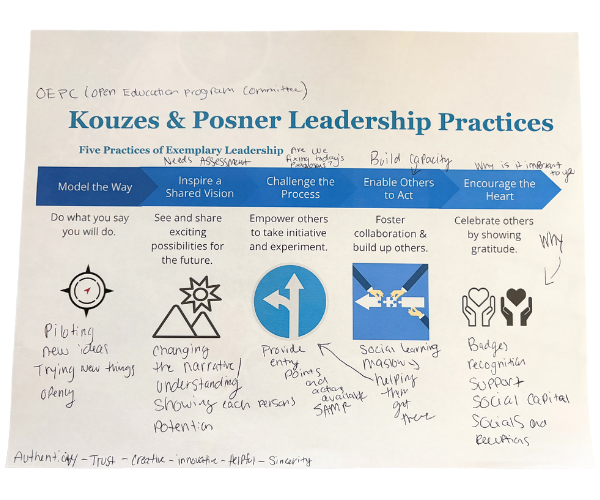
Handout THECB OER Year 2 Fellows received at our kick-off meeting in Austin, Tx, on October 16th & 17th, 2025.
Here’s how those practices translate for me:
Model the Way. Do what you say you’ll do. I show my work, keep promises visible, and make criteria inspectable so trust has something solid to stand on.
Inspire a Shared Vision. Share what could be and invite co-authors, not spectators. I name the future I (try to) see, connect it to lived experience, and hand others the pen.
Challenge the Process. Pilot new ideas. I work to treat constraints as creative prompts, failure as iterations, learn in public, and retire what doesn’t serve me anymore.
Enable Others to Act. Capacity building. Build together. I design for social learning, pair complementary strengths, remove friction (when possible), and distribute decision rights so momentum and ownership belongs to the group.
Encourage the Heart People before policy. Celebrate what matters. I recognize learning and invisible labor in real time: badges, shout-outs, and receipts that say “you are seen.”
Based on everything above, and after a long, honest look inward, I’m naming the core of how I lead. I’ve always scored high on intrapersonal intelligence (knowing one’s self) in Howard Gardner’s Multiple Intelligences, and this round of reflection has been both challenging and wonderfully illuminating: satisfying, validating, and clarifying. It reminded me that authenticity, pattern-finding, and human-first systems are not side notes; they’re the spine.
My Leadership Statement
I lead from the back and go back in. I build brave, sensible systems where people can be themselves and do real work together. I make my process and criteria visible so trust has ground to stand on. I invite a shared vision with stories and data, then co-author the path so it belongs to the group. I challenge the process through small, honest experiments that turn constraints into creative prompts. I enable others by sharing decision rights, removing friction, and leaving tools that outlast me. I encourage the heart by naming learning and invisible labor in real time. I protect humane pace and tell the truth about energy so our work is effective, kind, and sustainable.
⭐ What values shape your leadership? I’d love to hear your reflections.
This article is published on my personal LinkedIn account and reflects my own views. It does not represent or speak for the views, policies, or positions of my employer.
Resources
Brown, B. (2018). Dare to lead: Brave work, tough conversations, whole hearts. Random House.
Brown, B. (2025). Strong ground: The lessons of daring leadership, the tenacity of paradox, and the wisdom of the human spirit. Random House.
Kouzes, J. M., & Posner, B. Z. (2017). The Leadership Challenge: How To Make Extraordinary Things Happen in organizations. John Wiley & Sons, Incorporated.
Disclosure of Delegation to Generative AI
The authors declare the use of generative AI in the research and writing process. According to the GAIDeT taxonomy (2025), the following tasks were delegated to GAI tools under full human supervision:
Text generation
Proofreading and editing
Summarizing text
Adapting and adjusting emotional tone
The GAI tool used was: Microsoft Copilot GPT 5 (2025).
Responsibility for the final manuscript lies entirely with the authors.
GAI tools are not listed as authors and do not bear responsibility for the final outcomes.
Declaration submitted by: Megan Zara
Additional note: I use AI as an accommodation tool to support executive function challenges. I often begin by “brain dumping” my thoughts into AI to reduce the initial barrier to starting. I then use it to help organize my ideas, identify gaps or areas that need clarification or expansion, and assist with revisions for clarity, coherence, and tone.
'Progress, Not Perfection' Disclosure
I am not aiming for a perfect final version of this article, just better iterations over time. What you are seeing is a useful “good enough” version that I may refine later. Updates will be transparently documented.