True North in a World That Rewards Obedience
Most people don’t lack intelligence.
They lack a core.
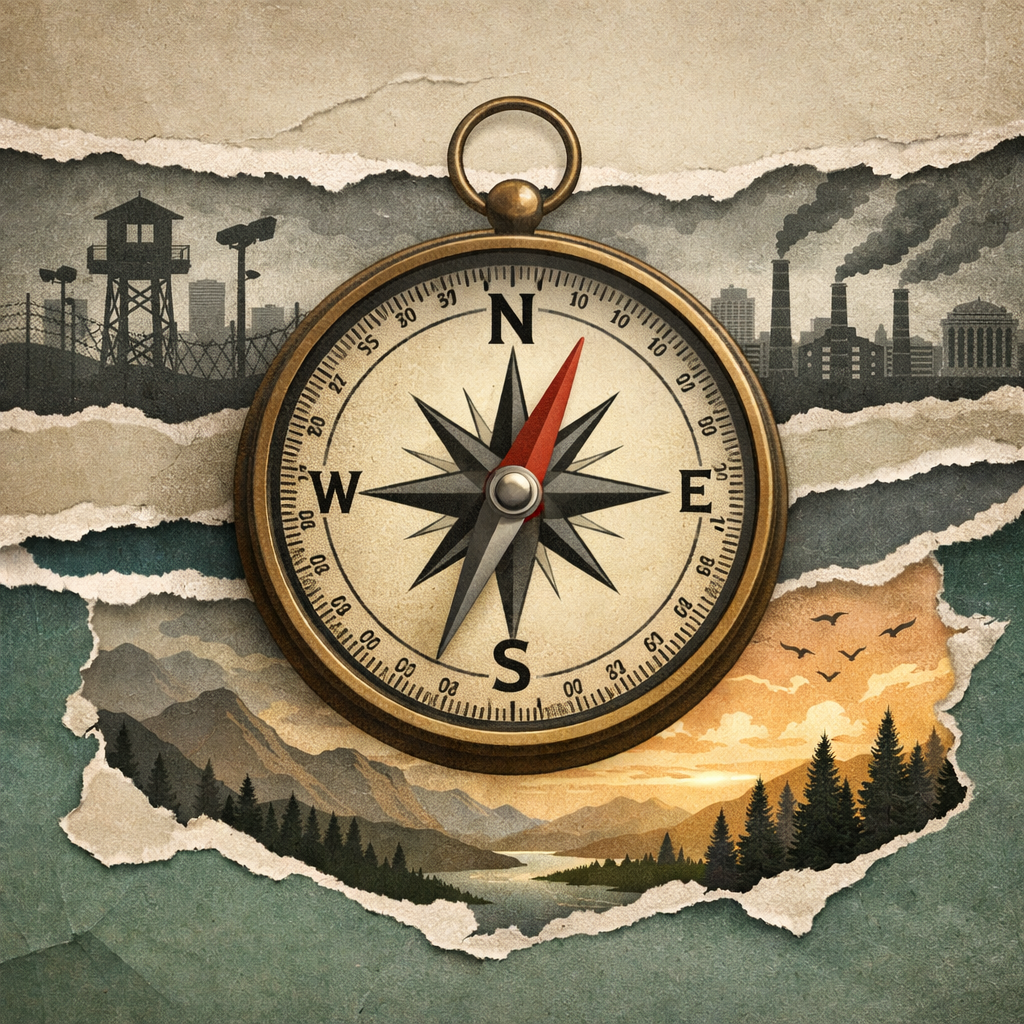
Not in the insulting way, not in the dismissive way. In the quiet, everyday way where their internal compass never quite gets built, or it gets outsourced. To policy. To tradition. To the group. To whatever keeps the peace.
So when life asks the real question, the one hiding under all the other questions, they freeze.
Who decides what is right and wrong?
You do.
We do.
For ourselves.
This is both liberating and terrifying, because it means you cannot hide forever behind “the rules.” It means there is no neutral ground where you get to be innocent while you participate in harm. It means you have to decide what you are willing to do, what you are willing to tolerate, and what you are willing to refuse.
And it means something else too, something we do not say out loud often enough:
A lot of what we call “normal” is maintained by millions of tiny yeses.
Yes, I’ll comply.
Yes, I’ll keep my head down.
Yes, I’ll pretend this is fine.
Yes, I’ll call it “policy” instead of a choice.
Yes, I’ll accept it because fighting it would cost me.
That last one is the trap.
Unjust systems do not stay standing because they are morally persuasive. They stay standing because they are expensive to resist. They charge you in time, money, reputation, safety, belonging. They make dissent feel like a character flaw. They rebrand obedience as virtue and resistance as selfishness.
They teach you that being “good” means being manageable.
And then they wait for you to confuse comfort with conscience.
So many people bow to unjust systems because that is how it is and we are told to accept it.
What if we didn’t?
The first thing that would happen is that the system would try to shame you back into place.
Not always loudly. Often politely.
It would call you unrealistic. Unprofessional. Dramatic. Naive. Disruptive. It would ask you to be “reasonable,” which is a word that sometimes means “please stop making other people feel responsible.”
It would offer you a deal: trade your integrity for a little peace.
That deal is more common than we admit. It shows up at work. In families. In institutions. In laws. In cultures that reward silence as maturity. You can feel it in your body when you start editing yourself before you speak. When you rehearse compliance so you do not get punished.
The second thing that would happen is you would find out who has a core.
Fast.
Because the moment you stop outsourcing your conscience to “the way things are,” people have to choose: stand in their values or hide inside procedure.
Procedure is useful. Policy can be necessary. Systems can coordinate complex life.
But systems also do something else when they are unjust: they launder accountability.
“That’s just policy.”
Translation: A person chose this, and people are choosing to keep it.
Calling harm “policy” is a way of pretending no one is responsible. It turns human decisions into weather. It makes cruelty feel inevitable. It makes participation feel clean.
But it isn’t clean. And deep down, people know it. That is why honesty is so threatening.
The third thing that would happen if we stopped accepting unjust systems is that reality would get more honest.
Not easier.
Clearer.
When you refuse to comply, you stop participating in the shared lie that the system is neutral. You name what is happening. You re-humanize power. You reveal the cost. You force the question back into the room.
Is this right?
If the answer is no, then the next question matters even more.
What are we going to do about it?
Here is where I want to be careful, because “don’t accept it” can become a fantasy if we do not pair it with something survivable. A lot of people are not complying because they are cowardly. They are complying because they are afraid, or tired, or trying to keep their kids fed, or trying not to lose housing, health care, community, access.
Unjust systems are designed to drain you.
So the goal is not constant rebellion. The goal is anchored refusal.
Anchored refusal is what happens when you build a core and then act from it with skill.
It looks like this:
You choose a small set of non-negotiables you will not betray, even if it costs you.
You choose a larger set of negotiables where you can compromise strategically without losing yourself.
And you practice the hardest question, the one that makes you honest with yourself:
Is my compliance here about safety and survival, or about comfort and belonging?
Because those are different.
And many of us have been trained to treat discomfort as danger.
Anchored refusal can be loud or quiet. It can be public or private. It can be confrontation, or it can be leaving. It can be staying and making the inside less cruel. It can be building parallel structures that keep people alive when institutions fail them.
It might look like selective noncompliance: choosing one or two places where your “no” matters and where you can sustain it.
It might look like refusing to let systems launder accountability: gently, consistently naming choices as choices.
It might look like making values contagious: being the person who calmly refuses to pretend, so other people remember they do not have to pretend either.
Because this is the other secret.
People find their core in contact with someone who has one.
Your authenticity does not just belong to you. It gives other people permission to return to themselves.
So yes, you decide right and wrong for yourself. But you do not decide it in a vacuum. You decide it in the presence of other people, in the friction of real life, in the ache of consequence. You decide it while practicing courage and discernment at the same time.
And maybe the most radical thing you can do, in a world that rewards obedience, is this:
Stop calling acceptance maturity.
Stop calling compliance neutrality.
Stop calling your inner compass “too much.”
Build your core.
Find your true north.
And when the world tells you, kindly or cruelly, that this is just how it is, answer with the only thing that has ever changed anything:
It does not have to stay that way.