COLOR YOUR CALM: A CARE WORK RESET
A gentle coloring and reflection book for caregivers, educators, library workers, and overwhelmed humans who need something softer than another dense read.
25 stress-relief coloring pages, reflection prompts, and tiny care practices designed for real life.
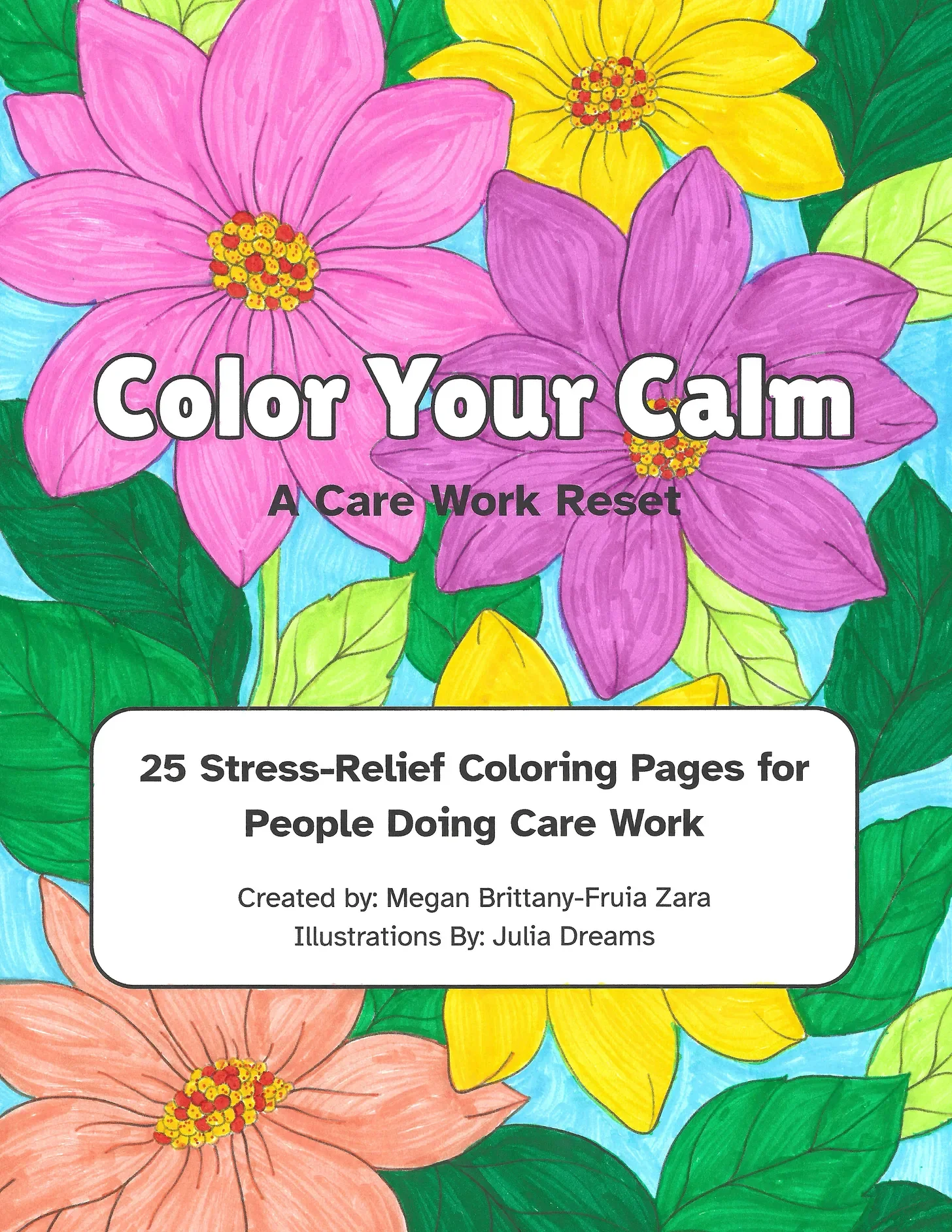
Free digital version available now. Printed copy includes shipping.
Get the Free Digital Copy
Color Your Calm is available as a free digital download because care-centered tools should be accessible.
Enter your email below and I’ll send it straight to your inbox.
This Book is For You If…
This book was made for people who care deeply and are tired of paying for it with their nervous system.
It may be for you if:
you work in education, libraries, caregiving, advocacy, or other care-heavy spaces
you are burned out, overstimulated, neurodivergent, disabled, or simply tired
you want reflection that is structured, but not rigid
you process better through image, texture, movement, or making you want something true, but cannot do another heavy article or long chapter right now
If you’ve ever thought, “I know what matters, but I’m too exhausted to articulate it,” this book was made with you in mind.
What’s Inside
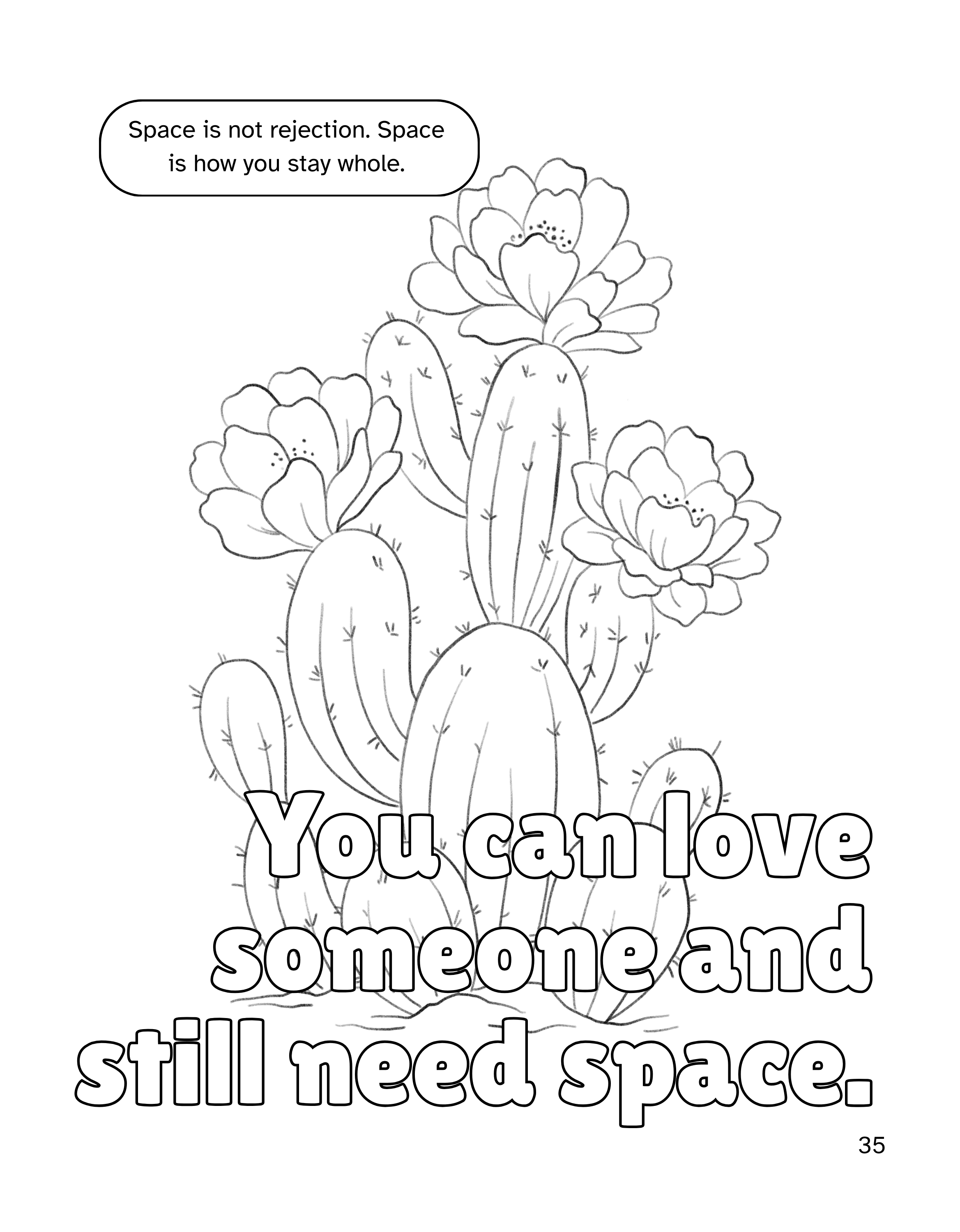
Color Your Calm is more than a coloring book. Each section is built around a care-centered theme and includes a short reflection piece, guided emotional insight, and five coloring pages designed to help you slow down, process, and reconnect.
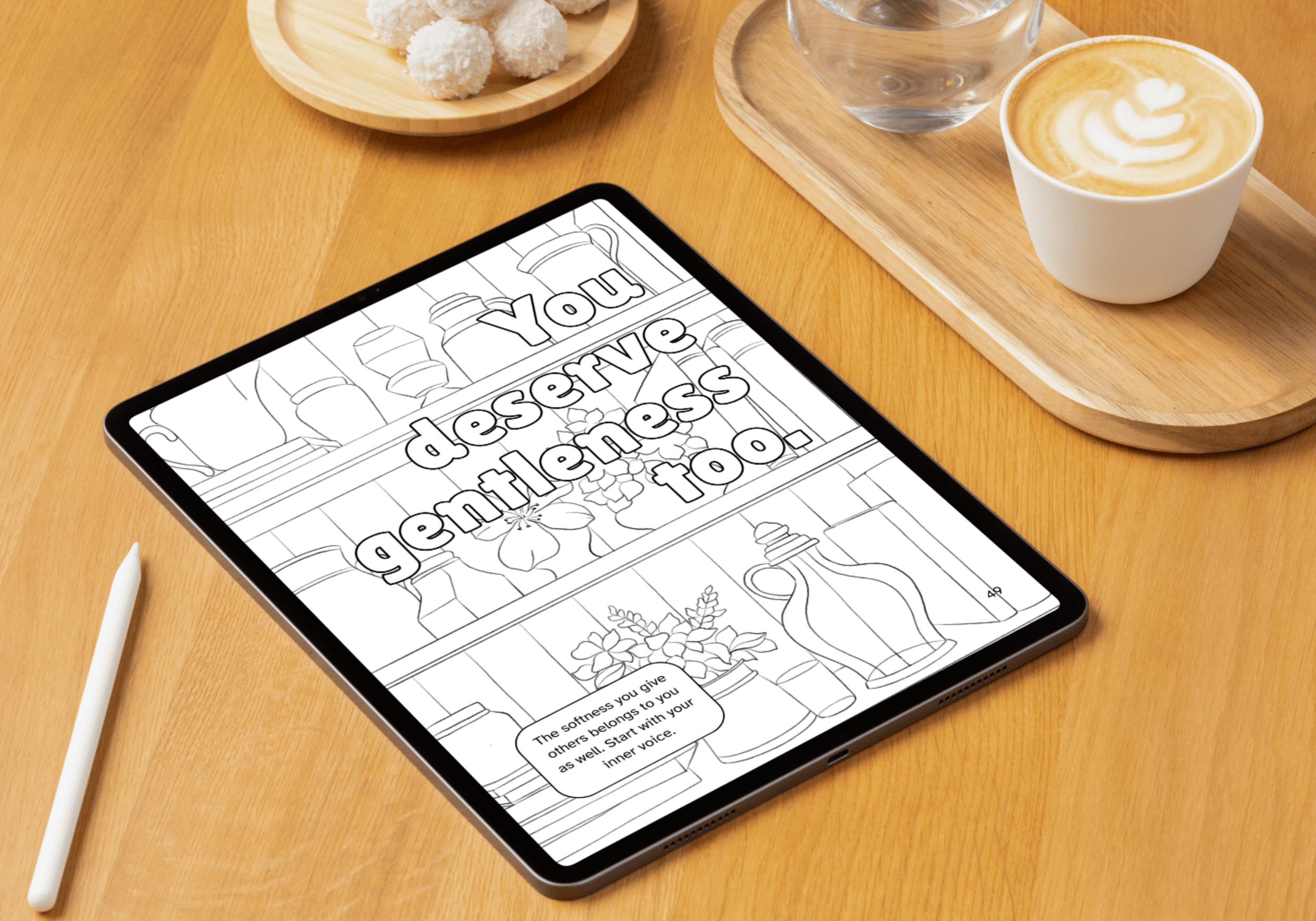
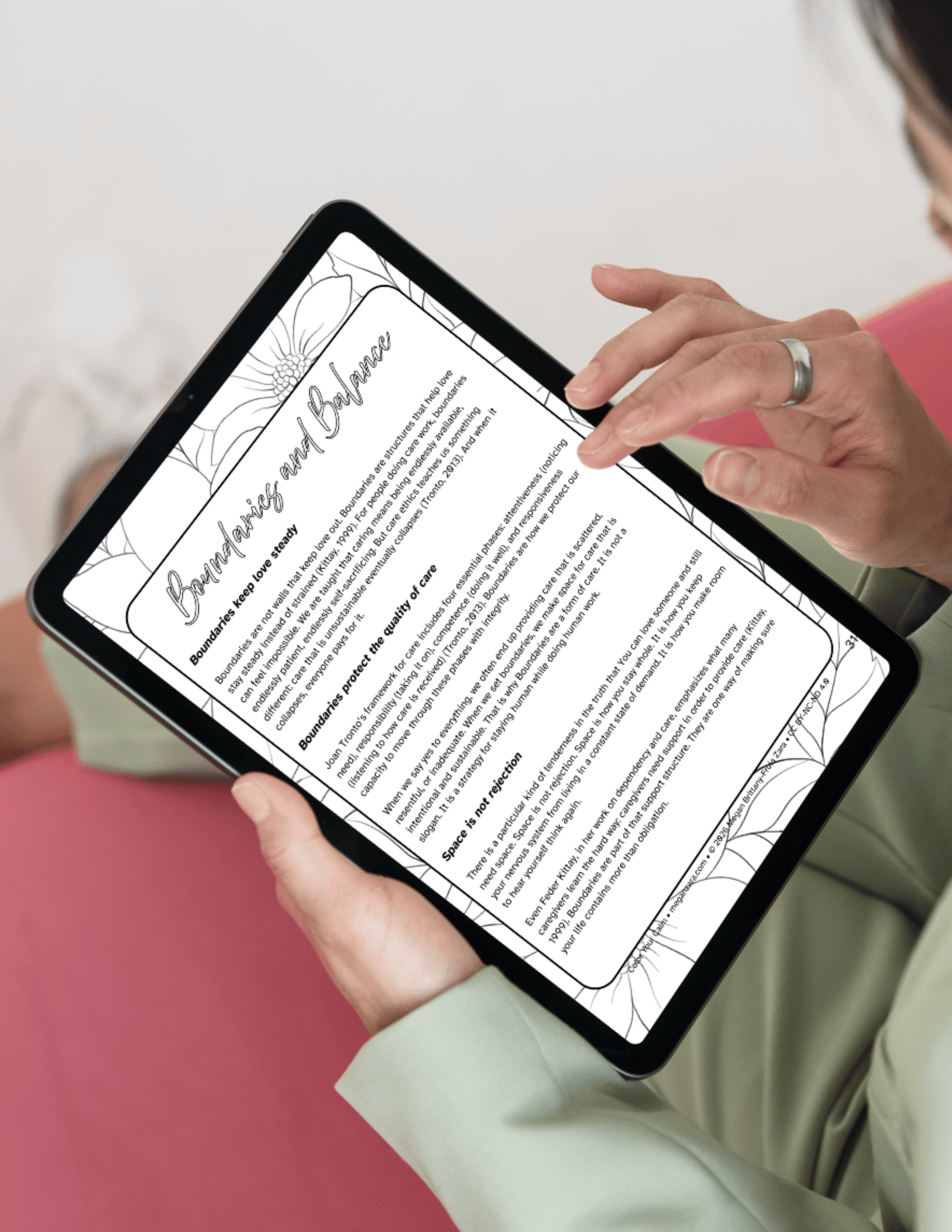
Inside the book, you’ll find:
1. Themed sections that meet real emotional needs
Topics include rest, boundaries, guilt, validation, shared humanity, and remembering that your needs matter too.
2. Gentle, thought-provoking writing
Each section begins with a short article-style reflection that translates care ethics into plain, human language.
3. Five coloring pages per section
Every theme includes coloring pages with quotes, visual prompts, and space for quiet reflection, doodling, or creative pause.
There’s No Right Way to Use This
Color one page when you need to regulate.
Use the prompts when you need clarity.
Skip around. Repeat pages. Print your favorites. Use it alone or with a group.
This is a tool, not a test.
You do not need to be artistic, insightful, or “doing it right.”
You just need a place to begin.
Why a Coloring Book?
Because sometimes thinking is easier when your hands are busy.
Because not everyone processes through long text.
Because care ethics should not be reserved for people with extra time, extra energy, or perfectly functioning brains.
Because accessibility is not an add-on. It is a baseline.
Color Your Calm was designed on purpose: to make reflection, care ethics, and emotional honesty more available to real humans with real lives.
This keeps your current argument, but sharpens it into something more persuasive and readable. The current page makes this case well; this version just gives it more punch.
Choose the Version That Fits Your Life

Free Digital Copy
Get instant access to the full book as a PDF.
Best for:
printing at home
coloring on a tablet
trying it right away
sharing a low-cost care tool with yourself or someone else
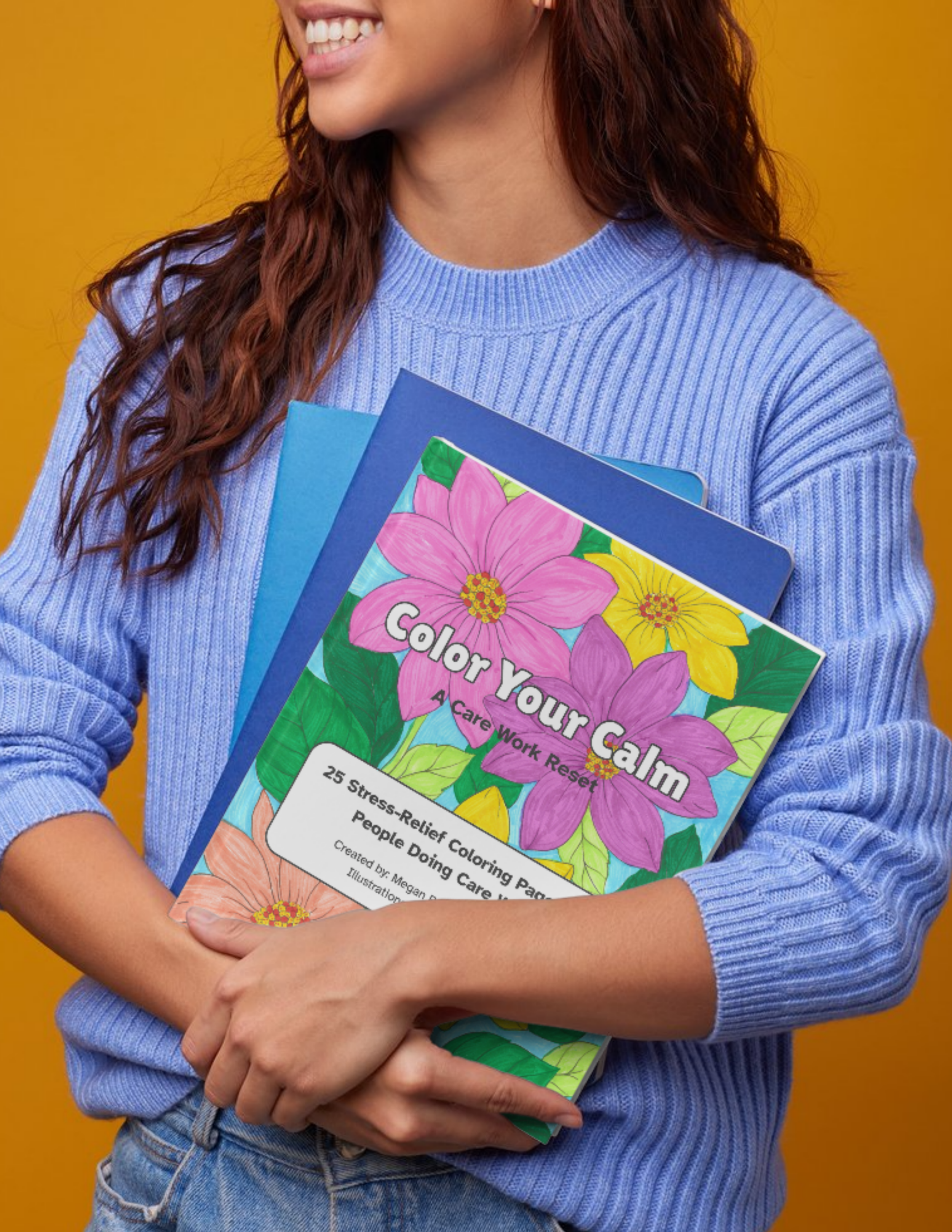
Physical Copy
Get the printed version if you want something tactile, giftable, and easy to leave on the table and come back to.
Best for:
people who love physical books
slower, screen-free reflection
gifting to a caregiver, educator, or helping professional
supporting the continued creation of this work

About the Author
About Megan
I’m an Open Education Librarian and care ethics researcher. I created Color Your Calm to make care-centered reflection more accessible, especially for people who are exhausted, overstimulated, or carrying invisible labor.
This book brings together research, lived experience, and creative practice in a format designed to meet people where they are.
It is the first volume in an ongoing series exploring care ethics, real life, and what it takes to build ways of living that do not break us.
Accessible by Design
The digital version is offered freely because care ethics should be accessible.
This work is licensed for sharing and noncommercial use, so you can download it, use it, and pass it along within the license terms.
Color Your Calm: A Care Work Reset © 2026 by Megan Brittnay-Fruia Zara is licensed under CC BY-NC-ND 4.0

Ready to Start?
Whether you download it for free or bring home the printed version, I hope it gives you a gentler place to begin.