I Made Something for You (And for Me)
Today I’m sharing something I’ve never shared before: my toilet paper story.
It’s in a coloring book.
It does sound odd, I know. But stay with me.
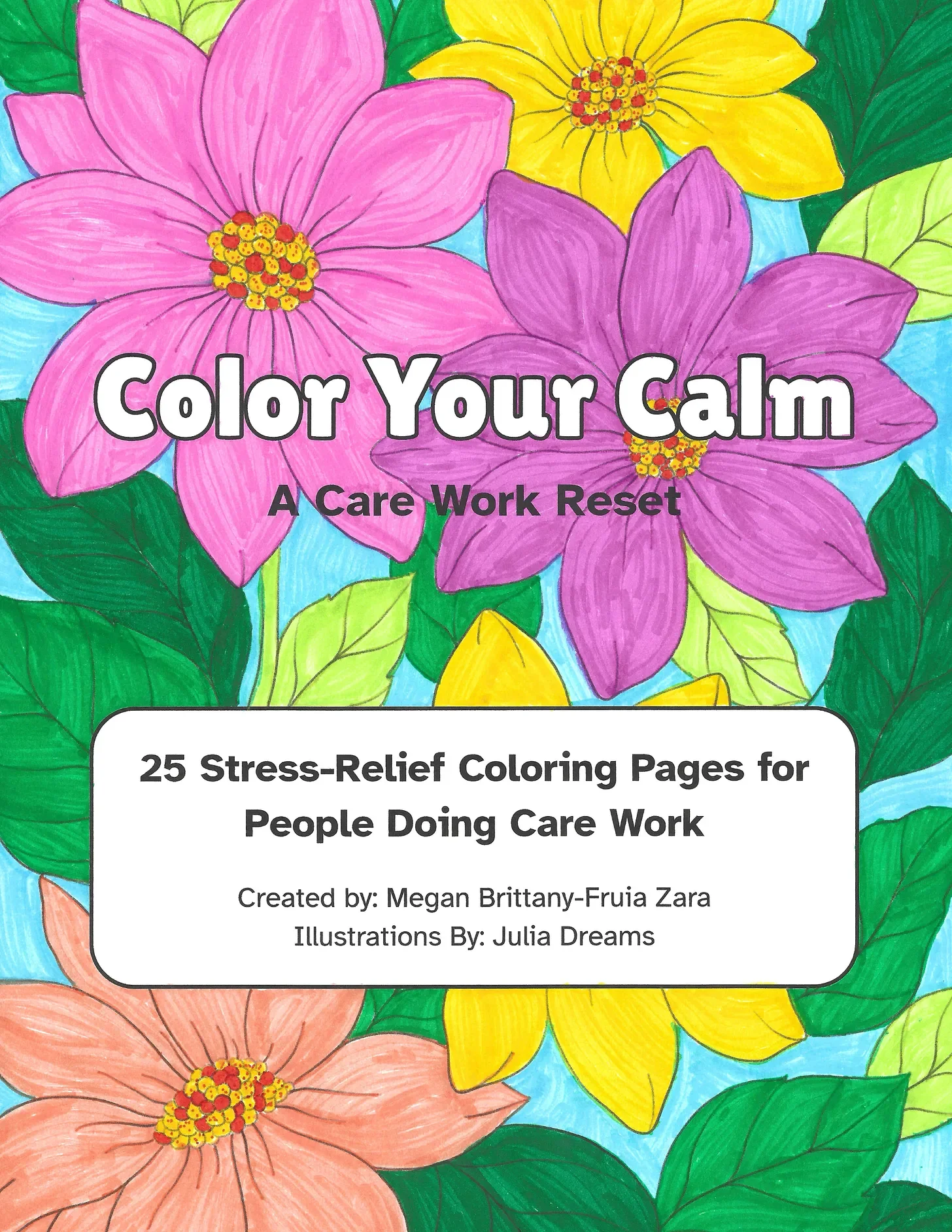
What This Is
Color Your Calm: A Care Work Reset is 25 stress-relief coloring pages for people doing care work. It’s also a research project. And a personal reckoning.
It combines:
Care ethics theory (Noddings, Tronto, hooks) in plain language
Reflection prompts and practices you can use immediately
My own story as a care-receiver and caregiver, the parts I’ve kept private until now
Beautiful line art by Julia Dreams
This book is a unique combination of research, personal story, and my love of coloring and creation. In a lot of ways, this book is me as a metaphor.
Why a Coloring Book?
Because I’m tired of theory that lives only in academic journals.
Because the people who need care ethics most, teachers, nurses, librarians, social workers, family caregivers, are too exhausted for another dense article.
Because not everyone processes through long text.
Because sometimes thinking is easier when your hands are busy.
Because accessibility is not an accommodation. It’s a baseline.
I made this format on purpose: to make theory more available to real humans with real lives.
What’s Inside

Each spread includes:
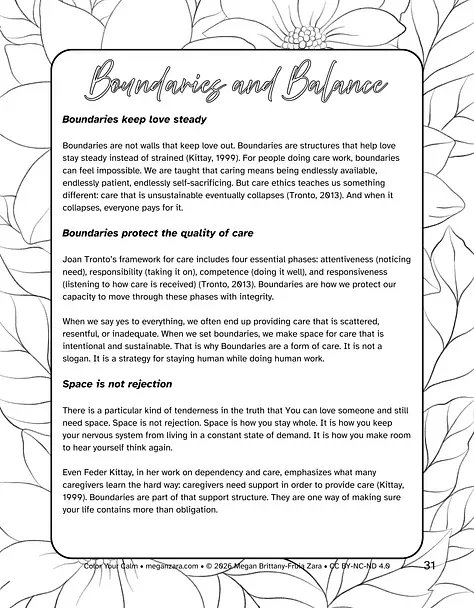
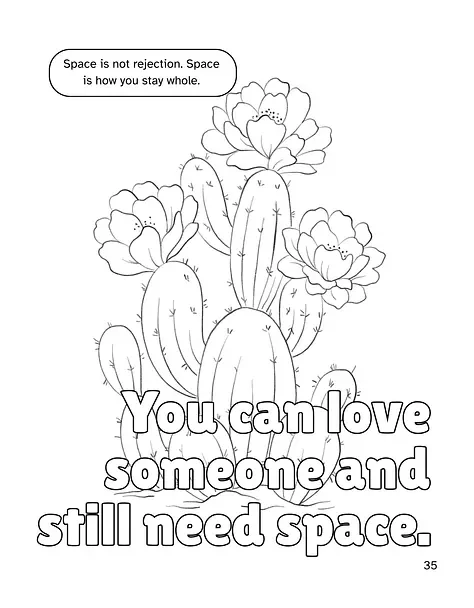
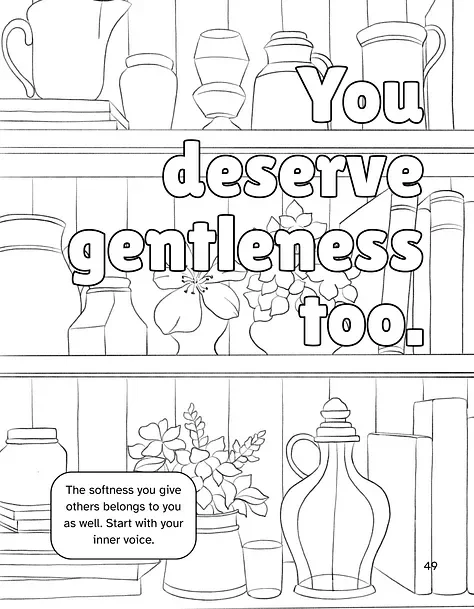
A coloring page designed for calm, not perfection
A short concept (no jargon, no gatekeeping)
Reflection prompts
Tiny practices you can try at work, at home, in your own head
Topics include:
Care as infrastructure (not performance)
Boundaries as design, not rejection
Universal design for real life
Dignity, friction, and hidden labor
Permission to rest
Self-compassion
Letting go of guilt and perfection
Why I’m Sharing This Now
For a long time, I kept my personal story separate from my professional work.
I talked about care ethics in the abstract. I built programs around participatory design and equity. I cited the research.
But I didn’t talk about what it actually cost me. The burnout. The shame. The years of caregiving that taught me everything I know about what happens when care becomes invisible.
This book changes that.
It’s the first time I’m really putting my lived experience next to my research. The first time I’m saying: this work is not theoretical for me. It’s survival.
And if you’re reading this, it might be survival for you too.
How to Get It
The digital book is free to download. I’m offering it under a CC BY-NC-ND license because care ethics should be accessible.
I ask for your email and where you’re located because I love data and I want to see where this work travels. That’s it.
You can print it out and color it with pencils, or color it digitally on a tablet. Use it however it works for your life.
If this book is useful to you and you’re able to support my work, there’s an optional pay-what-you-can donation. Any amount helps me continue this research.
Physical copies are available for pre-order (ships March 1, 2026). This option is for people who love tangible books. Your finished coloring pages will become art, emotion, and journaling in themselves, something worth keeping.
What’s Next
This is Volume 1 of a series.
I’m going to keep making these. And I’m going to keep writing here about the process, the research, the personal stories, the uncomfortable parts of doing this work in public.
If you’ve been following along, you know I’m in the middle of a PhD application process. This book is part of that journey. It’s me figuring out what kind of scholar I want to be.
One who doesn’t separate theory from lived experience.
One who makes work that meets people where they are.
One who believes care ethics should be accessible to exhausted people.
Thank you for being here.
What's your relationship to care work? What does it cost you? I'd love to hear in the comments.
-Megan