I’m a Librarian, But Not the Kind You’re Picturing
New Year, Two Directions
Happy New Year. It’s 2026 now, and I always get a little emotionally tugged in two directions at once: toward what’s new and possible, and toward what’s done, finished, and remembered.
I really loved seeing family and catching up. And I’m also sitting with something that has been quietly present for a long time, and I’m only just now naming it.
Naming the Quiet Gap
I have felt invisible in a lot of my life because my interests are niche. The things I get lit up about do not always fit into everyday conversation. Most people in my personal circle know me as “a teacher,” which is true. But over the last decade, I’ve been shaping that identity into something very specific, very right for me. The result is work I care about deeply, but that can be hard to explain quickly. People do not know what to ask, and I do not want to overwhelm anyone. So the conversation just… stops.
I’m sharing this because I want the people who love me to have more context, and honestly, because I want to feel a little more known.
The Librarian Picture in Your Head

When I say I’m a librarian, most people picture shelving books, helping someone find sources for a paper, or shushing people. That is real and important library work. It’s just not what my job looks like.
Open Education, Translated
I’m an academic librarian, and in higher education librarians can specialize. My specialization is open education. That phrase is jargony, so here’s the translation.
Open education is the work of making learning more accessible, more affordable, and more shareable. A big part of that is course materials. Students are often expected to pay hundreds of dollars just to fully participate in class. Open Educational Resources (OER) are one way to address that. OER are teaching and learning materials that are free to access and openly licensed, which means instructors can legally use them and often adapt them to fit their course.
My Work, In Practice
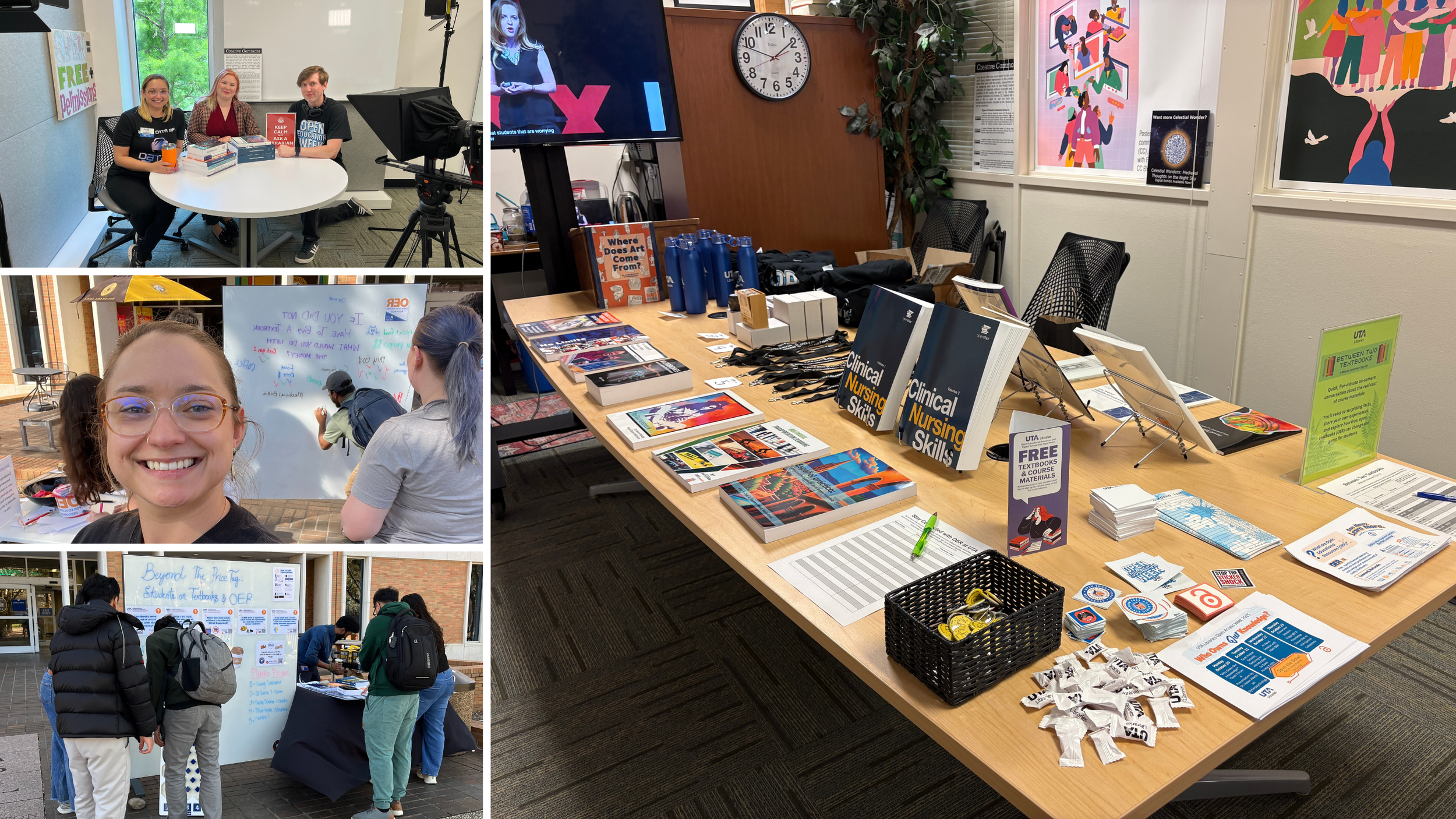
So what do I actually do all day?
I don’t shelve books. I’m not usually helping people find books unless I see someone who looks like they need help and I can step in. Most of my time is spent in my office or in meetings, in person and virtual. Most of my work is research, teaching, and building the open education program at UTA.
That means I:
research and evaluate course material options with faculty (quality, accessibility, fit, and impact)
teach workshops and do consultations on open resources, course design choices, and licensing
build the systems and supports that make open education sustainable at UTA, not just a one-time project
Leadership Through Care
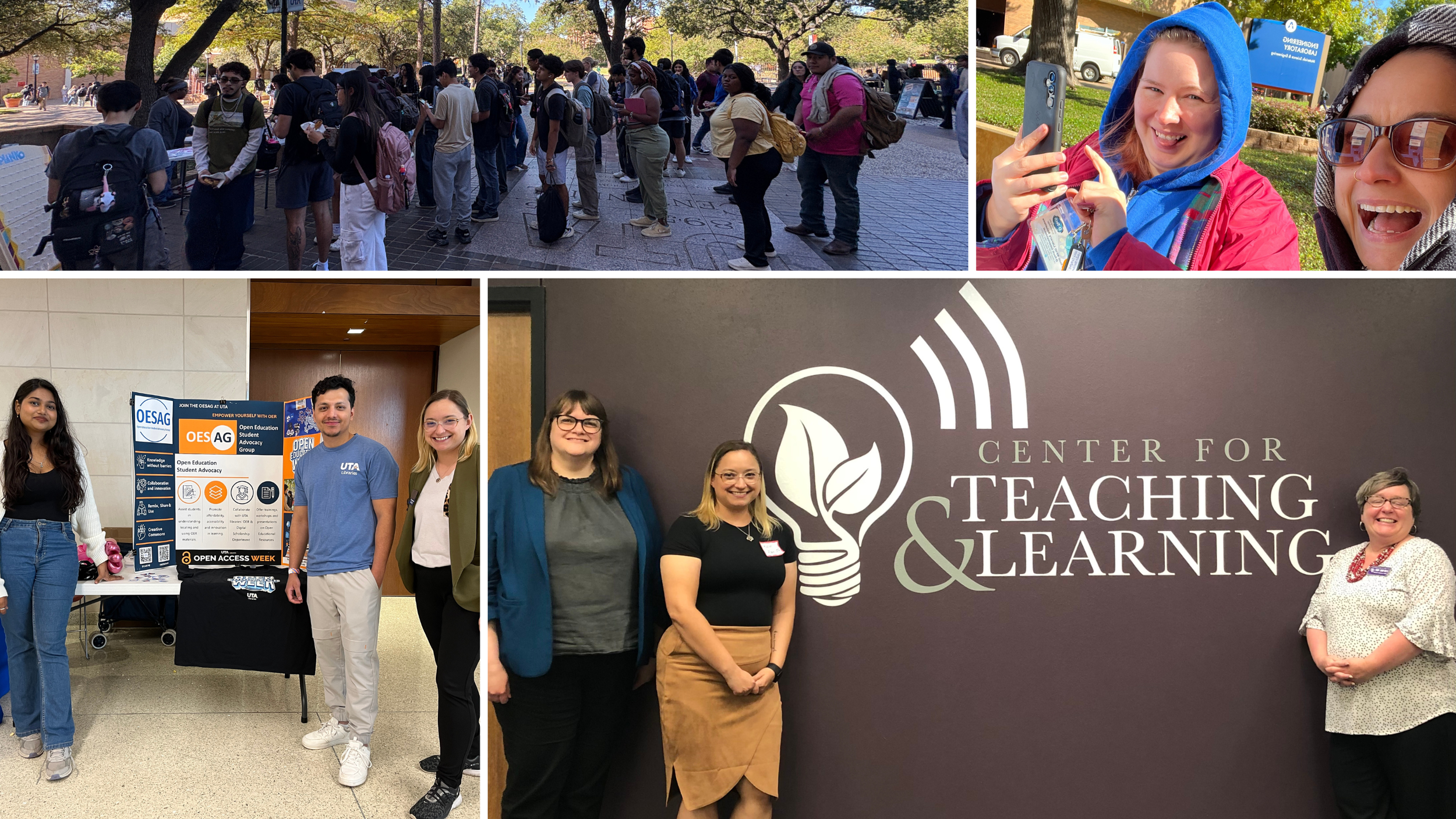
Open education didn’t just pull me into questions about cost and access. It pulled me into questions about leadership.
Because once you start building a program around access and belonging, you realize pretty quickly that the real work is not just materials. It’s people. It’s trust. It’s the emotional and relational labor of helping folks try something new without feeling judged, behind, or alone. It’s designing systems that do not depend on burnout, gatekeeping, or “the right person” being in the room.
That’s where my research has been taking me. I’m studying what it looks like to lead through care in higher education. Not as a soft add-on, but as an actual strategy for sustainable, ethical change. Care shows up in the choices we make about pace, support, communication, recognition, and who we design for. It also shows up in the kinds of cultures we build, especially in spaces where people are tired, under-resourced, and still trying to do meaningful work.
If you want the deeper version of what I’m researching right now, including the questions I’m asking and how I’m framing the work, you can read it here: Current Research
Where I’m Learning Right Now
Two fellowships are shaping this work for me right now, and they help explain why I’m so deep in it.
One is the Texas Higher Education Coordinating Board OER Fellowship (THECB), which supports this work across Texas and pushes me to design and document programs that genuinely help students and faculty, not just in theory, but in practice.
The other is the Rebus Luminary Fellowship, which is a three-month community of practice for postsecondary education leaders in the U.S. and Canada. It’s focused on building sustainable, authentic, and liberatory leadership, and it’s intentionally designed as a restorative space where leaders can slow down, connect, and develop practical strategies together. It includes community sessions and a culminating summit, with a strong emphasis on values like reciprocity, authenticity, joy, agency, and curiosity. The whole point is to build leadership that does not burn people out, and to build it collectively, not alone.
More Than a Job
This work is tied to my identity, my purpose, and my beliefs. It’s not just a job for me. It’s a mission and a calling. I’ve carved out a space that fits my very particular way of thinking and caring, and I’ve found the spaces that actually need that. I just want the people in my life to know that, and to feel like you can meet me there.
Questions That Keep the Conversation Going
If you ever want an easy follow-up question that helps instead of freezing the conversation:
What does “open” mean in your work?
What are you building right now?
What changes for students when this goes well?
Thanks for reading. I just wanted to put words to something I’ve carried for a long time, and let myself be a little more known.