Leadership That Leaves: What I Saw in Coach Ross
The Ring Ceremony
The boys were all up front, championship rings waiting, parents pulling out their phones, the room full of that particular kind of joy that comes at the end of a hard season. Coach Ross stood in the middle of it all and did something I have not stopped thinking about since.
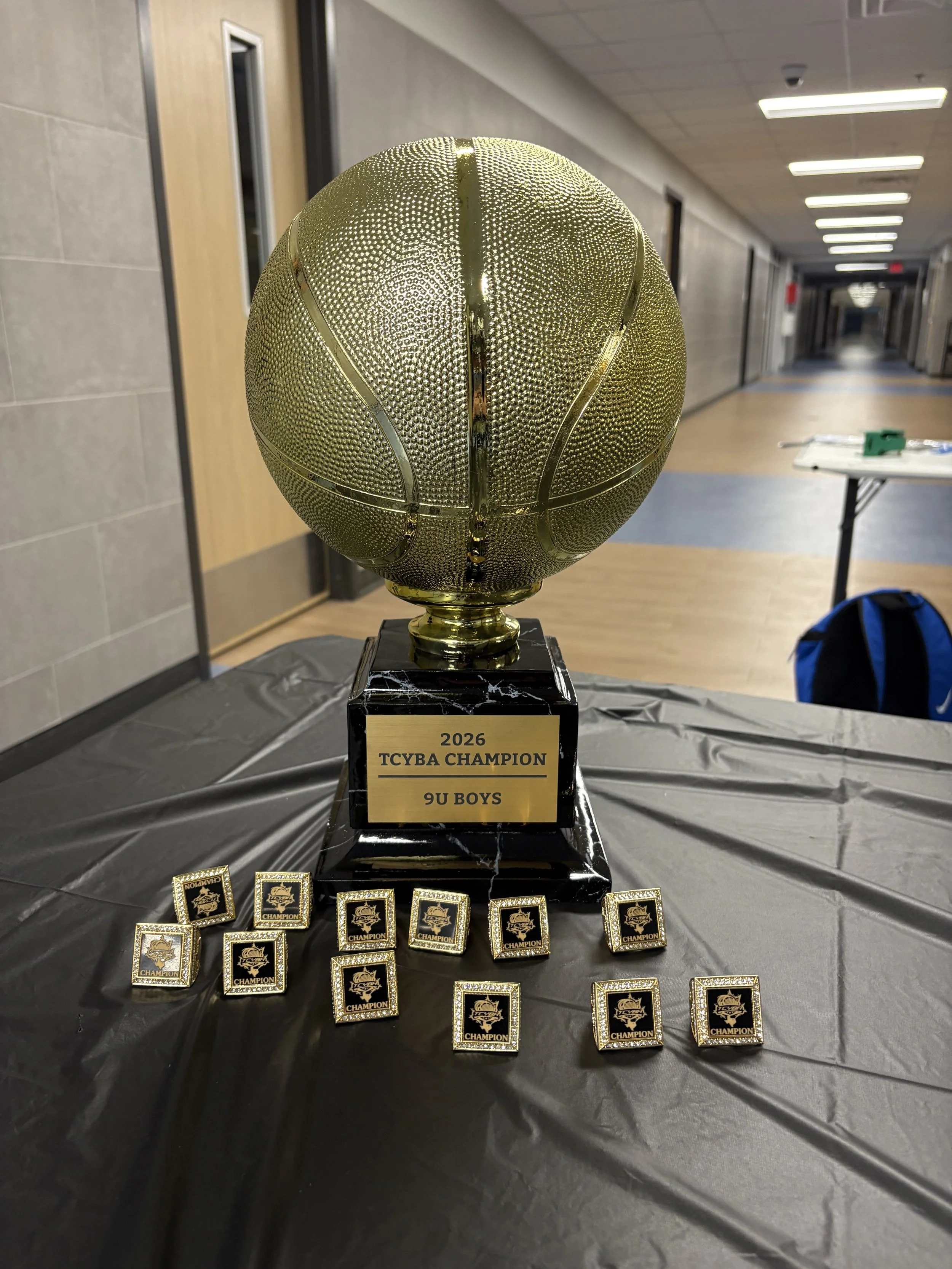
2026 TCYBA Champions
The trophy and rings marked the win.
What mattered most was everything that made them possible.
He did not just hand out rings. He told a story about each boy.
Before he ever called a name, he turned to the parents. He thanked them for getting the boys to practice, for handling the noise, for trusting him all season long. Then he said something that struck me immediately: he thanked them for “trusting me, letting me lead them, letting me be hard on them.”
That line alone says more about leadership than many polished leadership books ever do.
Because what sat underneath it was something simple and profound: he did not speak as though leadership had been automatically granted to him by title. He spoke as though it had been entrusted to him. He understood that what stood between him and those boys was not just authority. It was trust.
Then he started naming the boys, one by one, and what unfolded was not just a celebration. It was a public act of recognition.
One boy was his “defensive menace,” his “assistant coach,” his “everything.” Two others he called his little pit bulls, boys who, he said, were not even supposed to be on his team because no other coach wanted to add to their roster. “They asked me,” he said, “I said, I got them. We gonna teach them how to play basketball, and I’m gonna get them right.” Another boy had spent years orbiting the game before finally joining him. Another, he said, would not even have played this year if he had not been on Ross’s team.
What I was hearing was not just hype. I was hearing a leader narrate belonging in public.
By the end of the season, the team had gone undefeated. In one game, they came back from being down by ten. They finished the season as champions. Those are the visible facts. They matter. But they are not the part I keep returning to.
What stays with me is that, all season long and again at the end, Coach Ross made room for every boy to understand that he had a place in the story of that win. That does not happen by accident.
That is leadership.
The First Thing I Noticed
The truth is, I noticed something long before the ring ceremony. After the first practice, my son came home different. Not in some flashy, cinematic way. Not louder. Not suddenly performing confidence. Just more settled. More grounded. More certain that he belonged there. He felt like a winner before he had won anything, and that got my attention.
That mattered even more because this season was not a simple one for him.
My son is not naturally quiet or reserved. Quite the opposite. He is often the loudest in the room. In past seasons, when his teams were not as strong overall, he had often been one of the better players. This year was different. He was on a stronger team, surrounded by players who shifted his usual place in the hierarchy. That is not a small thing for a child, especially one used to being near the top.
Not being the best is hard for my boy. That is why this season told me so much.
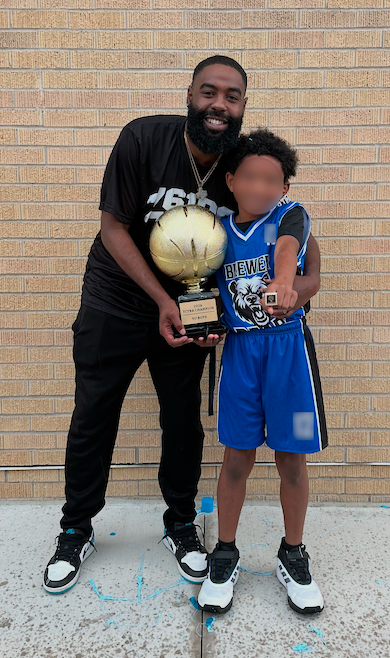
What stays with me most is not just what he won, but what he built in the kids who trusted him.
The fact that my son still wanted to play basketball, still made it a priority, still stayed committed even when he was not the standout, says a great deal to me about what Coach Ross created from the very beginning. He did not diminish my son. He did something harder and more meaningful than that. He made it possible for him to stay engaged, invested, and connected in a season that could easily have become a blow to his confidence or pride.
He made basketball feel worth staying with, even when my son was not the best player on the floor.
That is real leadership.
What Other Eyes Saw Too
My mom, my son’s grandmother, watched the season closely with me, and one thing she said afterward has stayed with me: Coach Ross did not put winning above the kids. He wanted them to win. He helped them win. He cultivated their skills. But he never seemed to place victory above the children themselves. She noticed it in the huddles.
He was not berating them. He was coaching them.
Even when he got loud enough to be heard, it did not sound angry. It sounded focused. Specific. Instructional.
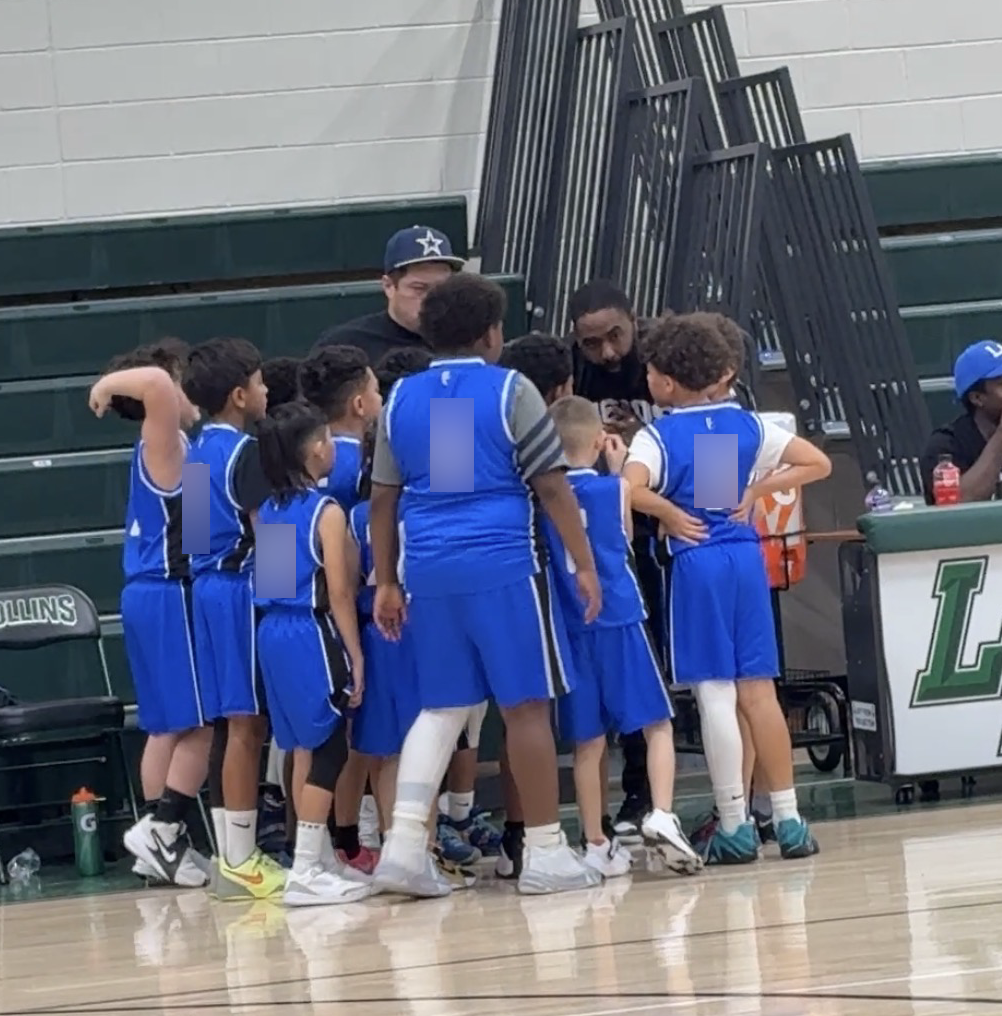
Leadership lives in the small hinge points too: posture, tone, attention, trust.
She noticed something else I found incredibly telling. When other teams huddled, it often seemed like only the players actively in rotation were pulled in close. With Coach Ross, everybody came in. Every boy stood up. Every boy listened. Every boy was part of the conversation. That detail matters to me because it says something about the culture he built. No one was peripheral to the team. No one was treated like background scenery. Every child was part of the whole.
She also said something I had been quietly noticing myself all season: she could not tell which one was his son. I could only tell because I started intentionally watching for it.
That mattered too. There was no visible favoritism. No obvious separation. His son was part of the team, not the center of it. And she noticed one more thing I had not fully named until she said it: in the huddles, he bent down. He got at their level. He did not loom over them. Even physically, he seemed to understand that leadership is not only what you say. It is how you enter the space.
Meet Coach Ross
Later, when I interviewed Ssiah Ross, known to many simply as Coach Ross, what I heard matched exactly what I had seen from the stands.
Coach Ross is a youth sports coach entering his tenth year. Beginning with flag football for 4- and 5-year-olds, he has spent years walking with young athletes as they grow, building a coaching philosophy rooted in trust, accountability, consistency, and care. His teams are marked not only by strong performance, but by something much rarer: environments where every player feels seen, valued, and responsible for the whole.
When I asked him about his purpose, he said, “I always say I feel my purpose is to impact others in all aspects of life… no matter who or what it is, I’m here to help.”
Then he said something that, to me, reveals the heart underneath everything else: part of what matters most to him is wishing he had had a “me” (himself) in his own life.
That line has stayed with me.
Because some of the most meaningful leaders I have ever known are leading from exactly that place. Not from ego. Not from performance. Not from the need to dominate, prove, or control. They are leading from memory. From absence. From having needed something steady, wise, caring, or trustworthy when they were younger and deciding to become that for someone else.
That is what I saw in Coach Ross all season.
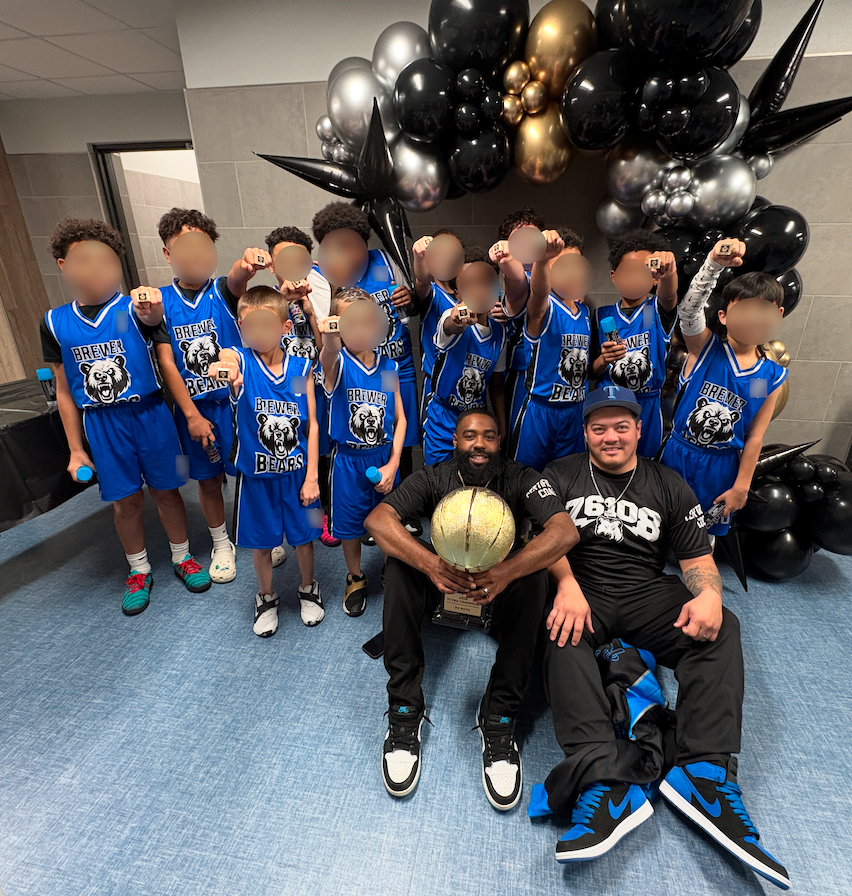
A championship team, yes. But also a team where every child seemed to know he mattered.
Not just a coach trying to win games. A human being trying to leave something better in the people entrusted to him.
What I Watched Him Build
Coach Ross was strategic, absolutely. He knew who his strongest shooters were. He knew who his strongest defenders were. He knew how to begin a game in a way that built momentum and stability. I watched him use his strongest players early, get points on the board, and create room for his middle-level players to get meaningful minutes and real opportunities to contribute. That matters so much.
Too many leaders know how to win with a few polished people. Far fewer know how to build a system where more people can belong, contribute, and grow. Coach Ross does.
In his ring speech, he pushed back against the easy explanation for their success. He talked about the outside noise, about people assuming they were winning simply because they had the best players. Then he said, in essence, no. These boys work hard. They work hard at practice. Nobody is practicing harder than us. I loved that.
Because it shifted the story from talent to culture. From appearance to discipline. From “they just had a stacked team” to “they built something strong together.”
And all season, that culture showed. There was no parent drama. No player drama. No visible fracture over who mattered most. Coach Ross told me directly that he treats the boys equally, with love, attention, and care, because once favoritism enters, trust starts to erode. He talked about wanting to create an environment where kids could focus, play, and make their coach proud without carrying unnecessary stress. He talked about staying the course, sticking to the plan, and not letting outside noise muddy the mission.
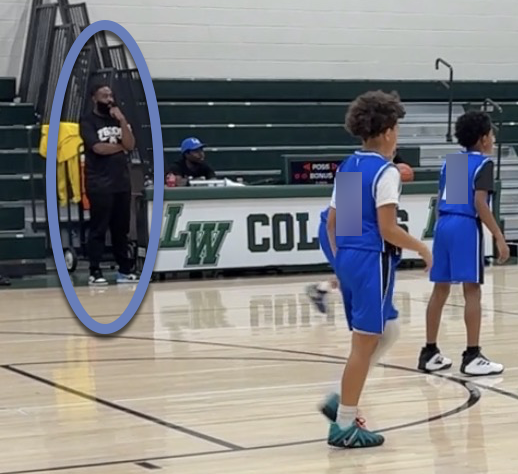
Coach Ross on the sideline, steady and watching. Before I had language for it, I noticed the calm.
That was not luck. That was design.
At one point, my mom said something that perfectly captured his style: he is not a performance coach. He is a growth coach. That feels exactly right to me.
Performance mattered to him, clearly. The team went undefeated. They won the championship. He is competitive. He is sharp. He knows how to lead a team to a win. But what seemed to matter most in the way he coached was building the foundation first: trust, effort, cohesion, communication, accountability, and a safe enough environment for kids to learn, recover, and keep going.
With that kind of leadership, performance follows. Not because outcomes are guaranteed, but because the space is steadier. The expectations are clearer. The kids are less afraid of mistakes. They can learn in public. They can take correction without collapsing.
Leadership That Creates Dependence, and Leadership That Leaves
I have spent years noticing the difference between leaders who create dependence and leaders who build capacity. The first kind is familiar to many of us. It is leadership rooted in title, fear, hierarchy, and forced respect. It creates environments where people feel controlled rather than developed, managed rather than known, compliant rather than capable. Often, it mistakes dependence for loyalty. People stay close to that kind of leader because they have to, not because they want to.
People survive that kind of leadership. They do not flourish in it.
Then there is another kind. There is leadership people choose to stay near, even when they do not have to. They return to it. They remember it. They seek it out again. Not because they are dependent, but because they are growing. Because what they receive is more than instruction. It is trust. It is relationship. It is challenge with dignity. It is accountability with care. It is a human bond that control-based leadership cannot counterfeit, no matter how polished its language becomes.
This is the kind of leadership I care most about in my life and in my research. Leadership by example. Leadership people recognize because they trust it. Leadership that builds capacity so well that one day the people being led will not need that leader in the same ways anymore.
This is what I think of as leadership that leaves. Leadership that leaves trust, not fear. Capacity, not dependency. Clarity, not confusion. Courage, not compliance. The best leaders are not the ones who make themselves permanently necessary. They are the ones who build people so well that, one day, those people can carry something forward on their own.
That is what made Coach Ross stand out to me so sharply.The more I study leadership, the more convinced I am that its deepest effects often turn on small hinge points. Not grand declarations. Not mission statements. The real test is usually smaller than that. The first practice. The tone of correction. The distribution of attention. The consistency of expectations. The way a leader protects the space from outside noise.
These are the tiny details where belonging is either built or broken.
The Boys He Claimed
One of the most revealing parts of Coach Ross’s speech was the way he talked about the boys that other coaches did not want. He said it plainly. Some of them were not even supposed to be on his team. No other coach wanted maxed-out rosters. He was asked to take them, and his response was simple: “I got them.”
That line has stayed with me because it tells me almost everything I need to know about his leadership ethic. Some people lead by selecting polished talent. They want easy wins, obvious stars, people who will make them look successful quickly. Others lead by developing people that other systems have already undervalued.
Coach Ross did not seem threatened by the unfinished parts. He seemed committed to them. He did not speak about those boys as burdens or concessions. He spoke about them with confidence, humor, affection, and expectation. We gonna teach them. I’m gonna get them right. They’re gonna be part of this.
That is not just coaching. That is moral imagination. That is a leader looking at a person and seeing more than current polish.
A Story I Have Carried for Years
Years ago, at a Frisco ISD Convocation, I heard the original author tell the Blueberry Story, and I have never stopped thinking about it. The story, in essence, contrasts blueberries with children. In a business setting, bruised blueberries can be sorted out in the name of quality control. The imperfect ones can be discarded. But children cannot and should not be treated that way. In schools, we do not get to keep only the polished ones and throw the rest back. We are responsible for all of them. For a long time, I carried that story primarily as a metaphor for teaching.
Now I carry it as a much bigger question.
Why did we stop there?
Why did we collectively accept the idea that humane, patient, developmental leadership belongs in schools, but not necessarily in workplaces, businesses, families, organizations, friendships, or public life? Why do we act as though children deserve care, nuance, patience, accountability, and trust, but adults should simply expect to be sorted, controlled, managed, or discarded in the name of productivity, speed, or power?
That is part of why Coach Ross stood out to me so powerfully. His first instinct was not to sort, narrow belonging, or discard. His first instinct was to coach. To claim responsibility. To build conditions where more people could grow.
That is what trust looks like in practice.
Accountability that Protects the Space
One of the moments that stayed with me this season was hearing that Coach Ross had apologized to the boys after a loss and taken responsibility. I brought it up in our interview because it struck me as unusual and deeply important.
Many leaders want accountability from others. Fewer model it themselves. What I heard in Coach Ross’s reflection, and again in his ring speech, was not blame directed at the boys. It was something much more mature than that. He spoke about a previous championship loss and said, plainly, “I take full responsibility for that.” Then he described what would be different this time: “Coach gonna keep his composure, and we gonna go get one. Y’all just do y’all job.” That distinction is important.
He was recognizing that one of his primary responsibilities as a leader was to hold the space better. To protect the conditions around them. To keep outside noise, pressure, distractions, and emotional spillover from entering the team in ways that would limit what the boys could do. That is what accountable leadership sounds like when it is mature.
It does not rush to blame the people being led. It asks, what was my role in the conditions? How did I shape the space? What do I need to own, adjust, or protect better next time?
Coach Ross did not just demand composure from the boys. He practiced reflection himself. He apologized. He learned. He adjusted.
That is leadership by example.
Why I Refuse the Old Story of Leadership
We have normalized profoundly inhumane forms of leadership and called them strong, practical, realistic, and necessary. I hear it all the time: that is just how it is. That is how it works. That is what leadership requires.
I refuse.
I refuse because I have seen leaders who do better. Not performatively. Not because they memorized the right language. Because care is already part of their ethic. Because their instinct is not to dominate people, but to develop them. Because they understand that leadership is not about proving they are the best person in the room. It is about being deeply committed to the people in the room. And I think, especially now, people are less and less willing to confuse control with care.
People do not want to be controlled and told it is leadership. They want to be considered. Seen. Trusted. Challenged with dignity. Invited to bring forward their strengths and gifts. Or simply allowed to grow in relationship with someone who wants their becoming, not their dependence.
That is one reason I have written elsewhere about care as infrastructure and about the danger of mistaking obedience for integrity. Those questions feel relevant here too. What counts as good leadership depends a great deal on what we are willing to normalize, and I am increasingly uninterested in normalizing leadership that shrinks people. Instead, I want to keep naming and learning from leaders who make growth more possible.
Coach Ross is one of them.
What My Work Keeps Teaching Me
My own work in open, care ethics, and liberatory leadership keeps drawing me toward the same conclusion: leadership at its best is relational, reflective, iterative, and fully human. It is not domination. It is not image management. It is not compliance for compliance’s sake. It is the practice of creating conditions in which other people can become more fully themselves.
That is why I keep returning to people who lead children well. I started my own career leading kids, and I have long suspected that some of the best, kindest, most trustworthy leaders begin there. When you lead children well, you quickly learn that fear is not the same as respect. You learn that relationship changes what people are capable of. You learn that accountability works differently when trust is present. You learn that care and structure belong together. You learn not to discard people too quickly.
Perhaps most importantly, you learn that the person in front of you is always more than the behavior, the performance, or the role. I think truly good leaders often come to the table as fully human. They are self-reflective. Iterative. Capable of nuance and gray area. They mess up. They apologize. They keep learning. They feel deeply. They lead vulnerably. Their strengths are often emotional and relational, which means systems that reward only what is loud, measurable, or immediately profitable often overlook their value.
But they are powerful anyway. Often, they are leading from lived experience. From the trenches. From having survived, they are now trying to help others through. Often, whether they say it outright or not, they are doing what they needed an adult to do when they were children.
That is why their leadership lands differently.
That is why people trust them.
That is why people choose to stay with them.
That is why their impact travels.
What His Leadership Leaves Behind
Coach Ross is not a leader because he demands respect. He is not a leader because a title made him one. He is not a leader because fear kept people in line. He is a leader because he cared enough to build something trustworthy. Because he created conditions where kids could grow. Because he was leading from purpose, not ego. Because what he leaves behind in people matters more than what he extracts from them.
Yes, his team won a championship. Yes, they came back from being down by ten. Yes, they finished undefeated.
But what compels me most is not the ring. It is the residue.
What did his leadership leave behind in those boys? More trust. More confidence. More resilience. More understanding of what it feels like to be guided without being diminished. More evidence that accountability and care can live in the same room. More proof that leadership can be both strong and humane.
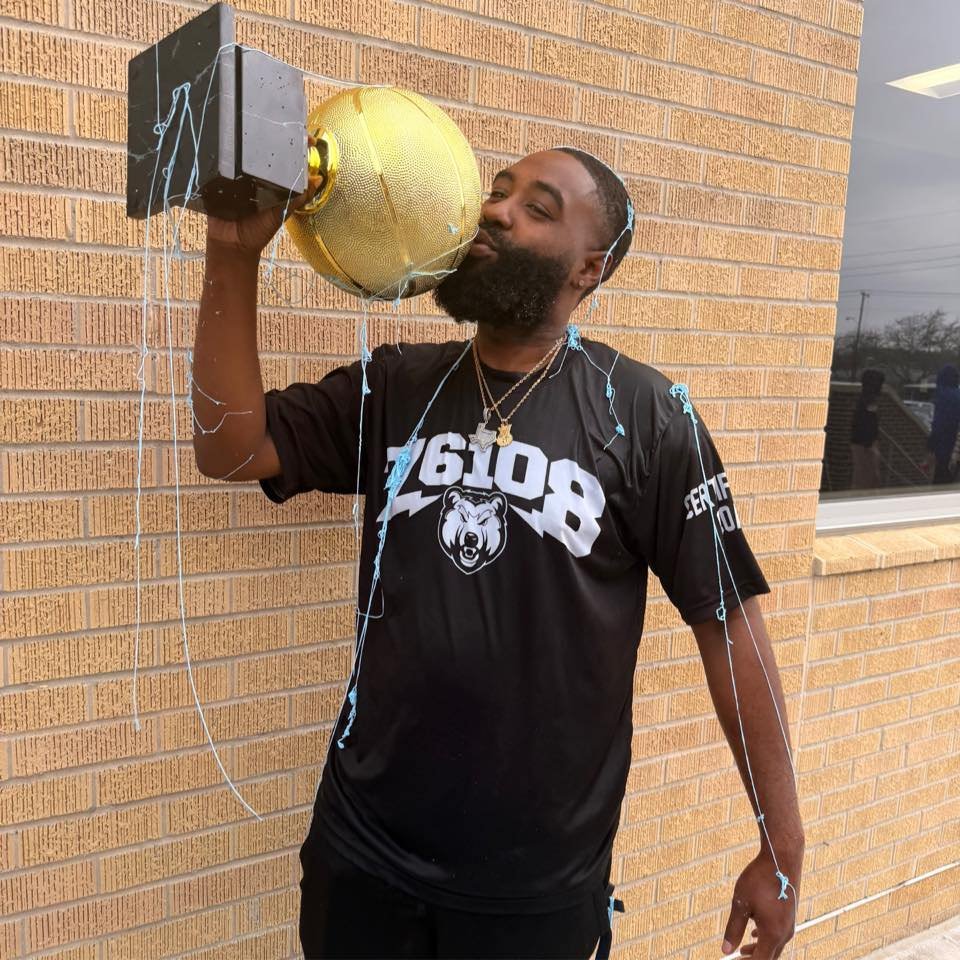
The championship was real. So was everything he poured into the people who earned it.
That is real leadership.
And I think we need to get much more serious, across every part of our lives, about naming it, valuing it, and refusing its opposite. We can stop calling fear strength. We can stop calling control wisdom. We can stop confusing dependency with loyalty. We can stop protecting systems that erode people and then acting surprised when people no longer trust leaders.
Instead, we can turn toward the leaders who are already showing us another way. The ones who lead because they feel a purpose. Because they see a need. Because they care for the people. Because they are willing to go first in reflection, repair, honesty, and commitment.
The ones whose leadership leaves something worth carrying forward.
That is what I saw in Coach Ross.
And that is the kind of leadership I intend to keep studying, honoring, and becoming.