I Wish You Knew Me Now
For the people who knew me before I knew myself
Content note: This piece includes a brief, non-graphic reference to suicidal crisis.
Something strange has happened over the last few years. I’ve become more forthcoming. I share more of myself professionally, especially on LinkedIn and within my professional network. I talk openly about what I believe, what I’m learning, things I’ve struggled with, things I’m proud of, and the questions I can’t seem to leave alone. I let myself be funny and weird and passionate. I talk about autism. I talk about education and openness and care and systems and all the things that make my brain light up. I’ve stopped trying quite so hard to make myself smaller or easier to understand.
And somewhere along the way, I realized something that is difficult to admit: there are people who have known me for only a few years who may know parts of me better than people who have known me my entire life.
I don’t mean that as an accusation. I think I finally understand part of why it happened.
When I was diagnosed as autistic, the doctor who diagnosed me helped me recognize that my work as an educator is not simply my career. It is also my primary autistic interest. Suddenly, so much of my social life made more sense. Put me in a conversation about teaching, learning, libraries, openness, technology, leadership, care, access, systems, or how humans make meaning together and I can talk to almost anybody. I can walk into a room full of strangers. I can facilitate. I can teach. I can ask questions. I can make connections. I can get ridiculously excited about an idea and start talking too fast because I’ve already connected it to six other things while everyone else is still on the first one.
For a long time, that confused me because it didn’t fit the story I had about myself. I was quiet. Shy. Sensitive. Awkward. Sometimes withdrawn. Sometimes apparently antisocial. Except I’m not exactly any of those things in isolation. I’ve realized that my sociality has context. Inside worlds that make sense to my brain, I feel at home. Because so much of my adult life has been built inside education, many of the people I’ve met professionally have gotten to know me while I’m in my element.
They’ve gotten to see my sparkle.
I don’t really have a better word for it. It’s the part of me that gets obnoxiously excited about an idea. It’s the part that sees connections everywhere and asks questions that occasionally make meetings weird. It’s the part that cares deeply about people and then gets frustrated when the systems supposedly built for those people don’t seem to care about them very much. It’s the part that creates things because I can’t stop wondering whether something could be done differently. It’s curious and playful and intense and sometimes unruly.
I wish my family could see her.
Not because I need my family to be impressed by what I’ve accomplished. You know about degrees. You know about jobs. You may know that I became a teacher, moved into educational technology, became a librarian, taught college students, went back to school again and again, presented things, built things, led things. Those are facts about my life. They’re not really what I wish you knew.
I wish you knew what other people have experienced on the other side of those job titles.
Over the years, I’ve kept some of the letters people have written about working with me. I don’t pull them out and reread them very often. Honestly, praise has always been a little difficult for me to hold. But reading those letters together now is unexpectedly emotional because they describe a person I’m not sure some of the people closest to me have ever had an opportunity to see.
People have described me as passionate, funny, creative, innovative, patient, kind, energetic, deeply invested in other people, and willing to stick with a problem until we figure it out. When I worked as a digital learning specialist, the teachers I supported remembered that I could help someone who was uncomfortable or intimidated by technology walk away feeling more confident. They described me as patient and encouraging, someone who met people where they were and stayed with them while they figured things out. Colleagues remembered that I noticed problems, created things that didn’t exist yet, shared what I learned, and pushed the people around me to think differently. Students remembered that I cared whether they understood, that I respected them, that I made them laugh, and that they felt like I actually knew them.
One former supervisor noticed something years before I understood it myself. He described me as highly relational and capable of connecting with people, but he also noticed that after supporting people all day I needed periodic time alone to process and recharge. He explicitly said that this wasn’t a weakness. It was simply part of how I worked. That same person described me as intrinsically motivated, creative, autonomous, good at building consensus, and someone who quietly identified problems others hadn’t noticed and then started building solutions.
I didn’t know I was autistic when most of those things were written.
There’s something almost painful about reading them now because other people were seeing pieces of me before I knew how to see them myself.
And then there are the students. One younger student wrote about smiling when she walked into my classroom because I was her teacher. Years later, a college student wrote to tell me that my flexibility and understanding during a difficult time had mattered to them, and that something about being in my class had changed the way they thought about becoming a teacher.
Those are the things I wish my family knew. Not because I want to show you how impressive I am. I don’t think that’s what I’m reaching for at all.
I think I want to say: I wish you had gotten to see me there.
I wish you could have sat quietly in the back of one of my classrooms. I wish you could have watched me teach something I loved or help someone who was scared of technology discover that they could do it. I wish you could have been in a room when somebody said something interesting and watched my entire brain light up. I wish you could have seen the ridiculous things I made, the questions I asked, the people I encouraged, the systems I challenged, the things I built because I couldn’t stop wondering if there might be another way.
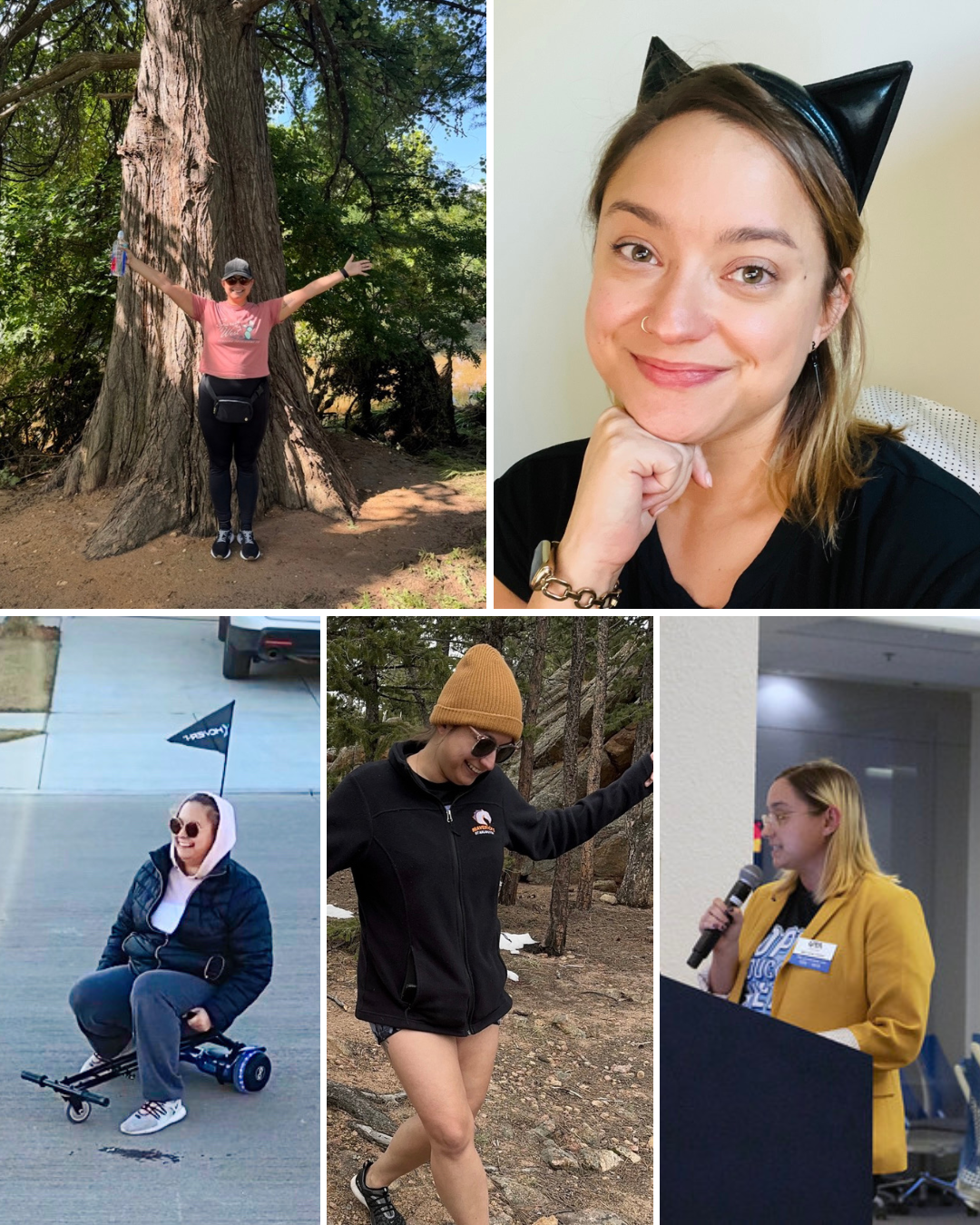
This is some of what “in my element” looks like.
Because I think you would recognize me.
The little girl is still in there. But I think you might understand her differently.
Little Megan. Big-kid Megan. Teenage Megan. Young-adult Megan. Those versions of me were confused a lot of the time. I was lonely. I was overwhelmed. I was living in what I now understand was, at times, sensory hell. I felt things enormously and didn’t know how to communicate what was happening inside me. I missed people intensely while somehow not knowing how to maintain connection with them. Things that seemed easy for other people sometimes felt impossible to me, and I didn’t understand why.
Nobody else understood either.
So we used the language we had. I was a crybaby. Dramatic. A wet blanket. A brat. Quiet. Shy. Bossy. Too sensitive. Too emotional. Difficult.
Some of those words came from other people. Some of them eventually became words I used about myself.
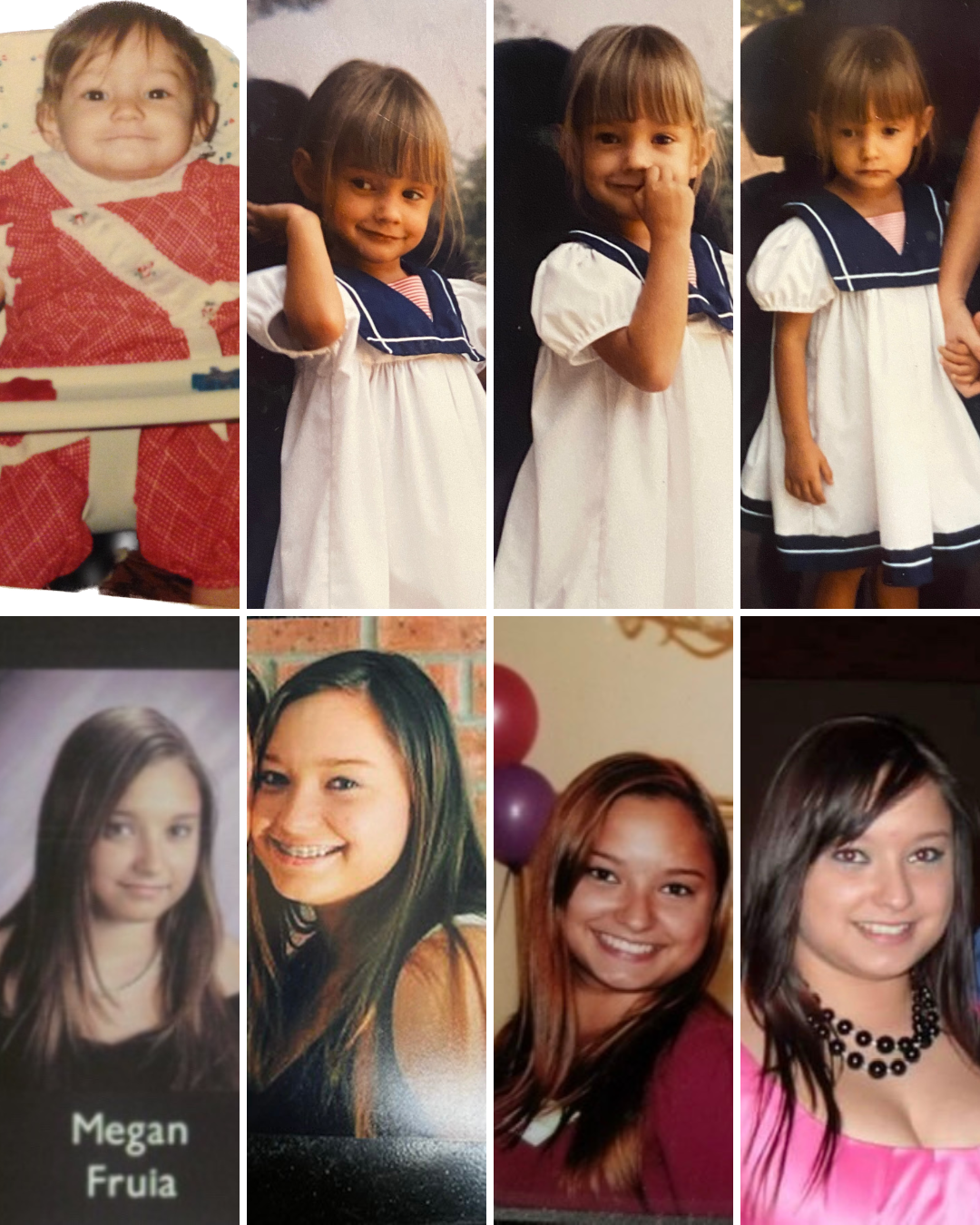
Before I had language for myself.
I don’t blame the people who loved me for not figuring out that I was autistic. I was a girl growing up in the 1990s and early 2000s. Our cultural and clinical understanding of what autism could look like was very different, especially for girls whose presentation didn’t match the stereotypes people recognized. I can’t expect parents, relatives, teachers, or friends to have somehow understood something that many professionals wouldn’t have recognized either.
And I know I was loved.
That matters.
There are good memories in my childhood. There is laughter. There are traditions and holidays and ridiculous stories. There are people who protected me, provided for me, worried about me, showed up for me, and loved me with the information and capacities they had.
And there was trauma.
Both things are true.
There were experiences that frightened me, overwhelmed me, or taught me things about myself that I have spent years unlearning. Some of those experiences involved people who loved me very much and had absolutely no intention of hurting me. I’m learning that acknowledging impact does not require me to manufacture malicious intent. I can have compassion for adults who didn’t understand what was happening and finally have compassion for the child who was experiencing it.
Sometimes I wish I could take everyone back to those moments with what we know now. Not so we could diagnose every childhood memory. Not so every tantrum becomes autism or every conflict gets rewritten. I just wish someone could look at her differently.
Maybe she wasn’t being dramatic. Maybe she was overwhelmed. Maybe she wasn’t trying to ruin everyone’s fun. Maybe something really did feel unbearable to her. Maybe “bossy” was sometimes a child desperately trying to create predictability in a world that felt unpredictable. Maybe quiet wasn’t emptiness. Maybe crying wasn’t manipulation.
Maybe questioning wasn’t defiance.
That last one has followed me.
I question things. I always have. I want to understand why. I notice contradictions. I struggle with “because that’s just how it is.” I want to know who made the rule, why we follow it, whether it still makes sense, who benefits from it, who gets hurt by it, and what might happen if we tried something different.
That quality hasn’t always made relationships easy. In some places, questioning became bad. Questioning could mean disrespectful. Difficult. Argumentative. Too much. There have been relationships where I learned, implicitly or explicitly, that belonging was easier when I was smaller, quieter, more agreeable, or more recognizable to the person who already had an idea of who Megan was supposed to be.
Then I entered professional worlds where people sometimes called those same qualities something entirely different: curiosity, critical thinking, creativity, innovation, leadership, systems thinking.
Apparently the questioner wasn’t something I needed to get rid of. She needed places where questions were allowed.
That realization has brought grief with it, because becoming more fully myself hasn’t meant everyone came with me.
There are people in my family who have stayed. There are people who have continued learning me as I have changed, even when they didn’t completely understand me. There are people who have loved different versions of me and made room for the next one. I don’t want an essay about loss to erase them. Staying curious about another human being over decades is its own kind of love, and I know that now.
There are also people who haven’t stayed. Some of those losses have been ordinary distance. Some have been conflict. Some relationships probably ended for reasons I understand differently than the other person does. I don’t want to tell their stories for them or pretend I know everything that happened inside those relationships.
I only know what it felt like from where I stood.
Sometimes it felt like being unchosen.
I’ve been unchosen by people I loved. Friends. Partners. People I’m related to. People I once imagined would always be part of my life.
And there’s another category of loss I rarely hear people talk about: families that became mine until suddenly they weren’t.
I’ve had relationships where someone’s family became my family too. I didn’t experience those people as accessories to the person I loved. I attached to them. I loved them independently. I learned their personalities and rhythms and traditions. I knew where I belonged at holidays. I knew which stories would get told again. I knew where things were in the kitchen. At some point, I stopped thinking of them as my partner’s family and simply thought of them as family.
Then the central relationship ended, and sometimes an entire family disappeared with it.
I understand why that happens. Relationships end. Loyalties shift. Boundaries change. Everyone has their own grief to navigate, and nobody owes another person permanent access to their life because they once shared a family connection.
But I don’t think my heart understood the rules as cleanly as everyone else seemed to.
There wasn’t a switch inside me that changed someone from family to person I used to know. There still isn’t.
There are people I haven’t spoken to in years whom I still think about with enormous tenderness. There are people whose children I watched grow, parents who welcomed me, siblings and grandparents and extended families whose lives became braided into mine. Some of them probably haven’t thought about me in years. Some may have reasons for not wanting me in their lives anymore. I respect that.
But they still exist inside the map of mine.
And that is something I desperately wish people understood about me.
I disappear. The love doesn’t.
But I need to be careful with that sentence, because not every disappearance means the same thing.
There are people I have disappeared from because the structure that connected us disappeared and my brain seems to struggle with carrying relationships across that gap. There are people I’ve lost through time and distance whom I would genuinely love to find my way back to. There are people I miss and think about even though my behavior gives them very little evidence of that.
And there are people I avoid on purpose.
There are people whose access to me I have deliberately limited because experience taught me that being open with them came at too high a cost. Some of them once knew the version of me I’ve been describing here. They saw the sparkle. Then, even while we remained in the same family, workplace, community, or other shared structure, they stopped seeing it. I became quieter and more careful. I shared less. I learned which parts of myself not to bring into the room.
That isn’t the same kind of disappearance. That is a boundary.
I don’t mean that someone became unsafe simply because they disagreed with me, challenged me, hurt my feelings, or failed to understand me perfectly. Relationships require discomfort, repair, accountability, and forgiveness, and I have hurt people too. I mean relationships where trust was broken deeply or repeatedly enough that I learned I could not continue offering someone the same access to me.
Those relationships have affected me profoundly too. Learning myself has also meant learning that history, proximity, love, and even family do not automatically entitle someone to unlimited access to me. I can acknowledge what someone meant to me, or even still care about them, and choose distance. I do not want every relationship back.
That distinction matters.
But most of my disappearing isn’t that.
Some of the closest friendships of my adult life have grown inside workplaces, schools, projects, and professional communities. When there is a shared structure, I know how to belong. We see each other. We have something to talk about. There are reasons to interact. The relationship has a rhythm.
Then one of us leaves. The structure disappears, and somehow I often disappear with it.
I hate this about myself sometimes because the other person may experience silence while I experience something completely different. I remember our conversations. I wonder how you’re doing. Something happens and I think, Oh my God, they would love this. I remember something ridiculous we did fifteen years ago and laugh. I miss people terribly while simultaneously doing absolutely nothing that would indicate to those people that I miss them.
It’s one of the strangest contradictions of my life.
I used to describe it as object permanence, and maybe that language captures a piece of it, but “out of sight, out of mind” doesn’t actually describe my internal experience very well.
You are not out of my mind.
You are just somehow no longer inside the structure that tells my brain how to reach you.
The relationship can disappear externally without disappearing internally.
If you have ever been important to me and wondered why I stopped calling, stopped texting, stopped showing up, or seemingly moved on without you, I wish I could explain that better. I’m not saying this to excuse every time I’ve failed someone relationally. My silence has consequences regardless of what I intended. People need reciprocity. They need to know they matter. I know that loving someone privately inside my own head is not always enough to sustain a relationship with them.
But I want you to know that silence has not always meant indifference.
If I have ever told you I love you, there is a very good chance some part of that love is still with me.
Maybe this is why I find myself thinking so much about being known now. Because I have spent almost four decades being known in fragments.
My family knew the child who was overwhelmed. My own teachers knew the student. Partners knew versions of me inside those relationships. Their families knew another Megan. Friends knew me inside particular seasons. Colleagues knew the educator. The teachers I later supported professionally knew the person who could sit beside them when something felt intimidating and help them believe they could figure it out. Students knew the teacher who made them laugh and tried very hard to make sure they knew they belonged. Supervisors knew the person who asked questions, noticed problems, created things, cared deeply, worked intensely, and then needed to go be alone for a while.
Every one of those Megans is real.
None of them is the whole person.
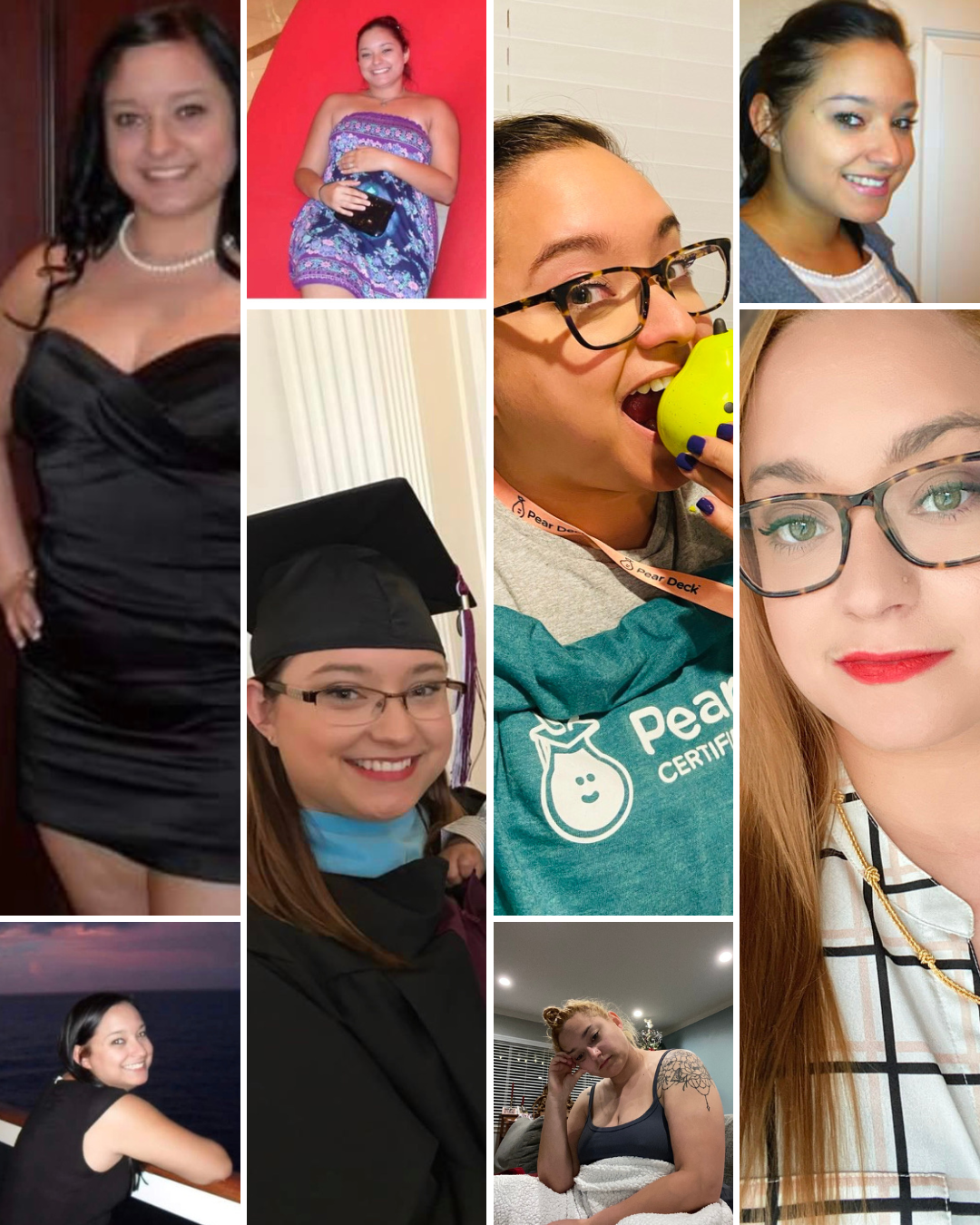
Becoming, without yet knowing what I was becoming.
Then I grew up. I went to college. I became an educator. I married and loved and lost. I became a mother. I struggled. I succeeded. I failed. On Christmas Eve 2021, I came dangerously close to ending my life. I’m profoundly grateful that I had access to help and people who supported me in getting it, because I’m here to tell this story now. I started over more than once. I hurt people. People hurt me. I made choices I understand differently now than I did when I made them. I survived periods of my life I am still learning how to talk about. I went back to school. I changed careers. I found communities where parts of me that had always seemed like liabilities suddenly had value. Eventually, I found language for my own brain.
The intensity became passion. The questions became scholarship. The inability to leave a problem alone became systems thinking. The sensitivity that embarrassed me became one of the ways I understand care. The kid who never quite understood the rules became an adult intensely interested in asking who made the rules in the first place.
I don’t want to make that transformation too neat. Some of those things are still hard. Sensitivity isn’t magically a superpower now. Intensity can exhaust me and other people. Questioning can become rigidity. I still get overwhelmed. I still cry. I still misunderstand people. I still disappear. I still hurt people without meaning to sometimes. Understanding myself hasn’t absolved me from responsibility for how I affect other people.
But it has given me context.
And somewhere in all of this, I started becoming legible to myself.
I think that may be one of the biggest things I’ve accomplished. Not the degrees. Not the job titles. Not the presentations, publications, projects, or whatever comes next.
I know myself now in a way I didn’t for most of my life.
I’m still figuring things out. There are pieces of my history I understand differently every time I revisit them. There are things I may be completely wrong about. A diagnosis doesn’t give me perfect retrospective vision, and self-understanding isn’t something you finish.
But I am no longer trying quite so hard to become the person I think everyone else needs me to be.
And that means I may not be the Megan you remember.
If you knew me twenty years ago, ten years ago, even three years ago, there are things about me you probably don’t know now. Not because everything before was fake. I wasn’t secretly this person all along waiting for someone to discover me. Those earlier versions of me were real. They were doing the best they could with what they understood at the time.
I just understand more now.
And I think I’m finally brave enough to let myself take up enough space to say it.
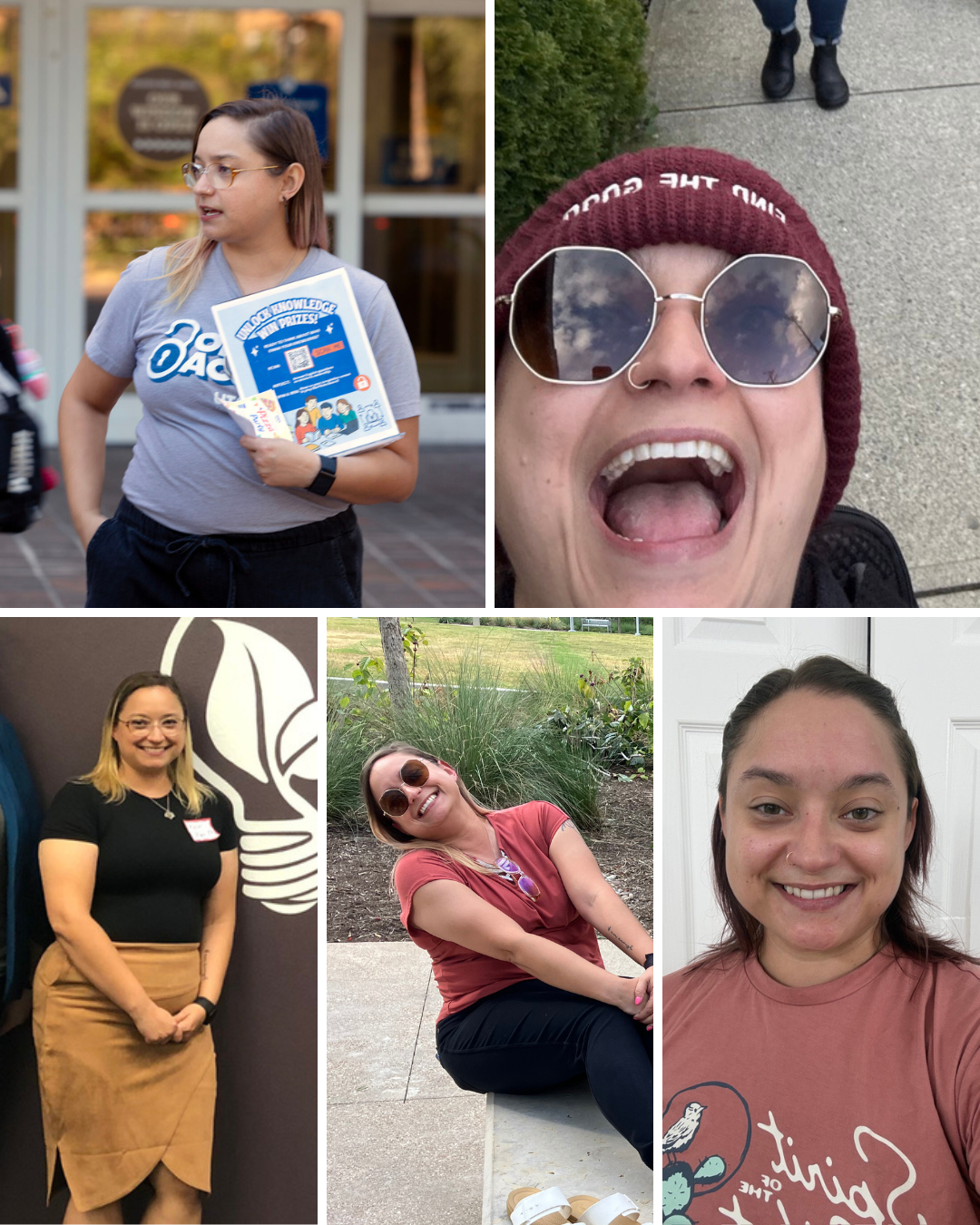
Me, now.
So, to the friends I’ve disappeared from, I haven’t forgotten you. To the people whose families once became mine, I remember you. To the people who have unchosen me, I’m learning that I can honor what something meant to me without requiring it to still exist. To the people I have chosen distance from, that distance has meaning too. To the family who stayed, thank you for continuing to learn me. And to the people who knew me first but may know me least now, I don’t need you to agree with every way I understand my past. I don’t need you to feel guilty. I don’t need you to be impressed by what I’ve accomplished.
I think I just want you to be curious.
Because I wish you could see me in my element now.
I wish you could see the woman those letters describe and recognize the child inside her. I wish you could see that some of the things that made her difficult to understand became the things that helped her understand other people. I wish you could see how much life has happened between the version of me you remember and the person writing this.
And maybe more than anything, I wish you knew that distance has never been a simple measure of my love.
Sometimes distance happened because life changed and I didn’t know how to bridge it. Sometimes someone else chose it. Sometimes I chose it because I needed to. Those distances do not all mean the same thing, and neither do the relationships on the other side of them.
I don’t know if I’ll suddenly become good at calling people. I don’t know whether writing this changes any relationship. I don’t expect one essay to repair distance, resurrect relationships that have ended, or explain an entire life.
But I don’t want my silence to keep speaking for me.
So this is me saying something I couldn’t have said when I was little, or a teenager, or a very confused young adult, because I didn’t know myself well enough yet.
I’m still here.
I’ve missed some of you terribly.
I’ve loved people from some very strange distances.
I’ve also learned that sometimes distance is how I love myself.
A lot has happened.
And to the people I’m reaching toward with this, if you’d like to, I’d really like you to know me again.