Proof Work
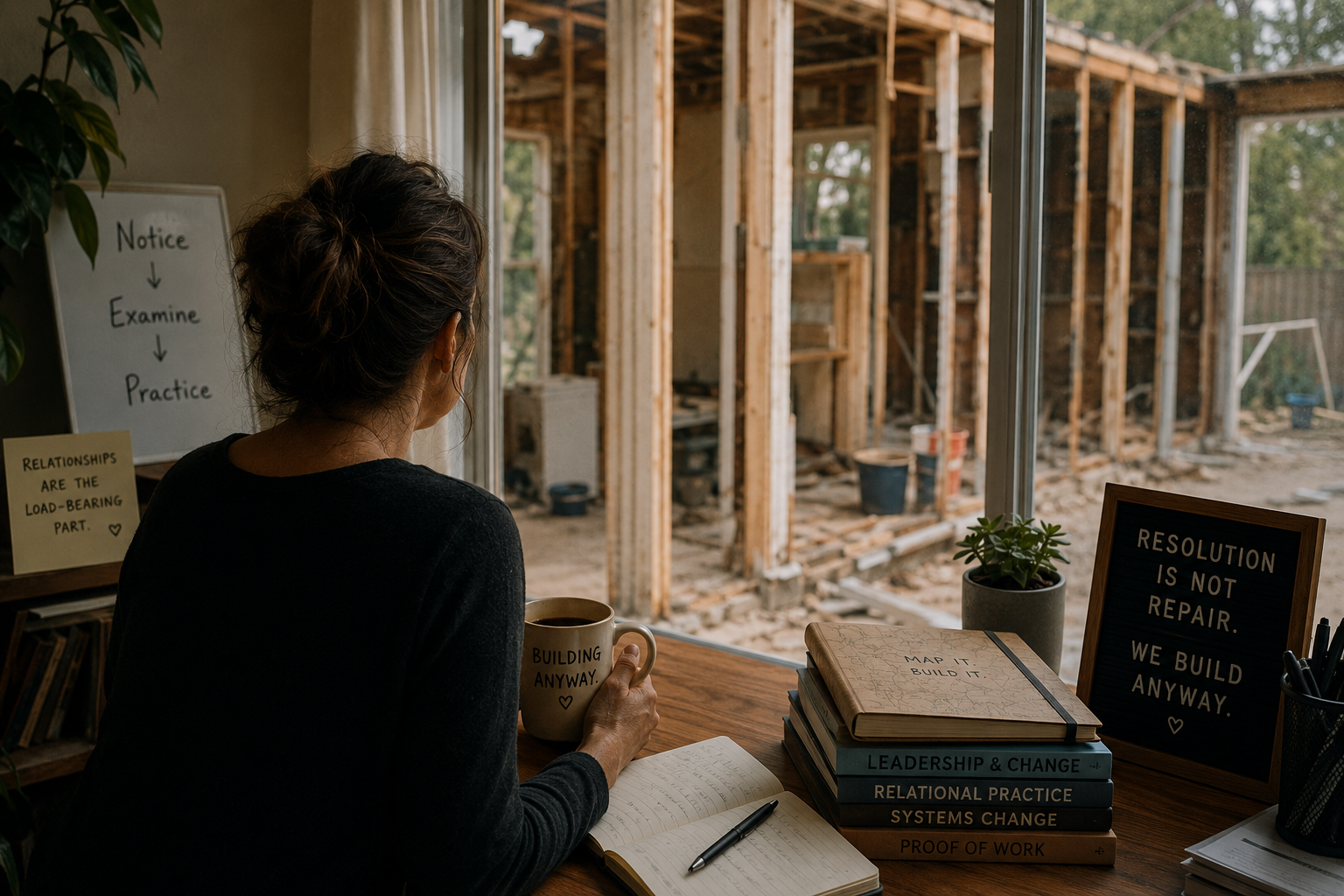
What This Summer Taught Me About Resolution, Repair, and Building Anyway
I had a plan for this summer. I started my PhD in Leadership and Change at Antioch University, and I made the leap out of the 9-to-5 and into working for myself, full time, through The Open Practice Academy (TOPA). People sometimes assume that second leap took years of careful planning. It did not. It came out of the desperation of fighting, for a long time, just to keep doing my job inside a system that was never going to change from the inside. I left that institution with no client roster and no funded runway, just a resolve to find myself, my value, and my purpose again, and a hard-won belief that I cannot fix systems, or practice the kind of leadership I actually believe in, from inside one that is actively breaking me. Everything I have built through TOPA has come after that, assembled in the middle of the chaos rather than before it. I think that origin makes the business, and my sense of purpose, stronger, not weaker.
Three days into June, an internet provider bored a hole through our main water line while working in our front yard. Category 3 sewage water moved through our home. Not a leak. Not a spill. A flood of the kind you do not clean, you remove, floor and all. We tore out our first floor within days. We left home on June 4 and have not been back since: my partner and me, our two kids, my mother, and six pets, all somewhere other than home for a summer that was supposed to be about arriving somewhere new.
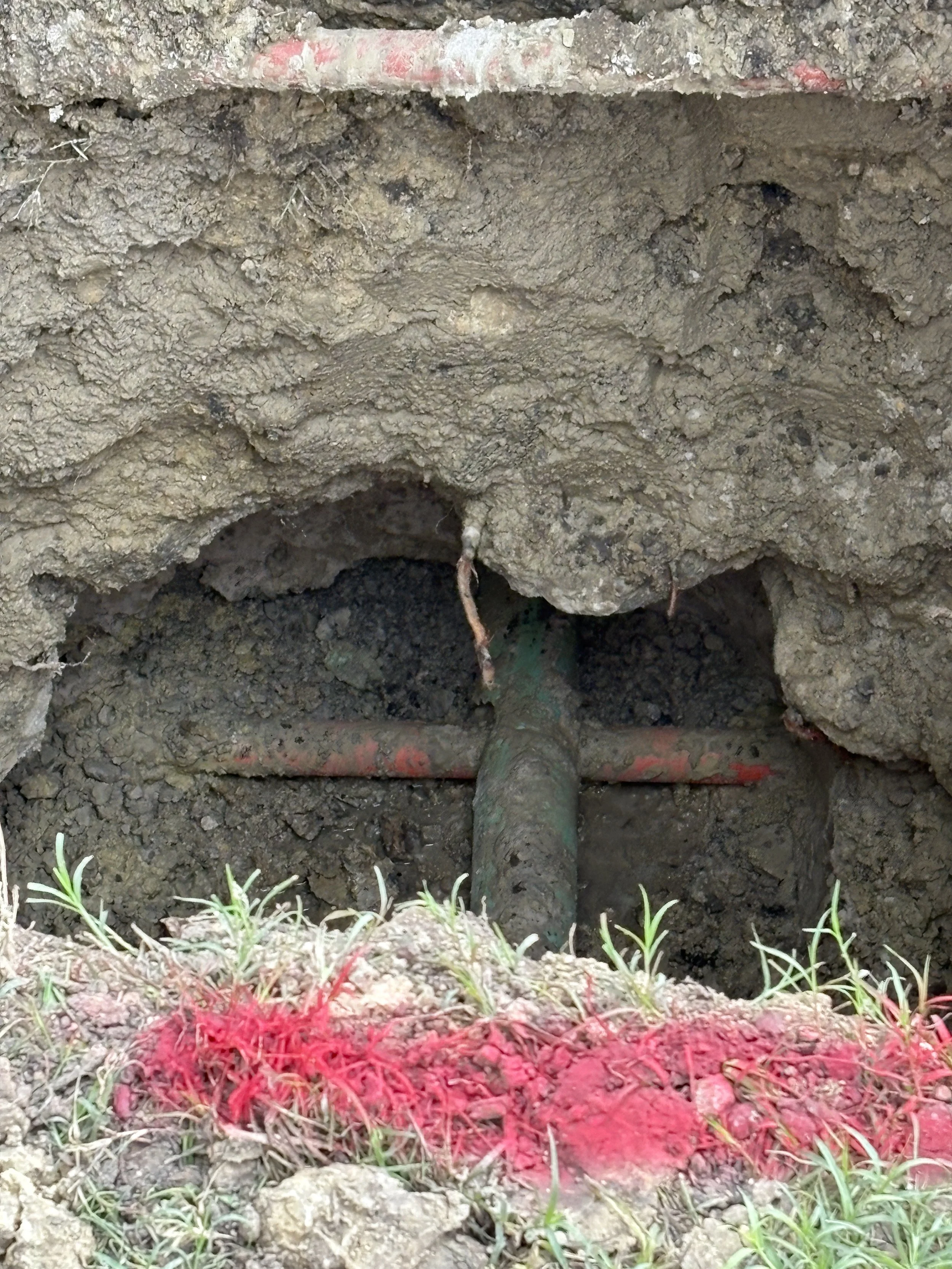
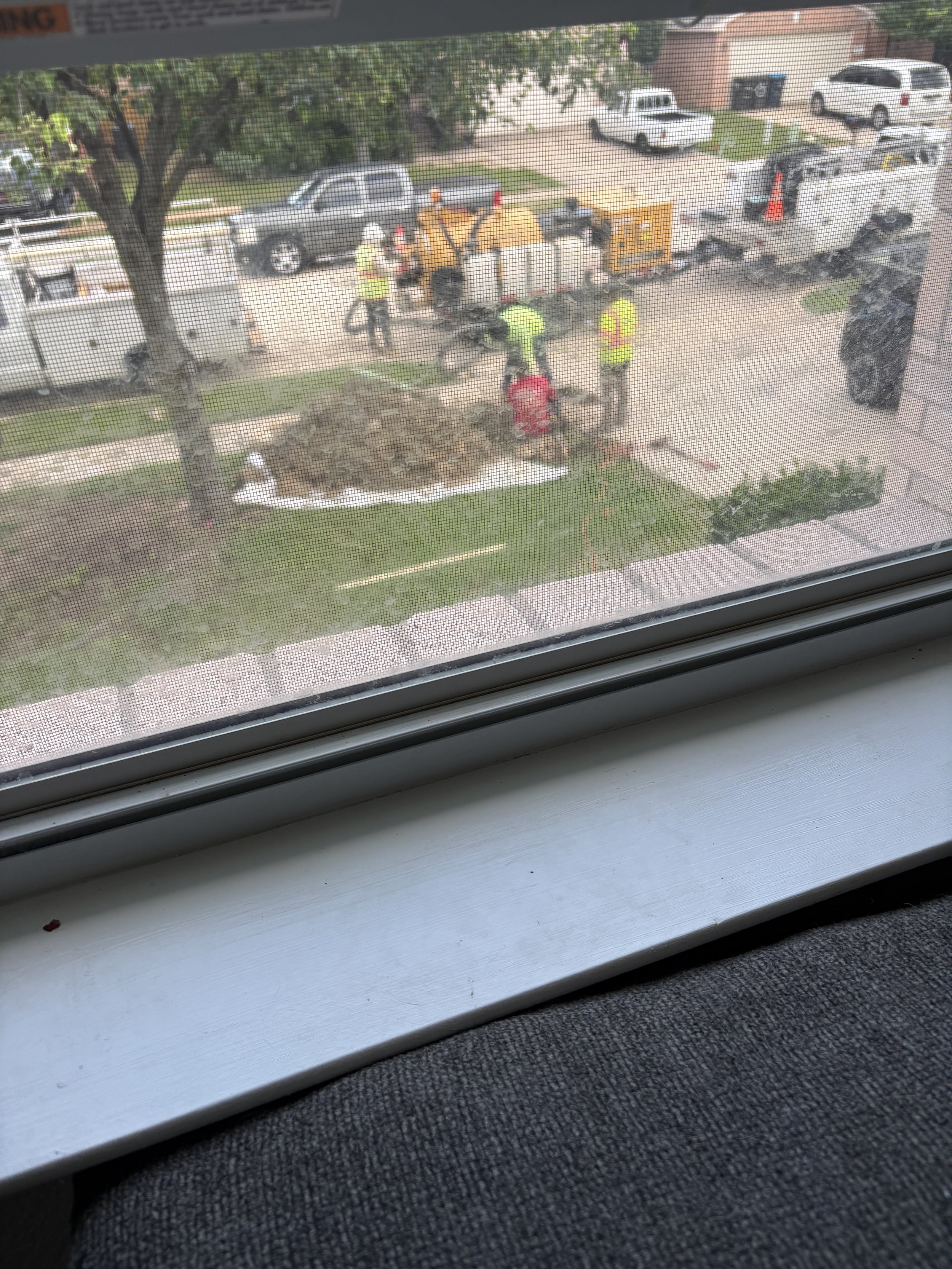
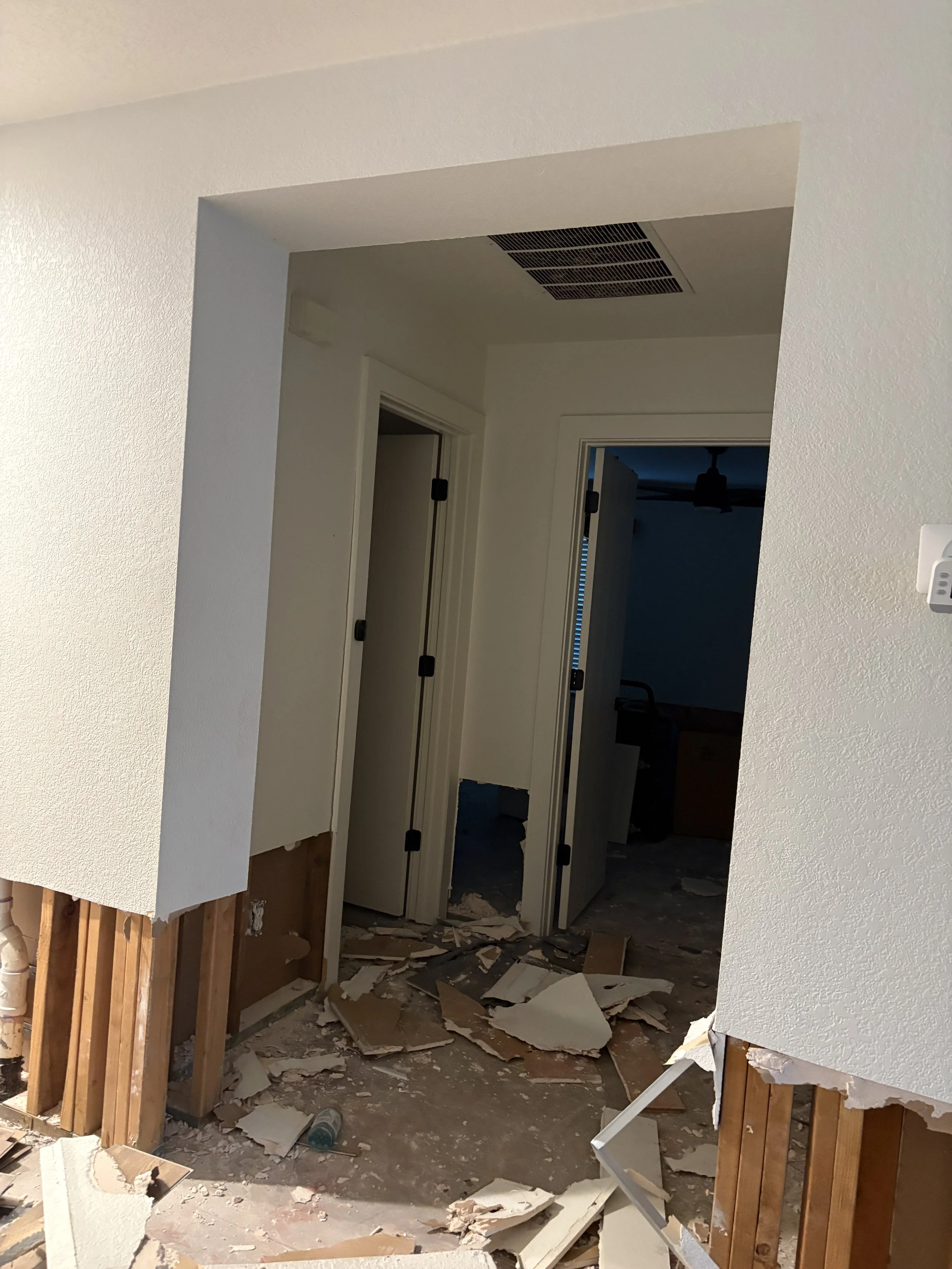
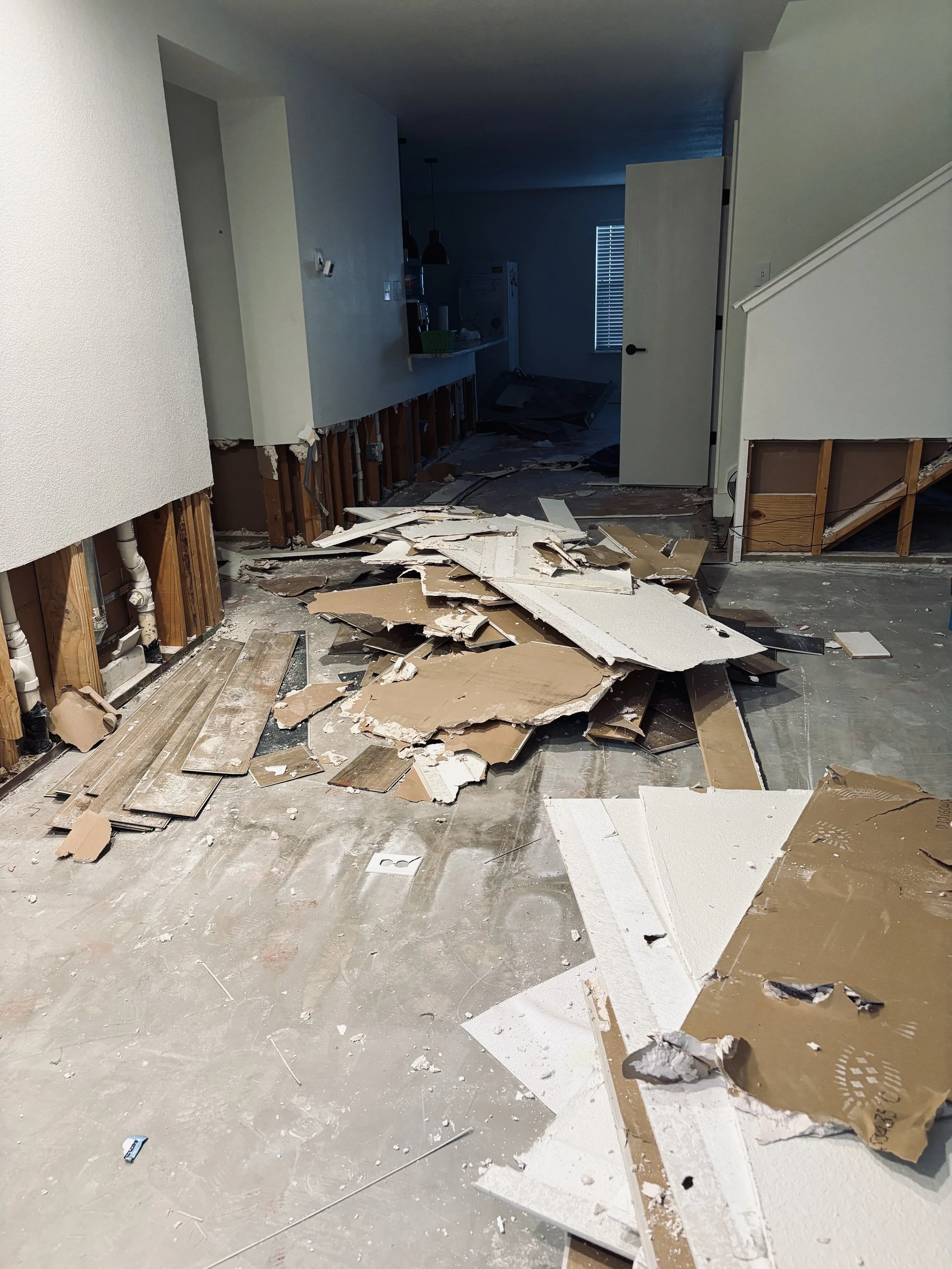
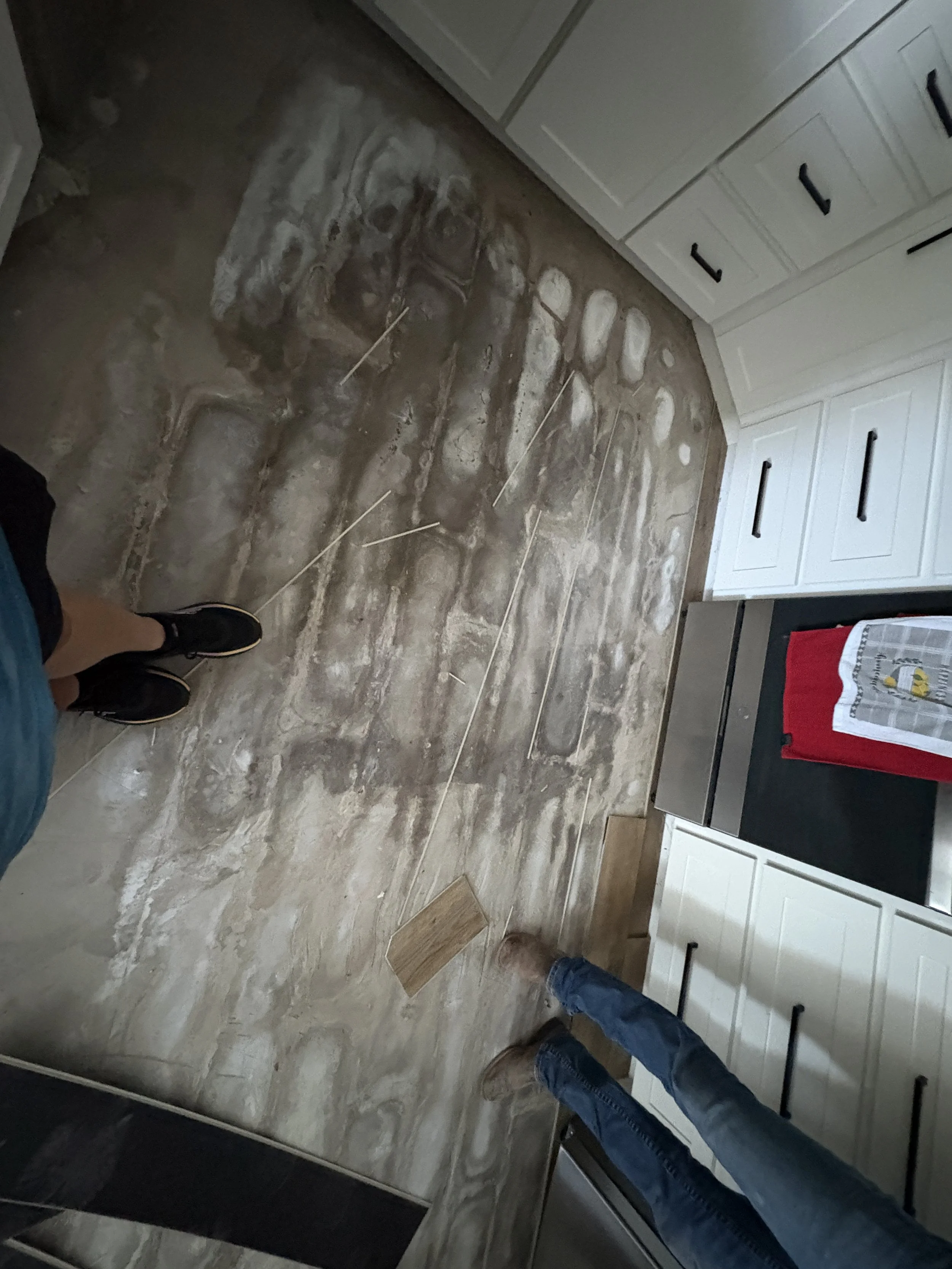
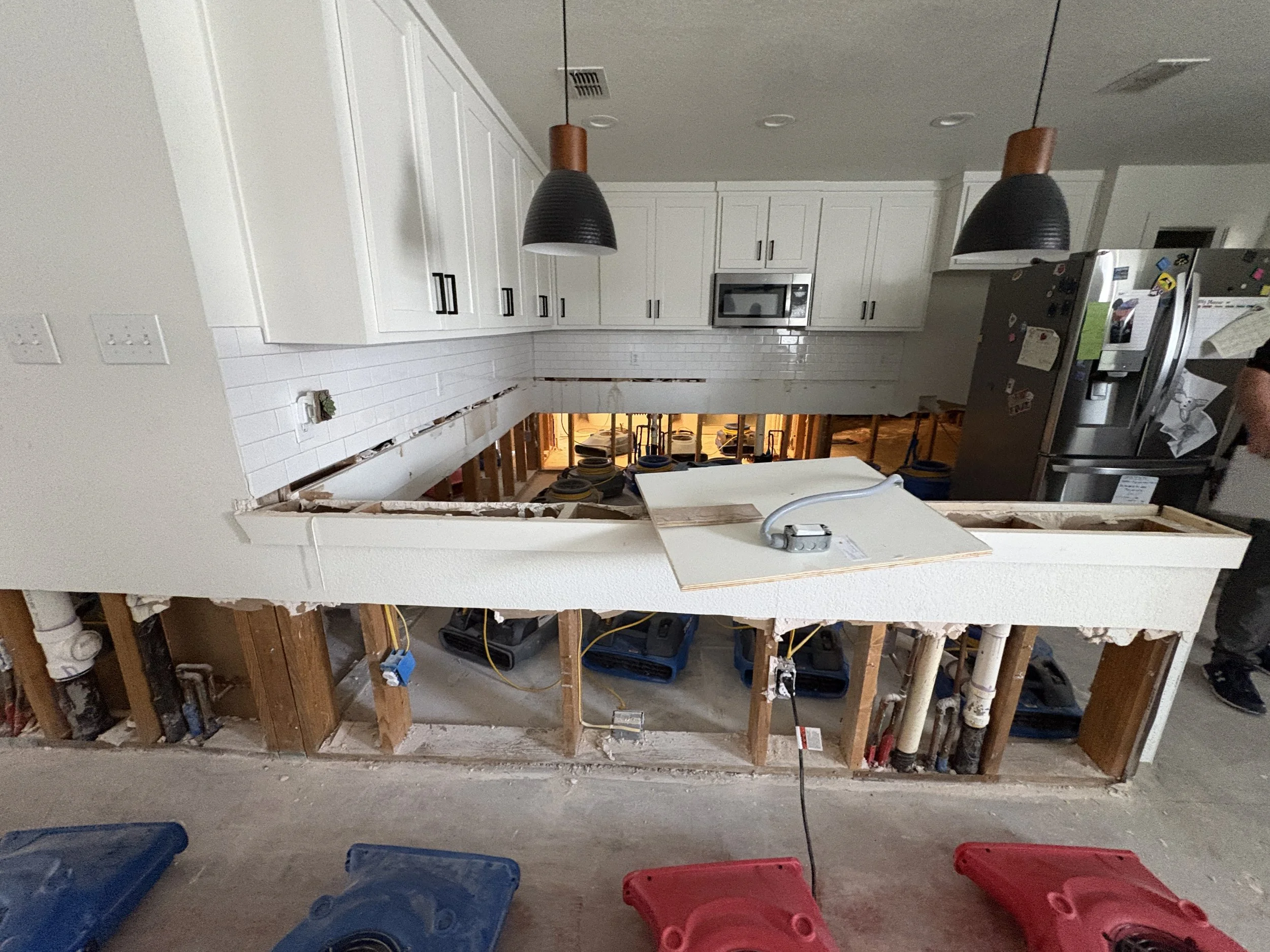
Most people do not understand what displaced actually means until they live it. It is not one dramatic night and then a hotel and then it is fine. It is weeks, then months, of not knowing where anything is, of two kids asking when we are going home and me not having an honest answer, of six pets who do not understand why their whole world moved. I have spent hours most days hunting for a furnished house that could actually hold our whole family and our pets, only to watch the good options disappear. FIFA had matches in North Texas this summer, and half the furnished rentals that would have worked for us were already booked for the tournament, at prices that kept climbing the longer I looked. I answer work emails in a voice that sounds calm while our actual house sits gutted a few miles away. I am telling you this plainly because I think the polished version of this story would leave it out, and I am done leaving it out.
I want to tell you what this summer taught me about the PhD, about the business, about the shape my work is finally taking. I will. But I have learned, the hard way, that I cannot tell any of it honestly without telling you who I already was walking into it. So this is also a positionality statement. Here is where I stand when I say the rest of it.
Resolution Is Not Repair
Before the PhD, before the water, I went through a long workplace disability accommodation and employment dispute. I will not share the internal specifics here. Not the documents, not the names, not the specific allegations. That was never mine to litigate in public, and it still is not. But what it did to me is mine to tell, so I am telling it.
For a long stretch of my life, I organized my days around documentation. Screenshots. Emails. Timelines. Medical forms. Calendar notes. Drafts I never wanted to write. Questions I had to ask carefully, because every sentence felt like it might someday need to prove that I had been reasonable, patient, and clear enough to deserve access. I learned to write while activated. I learned to translate distress into institutional language good enough that someone with power over my job might finally believe it. I have come to call this proof work: the labor of translating a body's distress into a form a system is willing to read. Disabled people asking for accommodation are rarely just asking for support. Systems ask us to prove the support is necessary, then that it is reasonable, then that it does not inconvenience the wrong people, then that we are still good workers and not difficult ones.
Institutions love documents. But the body keeps its own record too. Mine remembers the dread before certain meetings. It remembers the calculation, over and over, of whether I could show up, mask what it was costing me, complete the task, and still have anything left for the rest of my life. Eventually the dispute resolved, formally. A file closed. But I learned, in my body first and only later in language, that resolution is not the same thing as repair. A settlement is not the same thing as recognition. Money is not the same thing as acknowledgment. And I learned that I was still angry, not recklessly, not looking to burn anything down, but with a clear, clarifying anger that says: this should not be normal.
What I carried out of that season was a single, quiet realization: my body was still waiting to believe a door would hold. Trust like that rebuilds slowly, in private, after institutional harm. I did not expect an actual door, in an actual house, to test that same realization again this literally, or this soon.
Our homeowners insurance sent five thousand dollars for damage that gutted an entire floor of our home. The internet provider's insurer has not meaningfully moved. We are the ones holding five-figure bills for something we did not do, did not cause, and could not have prevented, while paying, at the same time, to live somewhere that is not our house. We are running out of money, and we are running out of options.
Here is what I notice, because noticing patterns is how I have always made sense of harm: the shape of this is exactly the shape I already lived once. A process that is not neutral simply because it has forms. A system that treats the person with the least power as the one who should carry the most burden, administrative and financial and physical at once. A check that arrives as if it settles something, when what it actually does is close a file. My partner is the one doing the proof work this time, hours on hold, documenting, following up, staying calm and reasonable and clear enough on the phone that someone might finally believe the damage is as bad as it is. I recognize every piece of what that costs, because I have done that exact labor in my own body. I did not expect to watch someone I love carry it instead, and I did not expect how much harder that would be than carrying it myself. He is incredible in it, patient in ways I am not sure I could be, and it guts me every time, because these are the very systems I have spent years working to fix. Knowing that does not make it easier to watch him absorb them now.
What the PhD Has Actually Taught Me So Far
I started my doctoral work this summer researching what I have come to call the conditions for learning and change, the circumstances, across very different fields, that make it possible for people to learn something new or become something different. I did not expect to be living inside my own research question by August.
That is what this summer has actually been, underneath the water and the insurance calls. A test of the conditions under which a family can keep functioning, keep parenting, keep showing up for a doctoral program and a new business, while displaced. Not a test of our willpower. We have plenty of that. A test of whether the structures around us, insurance included, are built to hold people up or built to let them fall through.
I do not think people fail to cope. I think environments fail to support coping, and then we call the resulting exhaustion a personal problem. That has felt true of workplaces for years. It turns out to be exactly as true of a flooded house.
Where I Am Standing Now
I carry certain positions into every room I enter: practitioner, builder, woman, neurodivergent person,among others. I am adding new ones this summer, and I want to name them plainly instead of tucking them behind the work. A founder weeks into launching a business from a house that is not her house. A doctoral student who went to her first residency knowing her family was sleeping somewhere temporary back home. A daughter helping her mother keep her own remote job going, a borrowed spare room standing in for the office she actually has. A couple relearning, night by night, how to keep two children and six pets steady inside a version of home that keeps changing addresses.
None of that is theoretical anymore. I do not have the option of disappearing into the work the way I might have wanted to at other points in my life. My family is watching how I hold this, every day, at close range, without any distance to soften it. That is a vulnerable place to write from, and I am choosing to write from it anyway, because I think people deserve to see the whole shape of what building something actually costs, not just the polished part.
What I Am Building, and Why
When I started The Open Practice Academy, I called it a business idea, then corrected myself in the same breath, because TOPA is terrifying for the same reason it is necessary: it is not a business idea. It is a declaration. I built it to take what I had already learned, survived, and believed, and make it available beyond one institution, one employer, one job title.
I framed that declaration as education work at first. Faculty development, learning design, the kinds of change I had spent years practicing professionally. This year, and certainly this summer, that framing got too small. What I actually build now is relational practice, grounded in the same questions my PhD in Leadership and Change keeps asking me to sit with: how do people actually change, and what do they need around them to do it. Education, business, and community work all run on the same throughline for me. No system changes without the relationships that carry it, and no leader leads well without learning to notice what those relationships actually need.
I did not arrive at that shift through theory. I arrived at it through a summer where the thing holding my family together was never a claims adjuster or a policy document. My partner led every insurance conversation, call after call, staying on hold so I did not have to. I spent my hours searching listings for a furnished house that could actually hold six pets and two kids, watching good options vanish into a tournament crowd before I could even call. My mother kept her own job running from a spare room. We each found the next right thing to do and did it, together, without a manual for any of it. Relational practice is not a softer version of the work I do. It is the load-bearing part I used to leave out of the blueprint.
I write about this work here and at theopenpracticeacademy.com, and this year I joined Maven's teaching marketplace to keep sharing it beyond my own site, building courses and live sessions on leadership, change, and human-scale design for anyone who wants to learn alongside me. Building in public, even this summer, is part of the practice. I am not interested in polishing the process until it looks easy.
Two Things Are True at Once
This summer holds two things at once, and I have stopped trying to make one of them cancel out the other.
It has been hard in ways I will not dress up: displaced, drained, watching the person I love most do proof work against a system that will not call its own damage what it is, a pattern I know from the inside because I once did that same labor in my own body. We are running out of money and options, plainly, and I am not interested in softening that either. And this summer has also been the one where I kept building anyway. I kept mapping the terrain of my own life in real time. I kept showing up for a doctoral cohort and a business launch I refused to postpone just because a company drilled a hole through the wrong pipe. That second part is not a performance, and I am not manufacturing resilience for anyone watching. It is the plain fact that I kept building, that I can tell you exactly what it cost, and that I am still choosing to build. Both things are true. I am done pretending only one of them fits in a single story.
What I Am Carrying Into the Rebuild
People deserve structures that do not punish them for being human. Not because everyone is amazing and everything works out. Because the alternative, the thing my family is living through right now, is doing everything right and still absorbing a stranger's mistake with money we cannot spare and time we do not have.
I am starting a PhD and starting a business in the same summer someone else's mistake took our home apart, in the same year I am still metabolizing what an earlier system did to my body and my trust. I have decided not to smooth any of that into a cleaner story than it is. The work I am building, The Open Practice Academy, relational practice, and my research into leadership and change, exist because I believe the conditions around people matter more than their willingness to push through bad ones. I am living proof of my own thesis this summer, whether I wanted to be or not.
We are still displaced. The bills are still coming. I am still, most days, three parts exhausted to one part certain. But I have not stopped mapping the terrain, and I have not stopped building the door I wish someone had already built for us. That is the work. It was always going to be the work. I am just doing it, again, in public, with less certainty and more resolve than I have ever had before.
About The Open Practice Academy
The Open Practice Academy helps people and organizations turn what they value into how they actually work.
TOPA brings together relational practice, learning, organizational change, and practical systems design to help good work become clearer, more accessible, and more sustainable.
Our work includes Relational Practice Coaching, Practice Cartography, custom learning and professional development, belonging and engagement strategy, and specialist support across leadership, education, open practice, learning design, and organizational change.
Sometimes that means helping a person think differently. Sometimes it means helping a team learn something new. Sometimes it means mapping the knowledge, relationships, and systems that allow the work to continue.
The common thread is practice: building the conditions that help people do meaningful work without losing the humans inside it.